Mexico Perfume Market Size, Industry Trends, Share, Growth and Report 2026-2034

Mexico Perfume Market Size, Industry Trends, Share, Growth and Report 2026-2034

IMARC Group has recently released a report titled “Mexico Perfume Market Size, Share, Trends and Forecast by Perfume Type, Category, and Region, 2026-2034”, providing a detailed analysis of market trends, competitive landscape, and regional dynamics.

Mexico Perfume Market Size and Share 2026–2034

The Mexico perfume market size reached USD 624.1 Million in 2025 and is projected to grow to USD 953.1 Million by 2034, exhibiting a CAGR of 4.67% during 2026–2034. The market growth is driven by rising disposable incomes, increasing consumer inclination toward premium fragrances, and strong influence of social media trends on purchasing behavior.

In 2026, the Mexico perfume market growth is expected to gain further momentum as consumers increasingly seek personalized and culturally inspired fragrances. The expansion of e-commerce platforms, along with the emergence of local artisanal perfume brands rooted in indigenous heritage, is contributing significantly to evolving Mexico perfume market trends. Additionally, growing urbanization and rising awareness about personal grooming are supporting sustained demand.

Key Market Statistics at a Glance

  • Base Year: 2025
  • Historical Years: 2020–2025
  • Forecast Period: 2026–2034
  • Market Size (2025): USD 624.1 Million
  • Projected Size (2034): USD 953.1 Million
  • Growth Rate: CAGR of 4.67%

Get Insights on the Mexico Perfume Market: Access the IMARC Sample Report: https://www.imarcgroup.com/mexico-perfume-market/requestsample

Mexico Perfume Market Growth Analysis and Trends

The Mexico perfume market growth is being driven by rising consumer spending on premium personal care products and increasing awareness of personal grooming. Consumers are showing a stronger preference for branded fragrances, luxury perfumes, and long-lasting scents as disposable incomes improve. Urbanization, changing lifestyles, and the growing influence of social media and beauty influencers are also encouraging fragrance purchases across different age groups.

One of the key Mexico perfume market trends is the increasing demand for premium, niche, and natural fragrances. Consumers are seeking unique scent profiles made with high-quality ingredients, while sustainable and eco-friendly packaging is becoming an important purchasing factor. In addition, international perfume brands are expanding their presence in Mexico through retail stores, e-commerce platforms, and strategic partnerships, making a wider variety of products available to consumers.

Looking ahead, the Mexico perfume market growth is expected to remain strong due to continued product innovation, expanding online retail channels, and rising demand for personalized fragrances. Companies are introducing gender-neutral perfumes, refillable packaging, and limited-edition collections to attract a broader customer base. These evolving Mexico perfume market trends are expected to support sustained market expansion as consumer preferences continue shifting toward premium, sustainable, and digitally accessible fragrance products.

Mexico Perfume Market Segmentation Insights

The Mexico perfume market is segmented based on product type, category, distribution channel, and region.

Breakup by Perfume Type:

  • Premium Perfume Products
  • Mass Perfume Products

The report offers a comprehensive segmentation and analysis of the market based on perfume type, covering both premium perfume products and mass-market perfume products.

Breakup by Category:

  • Female Fragrances
  • Male Fragrances
  • Unisex Fragrances

The report also provides an in-depth segmentation and analysis of the market by category, including female fragrances, male fragrances, and unisex fragrances.

Breakup by Region:

  • Northern Mexico
  • Central Mexico
  • Southern Mexico
  • Others

The report further presents a detailed analysis of the key regional markets, including Northern Mexico, Central Mexico, Southern Mexico, and other regions.

Mexico Perfume Market Challenges & Opportunities

The Mexico perfume market faces challenges such as intense competition among global and local brands, leading to pricing pressures. Counterfeit products and fluctuating raw material costs also create obstacles for manufacturers. Additionally, maintaining product differentiation in a highly saturated market remains a key concern.

However, the market presents significant growth opportunities. Rising disposable incomes, expanding middle-class population, and increasing preference for premium and niche fragrances are driving demand. The rapid growth of e-commerce and digital marketing strategies is enhancing brand reach and customer engagement. Furthermore, the trend toward sustainable and natural ingredients is encouraging innovation and product diversification.

Mexico Perfume Market Competitive Landscape

The Mexico perfume market is highly competitive, with both international and domestic players focusing on innovation, branding, and expanding distribution networks. Companies are investing in digital marketing, influencer collaborations, and product differentiation strategies to strengthen their market position. Premiumization and the introduction of culturally inspired fragrances are key strategies adopted by leading players to increase Mexico perfume market share.

Strategic partnerships, new product launches, and expansion across online platforms are shaping the competitive dynamics of the market.

Key Players in the Market

  • L’Oréal Group: A global leader in the fragrance industry, L’Oréal offers a wide portfolio of luxury and mass-market perfumes through brands like Lancôme and Yves Saint Laurent. The company focuses on innovation, strong branding, and digital marketing strategies to expand its presence in Mexico’s growing premium fragrance segment.
  • Coty Inc.: Coty Inc. is known for its diverse fragrance portfolio, including celebrity and designer perfumes. The company emphasizes strategic licensing agreements, product innovation, and expanding its retail and e-commerce footprint to capture a larger share of the Mexico perfume market.
  • Estée Lauder Companies: Estée Lauder Companies specializes in premium and luxury fragrances, leveraging strong brand equity and high-quality formulations. The company focuses on personalized marketing, exclusive product launches, and omnichannel distribution strategies to strengthen its position in Mexico’s premium perfume segment.

Mexico Perfume Market Forecast 2026–2034

The outlook for the Mexico perfume market remains positive during the 2026–2034 period. Growth will be supported by rising consumer spending, evolving lifestyle trends, and increasing digital penetration.

The Mexico perfume market demand is expected to remain strong, driven by growing interest in luxury and personalized fragrances. Additionally, the expansion of online retail and the rising popularity of niche and artisanal brands will further boost Mexico perfume market growth.

By 2034, the market is projected to reach USD 953.1 Million, with companies focusing on innovation, sustainability, and enhanced customer experience to capture a larger share of the market.

Author IMARC Group

IMARC Group is a leading global market research company providing data-driven insights and expert consulting services to businesses seeking to achieve their strategic objectives. With a multidisciplinary team of industry experts, IMARC delivers reliable market intelligence across sectors including Chemicals and Materials, Healthcare, Technology, Agriculture, and Retail.

Contact Us:

IMARC Group

Email: sales@imarcgroup.com

United States: +1-201971-6302
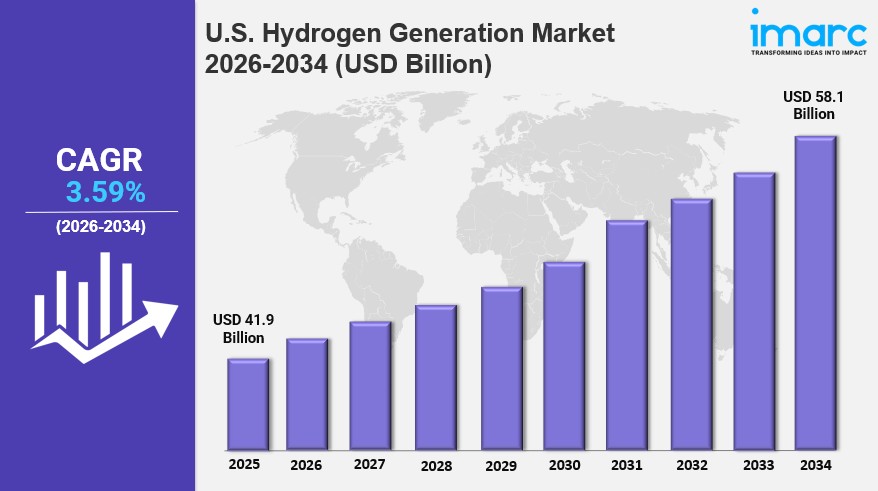
U.S. Hydrogen Generation Market to Reach USD 58.1 Billion by 2034

U.S. Hydrogen Generation Market to Reach USD 58.1 Billion by 2034

IMARC Group has recently released a new research study titled “U.S. Hydrogen Generation Market Size, Share, Trends, and Forecast by Technology, Application, Systems Type, and Region, 2026-2034”, offers a detailed analysis of the market drivers, segmentation, growth opportunities, trends and competitive landscape to understand the current and future market scenarios.

U.S. Hydrogen Generation Market Size and Share 2026-2034

The U.S. hydrogen generation market is witnessing steady growth in 2026 as industries increasingly adopt clean energy solutions to support decarbonization goals and reduce greenhouse gas emissions. According to IMARC Group, the U.S. hydrogen generation market size was valued at USD 41.9 Billion in 2025 and is projected to reach USD 58.1 Billion by 2034, growing at a CAGR of 3.59% during 2026-2034. Market expansion is being driven by rising investments in low-carbon hydrogen production, supportive federal policies, and the growing use of hydrogen across transportation, power generation, refining, and industrial manufacturing. As demand for sustainable fuels increases, the U.S. hydrogen generation market share is expected to strengthen across both public and private sectors.

In 2026, significant government funding for hydrogen infrastructure, continuous advancements in cost-effective production technologies such as electrolysis, and expanding adoption of fuel cell vehicles are creating new growth opportunities for the market. Companies are also investing in green hydrogen projects to improve energy security and reduce dependence on fossil fuels while meeting long-term climate targets. Additionally, increasing collaboration between energy providers, technology developers, and industrial users is accelerating hydrogen deployment across the United States. These favorable trends are expected to support the continued expansion of the U.S. hydrogen generation market, making hydrogen a key component of the country’s clean energy transition over the forecast period.

Key Market Statistics at a Glance

  • Base Year: 2025
  • Historical Years: 2020–2025
  • Forecast Period: 2026–2034
  • Market Size (2025): USD 41.9 Billion
  • Projected Size (2034): USD 58.1 Billion
  • Growth Rate: CAGR of 3.59%

Explore Growth Opportunities in the U.S. Hydrogen Generation Market: Grab IMARC Sample Report for evaluation: https://www.imarcgroup.com/united-states-hydrogen-generation-market/requestsample

Key Trends Driving Growth in the U.S. Hydrogen Generation Market

The U.S. hydrogen generation market trends in 2026 reflect the country’s accelerating shift toward cleaner and more sustainable energy sources. One of the key factors supporting U.S. hydrogen generation market growth is the increasing investment in green hydrogen production through renewable electricity and advanced electrolysis technologies. Government incentives, tax credits, and funding programs are encouraging both public and private organizations to expand hydrogen production facilities and related infrastructure. These initiatives are helping reduce carbon emissions while supporting long-term clean energy and climate objectives.

Another major growth driver is the rising adoption of hydrogen across multiple industries, including transportation, power generation, chemicals, and petroleum refining. The growing deployment of hydrogen fuel cell vehicles, along with investments in hydrogen refueling stations, is creating new opportunities for market expansion. At the same time, industrial manufacturers are increasingly using hydrogen to lower emissions in energy-intensive processes, while utility companies are exploring hydrogen as a reliable solution for large-scale energy storage and grid balancing.

Technological innovation is also playing a crucial role in strengthening the market. Continuous improvements in electrolysis efficiency, carbon capture technologies for blue hydrogen, and renewable-powered production methods are reducing production costs and improving commercial viability. In addition, strategic partnerships between energy companies, technology providers, and government agencies are accelerating hydrogen commercialization. As energy security and decarbonization remain national priorities, these developments are expected to support sustained market expansion throughout the 2026-2034 forecast period.

Speak to An Analyst: https://www.imarcgroup.com/request?type=report&id=20436&flag=C

U.S. Hydrogen Generation Market Segmentation Analysis

Analysis by Technology

  • Coal Gasification: Produces hydrogen by converting coal into synthesis gas, widely used where coal resources remain abundant.
  • Steam Methane Reforming: Dominates the market due to cost-effectiveness, producing hydrogen from natural gas for industrial applications.
  • Others: Includes electrolysis and biomass-based production methods, supporting cleaner hydrogen generation and sustainability goals.

Analysis by Application

  • Methanol Production: Hydrogen serves as a key feedstock for manufacturing methanol used in chemicals and fuel applications.
  • Ammonia Production: Large hydrogen demand supports ammonia manufacturing for fertilizers and industrial chemical production.
  • Petroleum Refinery: Hydrogen is essential for refining crude oil, desulfurization, and producing cleaner transportation fuels.
  • Transportation: Growing adoption of hydrogen fuel cells supports zero-emission vehicles and commercial transportation solutions.
  • Power Generation: Hydrogen is increasingly used for energy storage, grid balancing, and low-carbon electricity generation.
  • Others: Includes electronics, metal processing, food manufacturing, and other industrial hydrogen applications.

Analysis by Systems Type

  • Merchant: Hydrogen is produced centrally and supplied to multiple industrial customers through distribution networks.
  • Captive: Hydrogen is generated onsite by industries to ensure reliable supply and reduce transportation costs.

Regional Analysis

  • Northeast: Strong clean energy policies and industrial demand drive regional hydrogen generation market growth.
  • Midwest: Expanding manufacturing, agriculture, and renewable energy projects increase hydrogen production and consumption.
  • South: Abundant natural gas resources and refining industries support significant hydrogen generation activities.
  • West: Growing green hydrogen investments and renewable energy capacity accelerate market expansion across western states.

Key Challenges and Growth Opportunities in the U.S. Hydrogen Generation Market

The U.S. hydrogen generation market faces several challenges despite its positive long-term outlook. High production costs, particularly for green hydrogen produced through electrolysis, remain a major barrier to widespread adoption. In addition, limited hydrogen transportation, storage, and refueling infrastructure increases project costs and slows commercialization. Regulatory uncertainties, supply chain constraints, and the need for large-scale investments in production facilities also present challenges for market participants seeking to expand operations.

Despite these obstacles, the market offers significant growth opportunities through continued government support, technological advancements, and rising demand for clean energy solutions. Investments in renewable-powered hydrogen production, carbon capture technologies, and hydrogen infrastructure are expected to improve production efficiency and reduce costs. Growing adoption of hydrogen in transportation, power generation, heavy industries, and manufacturing, along with increasing public-private partnerships, will create new business opportunities and strengthen the long-term growth prospects of the U.S. hydrogen generation market.

Competitive Landscape

The U.S. hydrogen generation market is highly competitive, with leading companies focusing on expanding production capacity, developing green hydrogen technologies, and strengthening distribution networks. Market participants are investing in strategic partnerships, research and development, and large-scale hydrogen infrastructure projects to meet the growing demand from industrial, transportation, and energy sectors. Continuous innovation and government-supported clean energy initiatives are further intensifying competition and creating new growth opportunities.

Key Players

  • Air Products and Chemicals, Inc. – Expanding hydrogen production facilities and investing in large-scale clean hydrogen and infrastructure projects.
  • Linde plc – Offers advanced hydrogen generation, storage, and distribution solutions for industrial and mobility applications.
  • Air Liquide – Focuses on low-carbon hydrogen production through innovation, renewable energy integration, and strategic partnerships.
  • Plug Power Inc. – Develops green hydrogen ecosystems, including electrolyzers, fuel cells, and hydrogen refueling infrastructure.

Author IMARC Group

IMARC Group is a leading global market research company providing data-driven insights and expert consulting services to businesses seeking to achieve their strategic objectives. With a multidisciplinary team of industry experts, IMARC delivers reliable market intelligence across sectors including Chemicals and Materials, Healthcare, Technology, Agriculture, and Retail.

Contact Us:

IMARC Group

Email: sales@imarcgroup.com

United States: +1-201971-6302
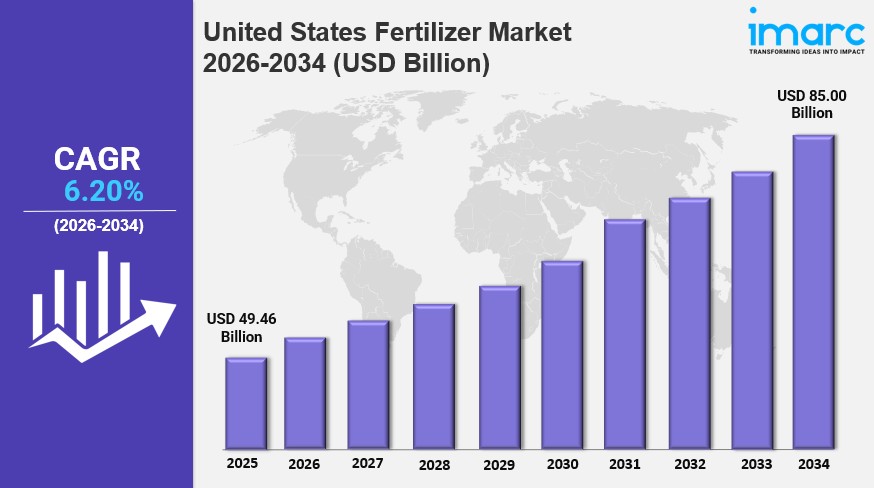
United States Fertilizer Market Size to Worth USD 85.00 Billion by 2034

United States Fertilizer Market Size to Worth USD 85.00 Billion by 2034

IMARC Group has recently released a report titled “United States Fertilizer Market Size, Share, Trends and Forecast by Product Type, Product, Product Form, Crop Type, and Region, 2026-2034”, providing a detailed analysis of market trends, competitive landscape, and regional dynamics.

United States Fertilizer Market Overview 2026–2034

The US fertilizer market size was valued at USD 49.46 Billion in 2025 and is projected to reach USD 85.00 Billion by 2034, growing at a CAGR of 6.20% during 2026–2034. The market is experiencing steady growth due to the increasing need to improve agricultural productivity, meet rising food demand, and enhance crop yields through effective nutrient management solutions.

In 2026, the market continues to expand as farmers increasingly adopt precision agriculture technologies and sustainable farming practices. Growing awareness of soil health, efficient nutrient utilization, and environmentally responsible crop production is driving demand for advanced fertilizer products. Innovations in specialty fertilizers, controlled-release formulations, and nutrient management solutions are further supporting market growth, helping farmers maximize productivity while maintaining long-term soil fertility across the United States.

Key Market Statistics at a Glance

  • Base Year: 2025
  • Historical Years: 2020–2025
  • Forecast Period: 2026–2034
  • Market Size (2025): USD 49.46 Billion
  • Projected Size (2034): USD 85.00 Billion
  • Growth Rate: CAGR of 6.20%

Explore Opportunities in the United States Fertilizer Market: Download the IMARC Sample Report: https://www.imarcgroup.com/united-states-fertilizer-market/requestsample

United States Fertilizer Market Trends and Growth Drivers

The United States fertilizer market is experiencing steady growth due to the increasing demand for higher agricultural productivity and improved crop yields. With rising food consumption and the need to maximize output from available farmland, farmers are increasingly relying on fertilizers to enhance soil fertility and ensure optimal nutrient availability. The cultivation of major crops such as corn, soybeans, wheat, and cotton continues to drive fertilizer demand across the country, supporting long-term market expansion.

A key trend shaping the market is the growing adoption of precision agriculture and advanced nutrient management practices. Farmers are utilizing technologies such as GPS-guided equipment, soil testing, remote sensing, and data analytics to apply fertilizers more efficiently and reduce waste. This shift toward precision farming is boosting demand for specialty fertilizers, controlled-release products, and customized nutrient solutions that improve crop performance while minimizing environmental impact.

Sustainability is also emerging as a major growth driver in the United States fertilizer market. Increasing awareness of soil health, environmental regulations, and the need to reduce greenhouse gas emissions is encouraging the adoption of eco-friendly fertilizer products. Manufacturers are investing in innovative formulations, bio-based fertilizers, and enhanced-efficiency nutrients that support sustainable farming practices. These developments, combined with ongoing advancements in agricultural technology and government support for modern farming methods, are expected to create significant growth opportunities for the market through 2034.

Speak to An Analyst:https://www.imarcgroup.com/request?type=report&id=19951&flag=C

Detailed Segmentation Insights for the United States Fertilizer Market

The United States fertilizer market is categorized by type, form, application, distribution channel, and region.

Breakup by Product Type:

  • Chemical Fertilizer
  • Biofertilizers

Breakup by Product:

  • Straight Fertilizers
    • Nitrogenous Fertilizers
      • Urea
      • Calcium Ammonium Nitrate
      • Ammonium Nitrate
      • Ammonium Sulfate
      • Anhydrous Ammonia
      • Others
    • Phosphatic Fertilizers
      • Mono-Ammonium Phosphate (MAP)
      • Di-Ammonium Phosphate (DAP)
      • Single Super Phosphate (SSP)
      • Triple Super Phosphate (TSP)
      • Others
    • Potash Fertilizers
      • Muriate of Potash (MoP)
      • Sulfate of Potash (SoP)
    • Secondary Macronutrient Fertilizers
      • Calcium Fertilizers
      • Magnesium Fertilizers
      • Sulfur Fertilizers
    • Micronutrient Fertilizers
      • Zinc
      • Manganese
      • Copper
      • Iron
      • Boron
      • Molybdenum
      • Others
  • Complex Fertilizers

Product Form Insights:

  • Dry
  • Liquid

Crop Type Insights:

  • Grains and Cereals
  • Pulses and Oilseeds
  • Fruits and Vegetables
  • Flowers and Ornamentals
  • Others

Regional Insights:

  • Northeast 
  • Midwest 
  • South 
  • West

Challenges and Growth Opportunities in the United States Fertilizer Market

The United States fertilizer market faces challenges such as fluctuating raw material prices, supply chain disruptions, and increasingly stringent environmental regulations. Variations in the costs of key inputs, including natural gas, phosphate, and potash, can impact production expenses and profitability. In addition, growing concerns regarding nutrient runoff, greenhouse gas emissions, and water quality are prompting stricter regulatory standards, encouraging manufacturers and farmers to adopt more sustainable fertilizer production and application practices.

Despite these challenges, the market offers significant growth opportunities driven by the rising adoption of precision agriculture and sustainable farming practices. Increasing use of data-driven technologies, soil analysis tools, and variable-rate application systems is boosting demand for specialty fertilizers and enhanced-efficiency nutrient solutions. Furthermore, growing awareness of soil health and environmental conservation, along with supportive government initiatives, is accelerating the development of bio-based and eco-friendly fertilizers. These trends are expected to foster innovation, improve agricultural productivity, and create substantial growth opportunities in the United States fertilizer market through 2034.

United States Fertilizer Market Competitive Landscape

The United States fertilizer market is highly competitive, with leading companies focusing on product innovation, strategic partnerships, and distribution network expansion to strengthen their market positions. Market players are investing in advanced fertilizer formulations, precision agriculture technologies, and sustainable crop nutrition solutions while leveraging digital farming platforms and direct-to-grower sales channels to enhance customer reach and support long-term growth.

Key Players in the Market

  • Nutrien Ltd.: One of the world’s largest providers of potash, nitrogen, and phosphate fertilizers, serving agricultural markets globally.
  • CF Industries Holdings, Inc.: A leading manufacturer of nitrogen-based fertilizer products supporting crop production and industrial applications.
  • The Mosaic Company: Major producer and marketer of phosphate and potash fertilizers, with a strong presence in global agriculture.
  • Yara International ASA: Provides crop nutrition solutions, specialty fertilizers, and sustainable agricultural technologies worldwide.
  • Koch Industries Inc.:  Operates extensive fertilizer manufacturing and distribution businesses through its agricultural subsidiaries.
  • The Andersons Inc.: Supplies plant nutrients, agricultural inputs, and value-added farm solutions across the United States.

Looking to expand, invest, or gain a competitive edge in the U.S. market? Explore IMARC Group’s comprehensive United States market research solutions and unlock data-driven insights for smarter business decisions. https://www.imarcgroup.com/us-market-research

Author IMARC Group

IMARC Group is a leading global market research company providing data-driven insights and expert consulting services to businesses seeking to achieve their strategic objectives. With a multidisciplinary team of industry experts, IMARC delivers reliable market intelligence across sectors including Chemicals and Materials, Healthcare, Technology, Agriculture, and Retail.

Contact Us:

IMARC Group

Email: sales@imarcgroup.com

United States: +1-201971-6302
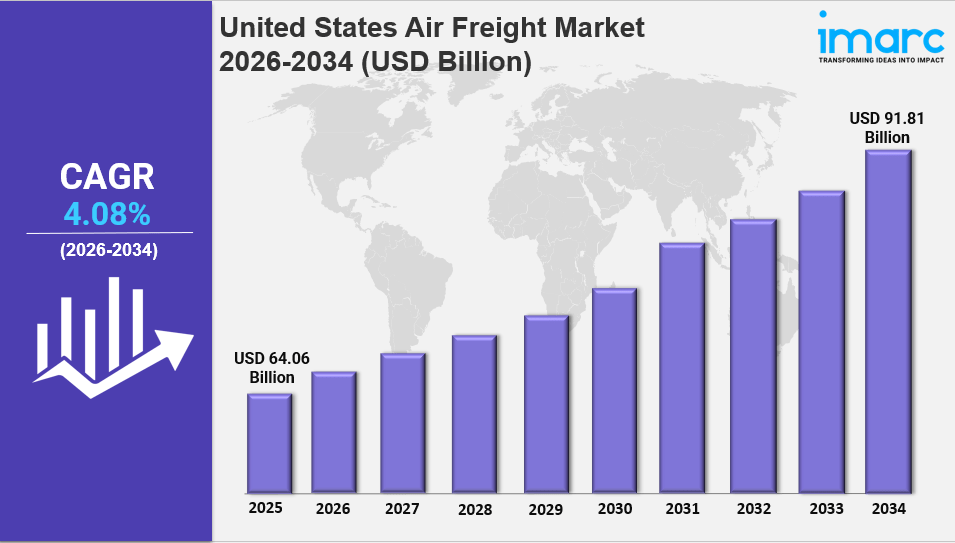
United States Air Freight Market Size, Share, Industry Trends, Growth and Forecast 2026-2034

United States Air Freight Market Size, Share, Industry Trends, Growth and Forecast 2026-2034

IMARC Group has recently released a new research study titled “United States Air Freight Market Size, Share, Trends and Forecast by Service, Destination, End User, and Region, 2026-2034”, offers a detailed analysis of the market drivers, segmentation, growth opportunities, trends and competitive landscape to understand the current and future market scenarios.

United States Air Freight Market Overview

The United States air freight market is witnessing steady growth, driven by the rising demand for fast, secure, and efficient cargo transportation across various industries. The market reached a value of USD 64.06 Billion in 2025 and is projected to grow to USD 91.81 Billion by 2034, expanding at a CAGR of 4.08% during 2026–2034.

Market growth is being supported by increasing demand from the pharmaceutical and healthcare sectors, which require reliable and time-sensitive logistics solutions. In addition, the rapid expansion of e-commerce and express delivery services has encouraged major retailers to invest in dedicated air cargo networks to enhance delivery speed and operational efficiency. The integration of advanced technologies, including artificial intelligence (AI) and the Internet of Things (IoT), is further improving supply chain visibility, optimizing logistics operations, and contributing to the overall expansion of the United States air freight market.

Key Market Statistics at a Glance

  • Base Year:  2025
  • Historical Years:  2020–2025
  • Forecast Period:  2026–2034
  • Market Size (2025):  USD 64.06 Billion
  • Projected Size (2034):  USD 91.81 Billion
  • Growth Rate:  CAGR of 4.08%
  • Leading Region:  South (Largest market share in 2025)

Explore Opportunities in the United States Air Freight Market: Download the IMARC Sample Report: https://www.imarcgroup.com/united-states-air-freight-market/requestsample

United States Air Freight Market: Key Trends Driving Industry Growth in 2026

According to the United States air freight market forecast, the industry is expected to witness sustained growth in 2026, supported by the increasing demand for rapid and reliable cargo transportation. One of the most significant trends shaping the market is the rising need for time-sensitive logistics services in the pharmaceutical and healthcare sectors. The transportation of vaccines, biologics, medical equipment, and other temperature-controlled products continues to drive demand for specialized air freight solutions that ensure speed, safety, and product integrity.

Another major trend influencing market growth is the continued expansion of e-commerce and express delivery services. Consumers increasingly expect faster shipping options, prompting retailers and logistics providers to invest in dedicated cargo fleets, advanced distribution centers, and integrated transportation networks. The growing popularity of same-day and next-day delivery services is creating new opportunities for air freight operators and strengthening the role of air cargo in modern supply chains.

Technological advancements and infrastructure improvements are also transforming the industry landscape. The adoption of artificial intelligence (AI), Internet of Things (IoT)-enabled tracking systems, automated cargo handling technologies, and digital logistics platforms is enhancing operational efficiency and shipment visibility. In addition, ongoing investments in airport expansion, cargo terminals, and warehousing facilities are improving freight capacity and supporting the long-term development of the United States air freight market.

Speak to An Analyst: https://www.imarcgroup.com/request?type=report&id=5496&flag=C

United States Air Freight Industry Segmentation

Analysis by Service

  • Freight: Conventional air cargo transportation services designed for large-volume shipments, providing dependable and efficient delivery solutions for manufacturers, distributors, and logistics providers.
  • Express: Premium air freight services focused on urgent and time-critical deliveries, offering faster transit times for high-value, perishable, and priority goods.
  • Email: Digital communication and documentation services that facilitate shipment booking, cargo tracking, customs processing, and coordination between freight stakeholders.
  • Others: Includes specialized air freight solutions such as temperature-controlled transportation, hazardous goods handling, charter cargo services, and customized logistics support.

Analysis by Destination

  • Domestic: Air freight operations conducted within the United States, connecting key commercial centers, industrial regions, airports, and distribution networks to support national trade and commerce.
  • International: Cross-border cargo transportation services that enable global trade by providing fast, secure, and reliable movement of goods between the United States and international markets.

Analysis by End User

  • Private: Individual consumers and small enterprises utilizing air freight services for personal shipments, e-commerce deliveries, and smaller-scale cargo transportation requirements.
  • Commercial: Large corporations, manufacturers, retailers, and logistics companies that depend on air freight services for bulk cargo movement, inventory management, and supply chain optimization.

Regional Analysis

  • Northeast: A leading air freight region driven by major international airports, dense population centers, strong industrial activity, and significant import-export operations.
  • Midwest: An important logistics and distribution hub supported by extensive manufacturing activity, strategic geographic positioning, and well-developed transportation infrastructure.
  • South: Experiencing rapid growth due to expanding industrial production, flourishing e-commerce operations, increasing foreign investment, and the presence of major cargo airports.
  • West: Characterized by substantial cargo volumes generated through international trade, particularly with Asia-Pacific countries, supported by major seaports, airports, and logistics centers.

Competitive Landscape

The competitive landscape of the United States air freight market is driven by factors such as service reliability, delivery speed, network coverage, fleet capacity, and technological innovation. Leading companies are increasingly leveraging AI-powered logistics platforms, IoT-enabled cargo tracking, predictive analytics, and automated warehousing systems to enhance operational efficiency and customer experience.

Strategic partnerships, infrastructure investments, and expansion of dedicated cargo fleets remain key growth strategies among market participants. As e-commerce volumes and international trade activities continue to rise, competition is expected to intensify, encouraging further innovation and service differentiation across the industry.

Key Market Players

  • FedEx Corporation – One of the largest air freight and express transportation providers globally, operating an extensive cargo aircraft fleet and offering integrated logistics, supply chain, and time-definite delivery services.
  • United Parcel Service, Inc. (UPS) – A leading logistics company with one of the world’s most comprehensive air cargo networks, providing domestic and international freight transportation, express delivery, and end-to-end supply chain solutions.
  • DHL International GmbH (DHL Express) – A major global logistics provider specializing in international express delivery and air freight services, recognized for its strong cross-border logistics capabilities and global distribution network.

Looking to expand, invest, or gain a competitive edge in the U.S. market? Explore IMARC Group’s comprehensive United States market research solutions and unlock data-driven insights for smarter business decisions:- https://www.imarcgroup.com/us-market-research

Author IMARC Group

IMARC Group is a leading global market research company providing data-driven insights and expert consulting services to businesses seeking to achieve their strategic objectives. With a multidisciplinary team of industry experts, IMARC delivers reliable market intelligence across sectors including Chemicals and Materials, Healthcare, Technology, Agriculture, and Retail.

Contact Us:

IMARC Group

Email: sales@imarcgroup.com

United States: +1-201971-6302

United States Data Center Market Size to Hit USD 116.9 Billion by 2034 | Growth at 8.81% CAGR

United States Data Center Market Size to Hit USD 116.9 Billion by 2034 | Growth at 8.81% CAGR

IMARC Group has recently released a new research study titled “United States Data Center Market Size, Share, Trends and Forecast by Component, Type, Enterprise Size, End User, and Region, 2026-2034”, offers a detailed analysis of the market drivers, segmentation, growth opportunities, trends and competitive landscape to understand the current and future market scenarios.

United States Data Center Market Size and Share 2026–2034

The United States data center market size was valued at USD 54.7 Billion in 2025. Looking forward, the market is projected to reach USD 116.9 Billion by 2034, exhibiting a CAGR of 8.81% during 2026–2034. The Market is primarily driven by the increasing adoption of cloud computing, rising demand for edge infrastructure, and the growing need for AI-powered workloads. Furthermore, expanding investments in advanced data center facilities, coupled with robust technological infrastructure and the strong presence of major cloud service providers, are significantly contributing to the growth and expansion of the United States Data Center Market share.

Key Market Statistics at a Glance

  • Base Year: 2025
  • Historical Years: 2020–2025
  • Forecast Period: 2026–2034
  • Market Size (2025): USD 54.7 Billion
  • Projected Size (2034): USD 116.9 Billion
  • Growth Rate: CAGR of 8.81%
  • Leading Segment: Hyperscale Data Centers

Get Insights on the United States Data Center Market: Access the IMARC Sample Report: https://www.imarcgroup.com/united-states-data-center-market/requestsample

Key Trends Shaping the United States Data Center Market in 2026

The United States Data Center Market in 2026 is witnessing significant transformation driven by rapid technological advancements and evolving enterprise requirements. The increasing adoption of hybrid and multi-cloud infrastructures is creating strong demand for scalable, flexible, and secure data center solutions. Additionally, the rising use of artificial intelligence (AI), machine learning, and high-performance computing (HPC) workloads is increasing the need for high-density facilities with advanced processing capabilities.

The expansion of 5G networks and Internet of Things (IoT) applications is further accelerating the development of edge data centers to support low-latency and real-time data processing. Moreover, leading hyperscale providers are expanding their data center footprint across the United States, contributing substantially to market growth. Sustainability is also emerging as a key focus area, with operators increasingly adopting renewable energy sources, advanced cooling systems, and energy-efficient technologies to minimize environmental impact and optimize operational efficiency.

Speak to An Analyst: https://www.imarcgroup.com/request?type=report&id=10535&flag=C

United States Data Center Market Segmentation

IMARC Group provides detailed segmentation analysis across component, type, enterprise size, end use industry, and region, with forecasts for 2026–2034.

Analysis by Component

  • Solution: Includes hardware, software, and infrastructure supporting data storage, processing, networking, and overall data center operations.
  • Services: Covers consulting, integration, maintenance, and managed services ensuring efficient performance and data center optimization.

Analysis by Type

  • Colocation: Shared facilities where businesses rent space, reducing costs while ensuring scalability, security, and operational efficiency.
  • Hyperscale: Large-scale data centers designed for massive workloads, supporting cloud computing, big data, and AI applications.
  • Edge: Decentralized facilities located near users, enabling low-latency processing for real-time applications and IoT systems.
  • Others: Includes enterprise-owned and modular data centers customized for specific operational and business requirements.

Analysis by Enterprise Size

  • Large Enterprises: Require high-capacity infrastructure to support complex operations, large datasets, and advanced digital transformation initiatives.
  • Small and Medium Enterprises: Adopt cost-effective cloud and colocation solutions for scalability, flexibility, and reduced infrastructure investments.

Analysis by End User

  • BFSI: Needs secure, reliable infrastructure for financial transactions, digital banking, and regulatory compliance requirements.
  • IT and Telecom: Major users due to increasing data traffic, cloud services, and network expansion across digital ecosystems.
  • Government: Uses data centers for public services, e-governance, data storage, and national digital infrastructure development.
  • Energy and Utilities: Supports smart grids, monitoring systems, and real-time data analytics for efficient energy management operations.
  • Others: Includes healthcare, retail, and education sectors requiring scalable, secure, and efficient data storage solutions.

Regional Analysis

  • Northeast: Leading region with strong financial sector presence and high demand for advanced data infrastructure solutions.
  • Midwest: Growing region due to cost advantages, availability of land, and increasing hyperscale data center investments.
  • South: Rapid expansion driven by favorable regulations, lower costs, and rising investments in digital infrastructure.
  • West: Dominates market due to major tech hubs, cloud providers, and high concentration of data center facilities.

United States Data Center Market Forecast

The United States Data Center Market is expected to witness robust and consistent growth through 2034, supported by ongoing digital transformation initiatives, increasing internet penetration, and the expanding adoption of AI-powered technologies. The demand for advanced and scalable data center infrastructure is anticipated to rise steadily as businesses continue shifting toward digital ecosystems.

Furthermore, the expansion of 5G networks, growing implementation of edge computing, and increasing investments in hyperscale facilities are expected to significantly strengthen United States Data Center Market growth in 2026 and beyond. However, factors such as increasing energy consumption, higher operational expenses, and evolving regulatory standards may present challenges to market expansion during the forecast period.

United States Data Center Market Challenges and Opportunities

The United States Data Center Market faces several challenges despite its strong growth potential. One of the major challenges is the high energy consumption associated with operating large-scale data centers, leading to increased electricity costs and environmental concerns. Rising operational expenses, including cooling infrastructure, maintenance, and land acquisition costs, also create pressure on market participants. Additionally, regulatory compliance related to data privacy, cybersecurity, and environmental standards can increase complexity for operators. Shortages of skilled workforce and supply chain constraints for critical components may further impact market development.

On the other hand, the market presents significant growth opportunities driven by rapid digital transformation across industries. The increasing adoption of cloud computing, artificial intelligence (AI), machine learning, and big data analytics is creating strong demand for advanced data center infrastructure. Expansion of 5G networks and edge computing solutions is opening new opportunities for localized and low-latency data processing facilities. Furthermore, growing investments in sustainable technologies, renewable energy integration, and energy-efficient cooling systems are expected to create long-term opportunities for innovation and market expansion.

Author IMARC Group

IMARC Group is a leading global market research company providing data-driven insights and expert consulting services to businesses seeking to achieve their strategic objectives. With a multidisciplinary team of industry experts, IMARC delivers reliable market intelligence across sectors including Chemicals and Materials, Healthcare, Technology, Agriculture, and Retail.

Contact Us:

IMARC Group

Email: sales@imarcgroup.com

United States: +1-201971-6302

United States Software Market Size to Reach USD 246,675.6  Million by 2034 | CAGR 3.86% Growth Outlook

United States Software Market Size to Reach USD 246,675.6 Million by 2034 | CAGR 3.86% Growth Outlook

IMARC Group has recently released a report titled “United States Software Market Report by Type (Application Software, System Infrastructure Software, Development and Deployment Software, Productivity Software), Deployment Mode (On-premises, Cloud-based), Enterprise Size (Small and Medium-sized Enterprises, Large Enterprises), Industry Vertical (IT and Telecom, BFSI, Retail, Government/Public Sector, Energy and Utilities, Healthcare, and Others), and Region 2026-2034”, providing a detailed analysis of market trends, competitive landscape, and regional dynamics.

United States Software Market Size and Share 2026–2034

The United States software market size reached USD 173,603.7 Million in 2025 and is projected to reach USD 246,675.6 Million by 2034, exhibiting a CAGR of 3.86% during 2026–2034. The market is experiencing steady growth driven by digital transformation and increasing adoption of advanced technologies across industries.

In 2026, the United States software market growth is supported by rising demand for solutions in remote healthcare, patient management, and medical data analysis. The healthcare sector is increasingly relying on software platforms to enhance efficiency, improve patient outcomes, and streamline operations. Additionally, the shift from traditional on-premises systems to cloud-based solutions is shaping key United States software market trends, offering scalability, flexibility, and cost efficiency for businesses.

Key Market Statistics at a Glance

  • Base Year: 2025
  • Historical Years: 2020–2025
  • Forecast Period: 2026–2034
  • Market Size (2025): USD 173,603.7 Million
  • Projected Size (2034): USD 246,675.6 Million
  • Growth Rate: CAGR of 3.86%

Get Insights on the United States Software Market: Access the IMARC Sample Report: https://www.imarcgroup.com/united-states-software-market/requestsample

United States Software Market Trends and Insights

The United States software market trends are evolving with the rapid adoption of cloud computing and ongoing digital transformation initiatives across industries. Organizations are increasingly shifting away from traditional legacy systems toward cloud-based platforms that offer greater flexibility, scalability, and real-time data access. This transition is helping businesses streamline operations, improve efficiency, and reduce infrastructure and maintenance costs.

In 2026, another major trend shaping the market is the growing adoption of low-code and no-code development platforms. These solutions enable businesses to build and deploy applications quickly without requiring extensive programming expertise. As a result, companies can accelerate innovation, reduce development timelines, and respond more effectively to changing business needs.

Furthermore, the integration of advanced technologies such as artificial intelligence (AI) and data analytics is significantly enhancing software capabilities. These technologies are enabling better decision-making, predictive insights, and automation of complex processes. Combined with continuous innovation and increasing enterprise adoption, these factors are strengthening the overall United States software market share and driving sustained growth.

Speak to An Analyst: https://www.imarcgroup.com/request?type=report&id=19069&flag=C

United States Software Market Segmentation Analysis

The United States software market is segmented based on deployment mode, enterprise size, application, end-user, and region.

Breakup by Type:

  • Application Software
    • Enterprise Resource Planning (ERP)
    • Customer Relationship Management (CRM)
    • Supply Chain Management (SCM)
    • Enterprise Collaboration Software
    • Enterprise Content Management (ECM) Software
    • Education Software
    • Others
  • System Infrastructure Software
    • Network Management Systems (NMS)
    • Storage Software
    • Security Software
  • Development and Deployment Software
    • Enterprise Data Management (EDM)
    • Business Analytics and Reporting Tools
    • Application Servers
    • Integration and Orchestration Middleware
    • Data Quality Tools
  • Productivity Software
    • Office Software
    • Creative Software
    • Others

Breakup by Deployment Mode:

  • On-premises
  • Cloud-based

Breakup by Enterprise Size:

  • Small and Medium-sized Enterprises
  • Large Enterprises

Breakup by Industry Vertical:

  • IT and Telecom
  • BFSI
  • Retail
  • Government/Public Sector
  • Energy and Utilities
  • Healthcare
  • Others

Breakup by Region:

  • Northeast
  • Midwest
  • South
  • West

United States Software Market Challenges & Opportunities

The United States software market faces challenges such as cybersecurity risks, data privacy concerns, and high implementation costs. Additionally, rapid technological changes require continuous innovation and investment.

However, the market offers significant opportunities driven by advancements in cloud computing, AI, and automation technologies. The increasing demand for digital solutions across industries, including healthcare and finance, is expected to create strong growth prospects. Companies focusing on innovation and scalable solutions are likely to gain a competitive advantage.

United States Software Market Competitive Landscape

The United States software market is highly competitive, with major players focusing on innovation, technological advancements, and strategic partnerships.

Companies are investing in cloud-based platforms, AI-driven solutions, and data analytics to strengthen their market presence. Mergers, acquisitions, and product innovation are key strategies to increase United States software market share.

Key Players in the Market

  • Microsoft: A leading provider of software solutions, cloud services, and enterprise applications.
  • Oracle: Offers database management systems and enterprise software solutions.
  • Salesforce: Specializes in customer relationship management (CRM) and cloud-based solutions.

United States Software Market Forecast 2026–2034

The outlook for the United States software market remains positive during the 2026–2034 period. Growth will be driven by increasing digital transformation, cloud adoption, and technological innovation.

The United States software market demand is expected to remain strong, supported by advancements in AI, analytics, and automation. In 2026, the market is already witnessing steady growth due to increased adoption of cloud-based and low-code platforms.

By 2034, the market is projected to reach USD 246,675.6 Million, with companies focusing on innovation, scalability, and efficiency to capture a larger United States software market share.

About Us:

IMARC Group is a leading global market research company providing data-driven insights and expert consulting services to businesses seeking to achieve their strategic objectives. With a multidisciplinary team of industry experts, IMARC delivers reliable market intelligence across sectors including Chemicals and Materials, Healthcare, Technology, Agriculture, and Retail.

Contact Us:

IMARC Group

Email: sales@imarcgroup.com

United States: +1-201971-6302

US Insurtech Market 2026: Size, Share, Industry Overview and Forecast to 2034

US Insurtech Market 2026: Size, Share, Industry Overview and Forecast to 2034

IMARC Group has recently released a new research study titled “US Insurtech Market Report by Type (Auto, Business, Health, Home, Specialty, Travel, and Others), Service (Consulting, Support and Maintenance, Managed Services), Technology (Blockchain, Cloud Computing, IoT, Machine Learning, Robo Advisory, and Others), and Region 2026-2034”, offers a detailed analysis of the market drivers, segmentation, growth opportunities, trends and competitive landscape to understand the current and future market scenarios.

US Insurtech Market Size & Trends

The US insurtech market size reached USD 2,699.1 Million in 2025. Looking forward, IMARC Group expects the market to reach USD 4,508.6 Million by 2034, exhibiting a CAGR of 5.69% during 2026–2034. The market is witnessing steady expansion due to the rapid evolution of advanced technologies such as artificial intelligence (AI), machine learning (ML), blockchain, and data analytics, which are transforming traditional insurance operations.

The US insurtech market growth is driven by the increasing adoption of digital platforms that enhance customer experience, streamline claims processing, and improve risk assessment. In addition, the rising demand for personalized insurance products and real-time services is significantly boosting the US insurtech market demand. The growing penetration of smartphones, digital ecosystems, and cloud-based solutions is further strengthening the US insurtech market share across various insurance segments.

Explore Growth Opportunities in the United States Insurtech Market – Grab IMARC Sample Report for evaluation: https://www.imarcgroup.com/us-insurtech-market/requestsample

Key Trends Shaping the US Insurtech Market in 2026

• Rising Adoption of AI and Automation

In 2026, insurers are increasingly integrating AI-driven tools for underwriting, fraud detection, and claims automation. These technologies are improving efficiency and accuracy, thereby expanding the US insurtech market share.

• Growth of Digital-First Insurance Platforms

The shift toward fully digital insurance platforms is transforming customer interactions. Online policy purchases, instant claims processing, and seamless onboarding are accelerating US insurtech market growth.

• Expansion of Usage-Based Insurance (UBI)

Usage-based insurance models, especially in auto insurance, are gaining traction. These models leverage telematics and data analytics, contributing significantly to US insurtech market demand.

• Increasing Investment in Blockchain Technology

Blockchain is being adopted to enhance transparency, security, and fraud prevention in insurance processes. This trend is driving innovation across the US insurtech market.

• Rising Demand for Personalized Insurance Products

Customers are seeking customized insurance solutions tailored to their specific needs. This demand is encouraging insurers to adopt advanced analytics, further strengthening the US insurtech market share.

Speak to An Analyst: https://www.imarcgroup.com/request?type=report&id=22150&flag=C

US Insurtech Market Report Segmentation

IMARC Group provides a detailed analysis of the market based on component, technology, application, end user, and region, with forecasts for 2026–2034.

Breakup by Type:

  • Auto
  • Business
  • Health
  • Home
  • Specialty
  • Travel
  • Others

The report provides a comprehensive breakup and analysis of the market based on type, including auto, business, health, home, specialty, travel, and other insurance segments.

Breakup by Service:

  • Consulting
  • Support and Maintenance
  • Managed Services

The report also presents a detailed breakup and analysis of the market based on services, including consulting, support and maintenance, and managed services.

Breakup by Technology:

  • Blockchain
  • Cloud Computing
  • IoT
  • Machine Learning
  • Robo Advisory
  • Others

The report provides a comprehensive breakup and analysis of the market based on technology, including blockchain, cloud computing, IoT, machine learning, robo-advisory, and other emerging technologies.

Breakup by Region:

  • Northeast
  • Midwest
  • South
  • West

The report also offers a comprehensive analysis of the key regional markets, including the Northeast, Midwest, South, and West.

United States Insurtech Market Outlook (2026–2034)

The US insurtech market outlook for 2026–2034 is highly positive, supported by rapid advancements in digital technologies and increasing adoption of innovative insurance solutions. Technologies such as artificial intelligence (AI), machine learning (ML), blockchain, and data analytics are transforming traditional insurance models, improving efficiency in underwriting, claims processing, and risk management. These developments are significantly contributing to sustained US insurtech market growth across the country.

In addition, the rising preference for personalized, flexible, and on-demand insurance products is driving the US insurtech market demand. Consumers are increasingly shifting toward digital platforms that offer seamless policy management, faster claim settlements, and enhanced customer experience. The growing popularity of usage-based insurance and mobile-first insurance services is further strengthening the US insurtech market share, particularly among tech-savvy and younger demographics.

Furthermore, increasing investments in insurtech startups and strategic collaborations between insurers and technology providers are expected to unlock new opportunities in the market. While challenges such as data security concerns and regulatory complexities persist, continuous innovation and supportive digital infrastructure are likely to sustain long-term US insurtech market growth during the forecast period.

Frequently Asked Questions About This Report

  1. How big is the U.S. insurtech market?
    The US insurtech market was valued at USD 2,699.1 Million in 2025.
  2. What is the US insurtech market growth rate?
    The market is projected to grow at a CAGR of 5.69% during 2026–2034.
  3. What is driving the US insurtech market demand?
    Key drivers include digital transformation, AI adoption, demand for personalized insurance, and improved customer experience.
  4. Which technologies are shaping the US insurtech market?
    AI, machine learning, blockchain, cloud computing, and big data analytics are the primary technologies.
  5. What is the US insurtech market outlook?
    The outlook is positive, driven by innovation, increasing investments, and growing digital adoption across the insurance industry.

Author IMARC Group

IMARC Group is a leading global market research company providing data-driven insights and expert consulting services to businesses seeking to achieve their strategic objectives. With a multidisciplinary team of industry experts, IMARC delivers reliable market intelligence across sectors including Chemicals and Materials, Healthcare, Technology, Agriculture, and Retail.

Contact Us:

IMARC Group

Email: sales@imarcgroup.com

United States: +1-201971-6302

United States Commercial Real Estate Market Size to Hit USD 995.6 Billion by 2034 | Growth at 3.32% CAGR

United States Commercial Real Estate Market Size to Hit USD 995.6 Billion by 2034 | Growth at 3.32% CAGR

IMARC Group has recently released a report titled “United States Commercial Real Estate Market Size, Share, Trends and Forecast by Type and Region, 2026-2034”, providing a detailed analysis of market trends, competitive landscape, and regional dynamics.

United States Commercial Real Estate Market Size and Share 2026–2034

The United States commercial real estate market was valued at USD 742.3 Billion in 2025 and is projected to reach USD 995.6 Billion by 2034, growing at a CAGR of 3.32% during 2026–2034. This steady expansion is driven by overall economic growth, rapid urbanization, and increasing demand for diverse commercial spaces across the country.

In 2026, market growth is being fueled by rising investments in office buildings, retail centers, industrial properties, and logistics infrastructure. The continued expansion of e-commerce is significantly boosting demand for warehousing and distribution facilities. Additionally, trends such as flexible workspaces and mixed-use developments are gaining traction, further contributing to the growth and transformation of the United States commercial real estate market.

Key Market Statistics at a Glance

  • Base Year: 2025
  • Historical Years: 2020–2025
  • Forecast Period: 2026–2034
  • Market Size (2025): USD 742.3 Billion
  • Projected Size (2034): USD 995.6 Billion
  • Growth Rate: CAGR of 3.32%

Explore Opportunities in the United States Commercial Real Estate Market: Download the IMARC Sample Report: https://www.imarcgroup.com/united-states-commercial-real-estate-market/requestsample

United States Commercial Real Estate Market Trends and Insights

The United States commercial real estate market is undergoing significant transformation, driven by shifting workplace dynamics and rapid digital adoption. Demand for flexible office spaces, co-working environments, and hybrid work models is reshaping the office segment, as businesses adapt to new ways of working. Companies are prioritizing agility and cost-efficiency, leading to increased interest in shared and flexible workspace solutions.

At the same time, the continued growth of e-commerce is fueling strong demand for industrial and logistics properties. Warehouses, distribution centers, and fulfillment hubs are becoming critical assets as companies expand their supply chain networks to meet rising consumer expectations for faster deliveries. This trend is particularly strengthening the industrial real estate segment across the United States.

Another key development in 2026 is the growing emphasis on sustainability and smart building technologies. Developers are investing in energy-efficient infrastructure, green building certifications, and advanced property management systems to enhance performance and tenant appeal. Additionally, the rise of mixed-use development integrating residential, commercial, and recreational spaces is further supporting market expansion and increasing overall market share.

Speak to An Analyst: https://www.imarcgroup.com/request?type=report&id=20946&flag=C

United States Commercial Real Estate Market Segmentation Analysis

The United States commercial real estate market is segmented based on property type, investment type, end-user, and region.

Breakup by Type:

  • Offices: Demand driven by corporate spaces, flexible work environments, and evolving hybrid workplace models.
  • Retail: Includes malls and stores, influenced by consumer spending and e-commerce competition.
  • Industrial: Growth fueled by manufacturing activities and rising demand for storage facilities.
  • Logistics: Rapid expansion due to e-commerce growth and need for efficient distribution networks.
  • Multi-Family: Strong demand for rental housing driven by urbanization and population growth.
  • Hospitality: Includes hotels and resorts, supported by tourism and business travel recovery.

Breakup by Region:

  • Northeast: High demand driven by financial hubs, urbanization, and premium commercial properties.
  • Midwest: Stable growth supported by industrial base and affordable real estate opportunities.
  • South: Fastest-growing region due to population growth and business-friendly environment.
  • West: Strong demand driven by technology sector and innovation-led commercial developments.

United States Commercial Real Estate Market Challenges & Opportunities

The United States commercial real estate market is facing several challenges, including fluctuating interest rates, economic uncertainty, and evolving workplace trends. The increasing adoption of remote and hybrid work models has reduced demand for traditional office spaces, prompting property owners to rethink utilization strategies and adapt to changing tenant needs.

Despite these challenges, the market presents strong growth opportunities. The rapid expansion of e-commerce is driving demand for logistics infrastructure such as warehouses and distribution centers. Additionally, advancements in smart building technologies, along with a growing emphasis on sustainability, urban redevelopment, and mixed-use developments, are creating new avenues for growth. Companies that embrace innovation and digital transformation are well-positioned to gain a competitive edge in this evolving market.

United States Commercial Real Estate Market Competitive Landscape

The United States commercial real estate market is highly competitive, with major players focusing on portfolio diversification, strategic investments, and the adoption of innovative technologies to enhance their market position. Companies are actively adapting to evolving market dynamics by optimizing asset performance and exploring new growth avenues.

Key industry participants are investing in premium properties, sustainable developments, and advanced property management solutions to improve efficiency and tenant experience. In addition, strategies such as partnerships, mergers and acquisitions, and expansion into high-growth regions are being widely adopted to strengthen market share and maintain a competitive edge.

Key Players in the Market

  • CBRE Group: Leading provider of property management, investment, and advisory services across multiple commercial real estate sectors.
  • JLL: Offers real estate investment and management services with strong focus on innovation, technology, and sustainability initiatives.
  • Brookfield Asset Management: Specializes in large-scale real estate investments, emphasizing diversified portfolios and long-term value creation strategies.

United States Commercial Real Estate Market Forecast 2026–2034

The outlook for the United States commercial real estate market remains optimistic throughout the 2026–2034 period, supported by rising investments, ongoing urban development, and evolving business requirements. As companies adapt to changing economic conditions and workplace trends, demand for diverse and flexible commercial spaces is expected to remain strong.

Market demand will continue to be driven by technological advancements and the expansion of industrial and logistics sectors. In 2026, the market is already experiencing steady growth, fueled by increasing interest in flexible workspaces, sustainable buildings, and modern infrastructure that aligns with tenant expectations.

By 2034, the market is projected to reach USD 995.6 billion, with companies increasingly focusing on innovation, sustainability, and strategic investments to strengthen their competitive position and capture a larger share of the United States commercial real estate market.

Author IMARC Group

IMARC Group is a leading global market research company providing data-driven insights and expert consulting services to businesses seeking to achieve their strategic objectives. With a multidisciplinary team of industry experts, IMARC delivers reliable market intelligence across sectors including Chemicals and Materials, Healthcare, Technology, Agriculture, and Retail.

Contact Us:

IMARC Group

Email: sales@imarcgroup.com

United States: +1-201971-6302

Mexico E-Bike Battery Market Size Worth $336.85 Million by 2034, with a CAGR of 9.94%

Mexico E-Bike Battery Market Size Worth $336.85 Million by 2034, with a CAGR of 9.94%

IMARC Group has recently released a new research study titled “Mexico E-Bike Battery Market Size, Share, Trends and Forecast by Battery Type, Battery Pack Position Type, and Region, 2026-2034”, offers a detailed analysis of the market drivers, segmentation, growth opportunities, trends and competitive landscape to understand the current and future market scenarios.

Mexico E-Bike Battery Market Overview 2026

The Mexico e-bike battery market focuses on the manufacturing and distribution of batteries that power electric bicycles. It includes a range of battery technologies such as lithium-ion, lead-acid, and nickel-based batteries, serving diverse e-bike categories like urban commuting, mountain biking, and cargo transport. The increasing shift toward sustainable transportation and environmentally friendly mobility solutions is playing a key role in driving the demand for e-bike batteries across Mexico.

As per industry analysis, the market was valued at USD 143.61 Million in 2025 and is expected to reach USD 336.85 Million by 2034, growing at a CAGR of 9.94% during the forecast period from 2026 to 2034. This growth is supported by the rising popularity of e-bikes, growing environmental consciousness, and continuous advancements in electric mobility infrastructure throughout the country.

Key Highlights of the Market

  • Rapid urbanization is driving the need for efficient and sustainable mobility solutions across Mexico
  • Increasing environmental awareness is boosting the adoption of eco-friendly transportation options such as e-bikes
  • Government initiatives promoting sustainable mobility are supporting overall market growth
  • Lithium-ion batteries dominate due to their high energy density, longer lifespan, and lightweight characteristics
  • Continuous advancements in battery technology and charging infrastructure are encouraging broader e-bike adoption

Get Insights on the Mexico E-Bike Battery Market: Access the IMARC Sample Report: https://www.imarcgroup.com/mexico-e-bike-battery-market/requestsample

Mexico E-Bike Battery Market Growth Drivers and Trends

The rising demand for electric bicycles is a major factor driving the growth of the Mexico e-bike battery market. E-bikes offer a practical, affordable, and environmentally friendly mode of transportation, especially in urban areas facing increasing traffic congestion. Consumers are increasingly adopting e-bikes for daily commuting, recreational use, and short-distance travel, which is boosting the demand for advanced batteries that deliver longer range, improved efficiency, and faster charging capabilities.

Government support for sustainable transportation and initiatives to reduce carbon emissions are further accelerating market expansion. Rapid urbanization, coupled with worsening traffic conditions in major cities, is encouraging individuals to shift toward electric mobility solutions. As e-bike adoption continues to rise, the need for durable, high-performance, and reliable battery systems is expected to grow significantly across the country.

At the same time, the increasing preference for lithium-ion batteries is emerging as a key trend in the market. These batteries dominate due to their superior energy density, lightweight design, extended lifespan, and quick charging features compared to traditional battery types. Continuous advancements in battery technology, along with expanding charging infrastructure and ongoing research and development efforts, are further enhancing battery performance, safety, and accessibility, making e-bikes a more convenient and attractive option for everyday use in Mexico.

Get Customized Segmentation Intelligence — Speak Directly to Our Expert: https://www.imarcgroup.com/request?type=report&id=35362&flag=C

Mexico E-Bike Battery Market Segmentation

The Mexico e-bike battery market is segmented based on battery type, battery pack position, and region, reflecting diverse consumer preferences and technological developments.

Breakup by Battery Type:

  • Lithium-Ion Battery: Dominates due to lightweight design, high energy density, longer lifespan, and fast charging capability.
  • Lead Acid Battery: Lower-cost alternative but heavier with shorter lifespan and lower energy efficiency.
  • Others: Includes nickel-based and emerging battery technologies used in specific e-bike models.

Breakup by Battery Pack Position Type:

  • Rear Carrier: Battery mounted on rear rack, common in commuter e-bikes with balanced weight distribution.
  • Down Tube: Integrated along the frame tube, improving bike stability and modern aesthetic design.
  • In Frame: Fully embedded within the bike frame, offering enhanced protection and streamlined appearance.

Regional Analysis:

  • Northern Mexico: Growing adoption due to urban mobility demand and infrastructure development.
  • Central Mexico: Largest share driven by dense urban population and higher e-bike usage.
  • Southern Mexico: Gradual growth supported by improving transportation alternatives and eco-friendly initiatives.
  • Others: Includes emerging regional markets with increasing interest in electric mobility solutions.

Mexico E-Bike Battery Market Challenges and Opportunities

Challenges:

  • High initial cost of advanced batteries, particularly lithium-ion, making e-bike adoption more expensive
  • Elevated battery prices contributing to the overall higher cost of electric bicycles for consumers
  • Limited charging infrastructure in smaller cities and rural areas
  • Range anxiety among users due to insufficient availability of charging stations
  • Environmental concerns related to battery recycling and safe disposal practices

Opportunities:

  • Increasing investments in battery technology to reduce costs and improve efficiency
  • Expansion of charging infrastructure across urban and semi-urban regions
  • Growing government support for sustainable mobility and clean energy initiatives
  • Rising consumer awareness about eco-friendly transportation options
  • Development of advanced recycling solutions and circular economy practices for batteries

Competitive Landscape and Key Players in the Mexico E-Bike Battery Market

The Mexico e-bike battery market is characterized by strong competition, with both international and regional companies striving to enhance their market presence. Leading players are focusing on innovation, improving battery performance, and forming strategic partnerships with e-bike manufacturers. Significant investments in research and development are enabling companies to deliver batteries with higher energy density, longer lifespan, and faster charging capabilities. These efforts are helping businesses strengthen their competitive positioning while meeting the evolving demand for efficient and sustainable mobility solutions.

Key Players in the Mexico E-Bike Battery Market

  • Panasonic Corporation: A prominent player in the global battery industry, Panasonic is known for its high-quality lithium-ion batteries. The company focuses on advanced energy storage solutions, offering reliable and durable batteries widely used in electric mobility applications, including e-bikes.
  • Samsung SDI: Samsung SDI specializes in cutting-edge battery technologies, particularly lithium-ion batteries with high energy density and safety standards. Its continuous innovation and strong R&D capabilities make it a key contributor to the e-bike battery ecosystem.
  • LG Energy Solution: LG Energy Solution is a leading manufacturer of advanced battery systems, providing high-performance and long-lasting lithium-ion batteries. The company emphasizes technological advancement and sustainability, supporting the growth of electric mobility worldwide.
  • BYD Company Ltd.: BYD is a major global player in electric mobility and battery production. Known for its vertically integrated operations, the company produces a wide range of battery solutions, including those for e-bikes, focusing on affordability, safety, and scalability.

Mexico E-Bike Battery Market Future Outlook

The Mexico e-bike battery market is poised for strong growth in the coming years, supported by rapid urbanization, rising environmental awareness, and the increasing demand for sustainable transportation solutions. As cities continue to expand and traffic congestion worsens, more consumers are shifting toward e-bikes as a convenient, cost-effective, and eco-friendly mobility alternative.

Advancements in battery technology are expected to play a crucial role in shaping the market’s future, with improvements in energy density, charging speed, and overall battery lifespan enhancing the performance of e-bikes. At the same time, the expansion of charging infrastructure and the implementation of supportive government policies are creating a favorable environment for market growth.

With growing consumer awareness and wider adoption of electric mobility, the Mexico e-bike battery market is anticipated to witness significant expansion throughout the forecast period from 2026 to 2034, offering substantial opportunities for manufacturers, technology providers, and investors.

Author IMARC Group

IMARC Group is a leading global market research company providing data-driven insights and expert consulting services to businesses seeking to achieve their strategic objectives. With a multidisciplinary team of industry experts, IMARC delivers reliable market intelligence across sectors including Chemicals and Materials, Healthcare, Technology, Agriculture, and Retail.

Contact Us:

IMARC Group

Email: sales@imarcgroup.com

United States: +1-201971-6302

United States Dental Implants Market Size to Expand to USD 2.3 Billion by 2034

United States Dental Implants Market Size to Expand to USD 2.3 Billion by 2034

IMARC Group has recently released a report titled “United States Dental Implants Market Report by Material (Titanium Dental Implants, Zirconium Dental Implants), Product (Endosteal Implants, Subperiosteal Implants, Transosteal Implants, Intramucosal Implants), End Use (Hospitals, Dental Clinics, Academic and Research Institutes, and Others), and Region 2026-2034”, providing a detailed analysis of market trends, competitive landscape, and regional dynamics.

United States Dental Implants Market Size and Share 2026–2034

The United States dental implants market size reached USD 1.4 Billion in 2025 and is projected to reach USD 2.3 Billion by 2034, exhibiting a CAGR of 5.76% during 2026–2034. The market is experiencing steady growth driven by rising demand for advanced dental treatments and aesthetic procedures.

In 2026, the United States dental implants market growth is supported by the increasing geriatric population and the rising prevalence of dental disorders such as tooth loss and periodontal diseases. Growing awareness about oral health and the benefits of dental implants over traditional dentures is shaping key United States dental implants market trends. Additionally, advancements in implant technologies and materials are enhancing treatment outcomes and patient satisfaction, further driving market expansion.

Key Market Statistics at a Glance

  • Base Year: 2025
  • Historical Years: 2020–2025
  • Forecast Period: 2026–2034
  • Market Size (2025): USD 1.4 Billion
  • Projected Size (2034): USD 2.3 Billion
  • Growth Rate: CAGR of 5.76%

Analyze the United States Dental Implants Market: Download the IMARC Sample Report for Insights: https://www.imarcgroup.com/united-states-dental-implants-market/requestsample

United States Dental Implants Market Trends and Insights

The United States dental implants market trends are evolving with a growing emphasis on aesthetic dentistry and minimally invasive procedures. Patients are increasingly seeking durable, natural-looking tooth replacement solutions that offer both functionality and improved appearance. This shift in consumer preference is significantly driving the adoption of dental implants across various age groups.

In 2026, technological advancements are playing a crucial role in shaping the market landscape. Innovations such as 3D imaging, digital dentistry, and CAD/CAM systems are enhancing precision, reducing treatment time, and improving overall patient outcomes. These technologies are enabling dental professionals to deliver more efficient and customized solutions, thereby increasing patient satisfaction and treatment success rates.

Additionally, the rising popularity of dental tourism and improving healthcare accessibility are further contributing to market growth. Patients are exploring cost-effective treatment options, while healthcare providers are expanding services to meet increasing demand. These factors, combined with growing awareness about oral health, are significantly strengthening the overall United States dental implants market share.

Get Customized Segmentation Intelligence — Speak Directly to Our Expert: https://www.imarcgroup.com/request?type=report&id=2653&flag=C

United States Dental Implants Market Segmentation Analysis

The United States dental implants market is segmented based on material, product type, end-user, and region.

Breakup by Material:

  • Titanium Dental Implants: Widely used due to strength, durability, and excellent biocompatibility with bone tissue.
  • Zirconium Dental Implants: Metal-free option preferred for aesthetics and reduced risk of allergic reactions.

Breakup by Product:

  • Endosteal Implants: Most common type placed directly into the jawbone for strong support.
  • Subperiosteal Implants: Positioned under the gum but above the jawbone for patients with low bone density.
  • Transosteal Implants: Pass through the jawbone, typically used in complex or severe cases.
  • Intramucosal Implants: Used to stabilize dentures by attaching them directly to the gum tissue.

Breakup by End Use:

  • Hospitals: Provide advanced dental procedures with integrated healthcare services and infrastructure.
  • Dental Clinics: Largest segment offering specialized dental treatments and implant procedures.
  • Academic and Research Institutes: Focus on innovation, training, and development of advanced dental technologies.
  • Others: Includes specialized care centers and private practices.

Breakup by Region:

  • Northeast: High demand driven by advanced healthcare systems and higher patient awareness.
  • Midwest: Steady growth supported by improving dental care accessibility.
  • South: Largest market due to population size and increasing dental treatments.
  • West: Strong demand driven by cosmetic dentistry trends and technological adoption.

United States Dental Implants Market Challenges & Opportunities

The United States dental implants market faces challenges such as high treatment costs, limited insurance coverage, and regulatory complexities. Additionally, lack of awareness in certain regions can hinder market growth.

However, the market offers significant opportunities driven by technological advancements, increasing demand for cosmetic dentistry, and rising healthcare awareness. The development of cost-effective implant solutions and expansion of dental services are expected to create strong growth prospects. Companies focusing on innovation and patient-centric solutions are likely to gain a competitive advantage.

United States Dental Implants Market Competitive Landscape

The United States dental implants market is highly competitive, with key players focusing on innovation, product development, and expanding their distribution networks.

Companies are investing in advanced implant technologies, digital dentistry solutions, and strategic partnerships to strengthen their market presence. Product innovation and expansion into new markets are key strategies to increase United States dental implants market share.

Key Players in the Market

  • Straumann Group: A leading provider of dental implant systems, focusing on innovation and advanced dental solutions.
  • Dentsply Sirona: Offers a wide range of dental products, including implants and digital dentistry solutions.
  • Zimmer Biomet: Provides dental implant systems and focuses on advanced medical technologies.

United States Dental Implants Market Forecast 2026–2034

The outlook for the United States dental implants market remains positive during the 2026–2034 period. Growth will be driven by increasing demand for aesthetic dentistry, technological advancements, and rising healthcare awareness.

The United States dental implants market demand is expected to remain strong, supported by innovation and expanding dental care services. In 2026, the market is already witnessing steady growth due to increased adoption of advanced dental procedures.

By 2034, the market is projected to reach USD 2.3 Billion, with companies focusing on innovation, affordability, and patient satisfaction to capture a larger United States dental implants market share.

Author IMARC Group

IMARC Group is a leading global market research company providing data-driven insights and expert consulting services to businesses seeking to achieve their strategic objectives. With a multidisciplinary team of industry experts, IMARC delivers reliable market intelligence across sectors including Chemicals and Materials, Healthcare, Technology, Agriculture, and Retail.

Contact Us:

IMARC Group

Email: sales@imarcgroup.com

United States: +1-201971-6302