United States Dental Implants Market Size to Expand to USD 2.3 Billion by 2034

United States Dental Implants Market Size to Expand to USD 2.3 Billion by 2034

IMARC Group has recently released a report titled “United States Dental Implants Market Report by Material (Titanium Dental Implants, Zirconium Dental Implants), Product (Endosteal Implants, Subperiosteal Implants, Transosteal Implants, Intramucosal Implants), End Use (Hospitals, Dental Clinics, Academic and Research Institutes, and Others), and Region 2026-2034”, providing a detailed analysis of market trends, competitive landscape, and regional dynamics.

United States Dental Implants Market Size and Share 2026–2034

The United States dental implants market size reached USD 1.4 Billion in 2025 and is projected to reach USD 2.3 Billion by 2034, exhibiting a CAGR of 5.76% during 2026–2034. The market is experiencing steady growth driven by rising demand for advanced dental treatments and aesthetic procedures.

In 2026, the United States dental implants market growth is supported by the increasing geriatric population and the rising prevalence of dental disorders such as tooth loss and periodontal diseases. Growing awareness about oral health and the benefits of dental implants over traditional dentures is shaping key United States dental implants market trends. Additionally, advancements in implant technologies and materials are enhancing treatment outcomes and patient satisfaction, further driving market expansion.

Key Market Statistics at a Glance

  • Base Year: 2025
  • Historical Years: 2020–2025
  • Forecast Period: 2026–2034
  • Market Size (2025): USD 1.4 Billion
  • Projected Size (2034): USD 2.3 Billion
  • Growth Rate: CAGR of 5.76%

Analyze the United States Dental Implants Market: Download the IMARC Sample Report for Insights: https://www.imarcgroup.com/united-states-dental-implants-market/requestsample

United States Dental Implants Market Trends and Insights

The United States dental implants market trends are evolving with a growing emphasis on aesthetic dentistry and minimally invasive procedures. Patients are increasingly seeking durable, natural-looking tooth replacement solutions that offer both functionality and improved appearance. This shift in consumer preference is significantly driving the adoption of dental implants across various age groups.

In 2026, technological advancements are playing a crucial role in shaping the market landscape. Innovations such as 3D imaging, digital dentistry, and CAD/CAM systems are enhancing precision, reducing treatment time, and improving overall patient outcomes. These technologies are enabling dental professionals to deliver more efficient and customized solutions, thereby increasing patient satisfaction and treatment success rates.

Additionally, the rising popularity of dental tourism and improving healthcare accessibility are further contributing to market growth. Patients are exploring cost-effective treatment options, while healthcare providers are expanding services to meet increasing demand. These factors, combined with growing awareness about oral health, are significantly strengthening the overall United States dental implants market share.

Get Customized Segmentation Intelligence — Speak Directly to Our Expert: https://www.imarcgroup.com/request?type=report&id=2653&flag=C

United States Dental Implants Market Segmentation Analysis

The United States dental implants market is segmented based on material, product type, end-user, and region.

Breakup by Material:

  • Titanium Dental Implants: Widely used due to strength, durability, and excellent biocompatibility with bone tissue.
  • Zirconium Dental Implants: Metal-free option preferred for aesthetics and reduced risk of allergic reactions.

Breakup by Product:

  • Endosteal Implants: Most common type placed directly into the jawbone for strong support.
  • Subperiosteal Implants: Positioned under the gum but above the jawbone for patients with low bone density.
  • Transosteal Implants: Pass through the jawbone, typically used in complex or severe cases.
  • Intramucosal Implants: Used to stabilize dentures by attaching them directly to the gum tissue.

Breakup by End Use:

  • Hospitals: Provide advanced dental procedures with integrated healthcare services and infrastructure.
  • Dental Clinics: Largest segment offering specialized dental treatments and implant procedures.
  • Academic and Research Institutes: Focus on innovation, training, and development of advanced dental technologies.
  • Others: Includes specialized care centers and private practices.

Breakup by Region:

  • Northeast: High demand driven by advanced healthcare systems and higher patient awareness.
  • Midwest: Steady growth supported by improving dental care accessibility.
  • South: Largest market due to population size and increasing dental treatments.
  • West: Strong demand driven by cosmetic dentistry trends and technological adoption.

United States Dental Implants Market Challenges & Opportunities

The United States dental implants market faces challenges such as high treatment costs, limited insurance coverage, and regulatory complexities. Additionally, lack of awareness in certain regions can hinder market growth.

However, the market offers significant opportunities driven by technological advancements, increasing demand for cosmetic dentistry, and rising healthcare awareness. The development of cost-effective implant solutions and expansion of dental services are expected to create strong growth prospects. Companies focusing on innovation and patient-centric solutions are likely to gain a competitive advantage.

United States Dental Implants Market Competitive Landscape

The United States dental implants market is highly competitive, with key players focusing on innovation, product development, and expanding their distribution networks.

Companies are investing in advanced implant technologies, digital dentistry solutions, and strategic partnerships to strengthen their market presence. Product innovation and expansion into new markets are key strategies to increase United States dental implants market share.

Key Players in the Market

  • Straumann Group: A leading provider of dental implant systems, focusing on innovation and advanced dental solutions.
  • Dentsply Sirona: Offers a wide range of dental products, including implants and digital dentistry solutions.
  • Zimmer Biomet: Provides dental implant systems and focuses on advanced medical technologies.

United States Dental Implants Market Forecast 2026–2034

The outlook for the United States dental implants market remains positive during the 2026–2034 period. Growth will be driven by increasing demand for aesthetic dentistry, technological advancements, and rising healthcare awareness.

The United States dental implants market demand is expected to remain strong, supported by innovation and expanding dental care services. In 2026, the market is already witnessing steady growth due to increased adoption of advanced dental procedures.

By 2034, the market is projected to reach USD 2.3 Billion, with companies focusing on innovation, affordability, and patient satisfaction to capture a larger United States dental implants market share.

Author IMARC Group

IMARC Group is a leading global market research company providing data-driven insights and expert consulting services to businesses seeking to achieve their strategic objectives. With a multidisciplinary team of industry experts, IMARC delivers reliable market intelligence across sectors including Chemicals and Materials, Healthcare, Technology, Agriculture, and Retail.

Contact Us:

IMARC Group

Email: sales@imarcgroup.com

United States: +1-201971-6302
United States Sneaker Market 2026: Size, Share, Industry Overview and Forecast to 2034

United States Sneaker Market 2026: Size, Share, Industry Overview and Forecast to 2034

United States Sneaker Market Size and Share 2026–2034

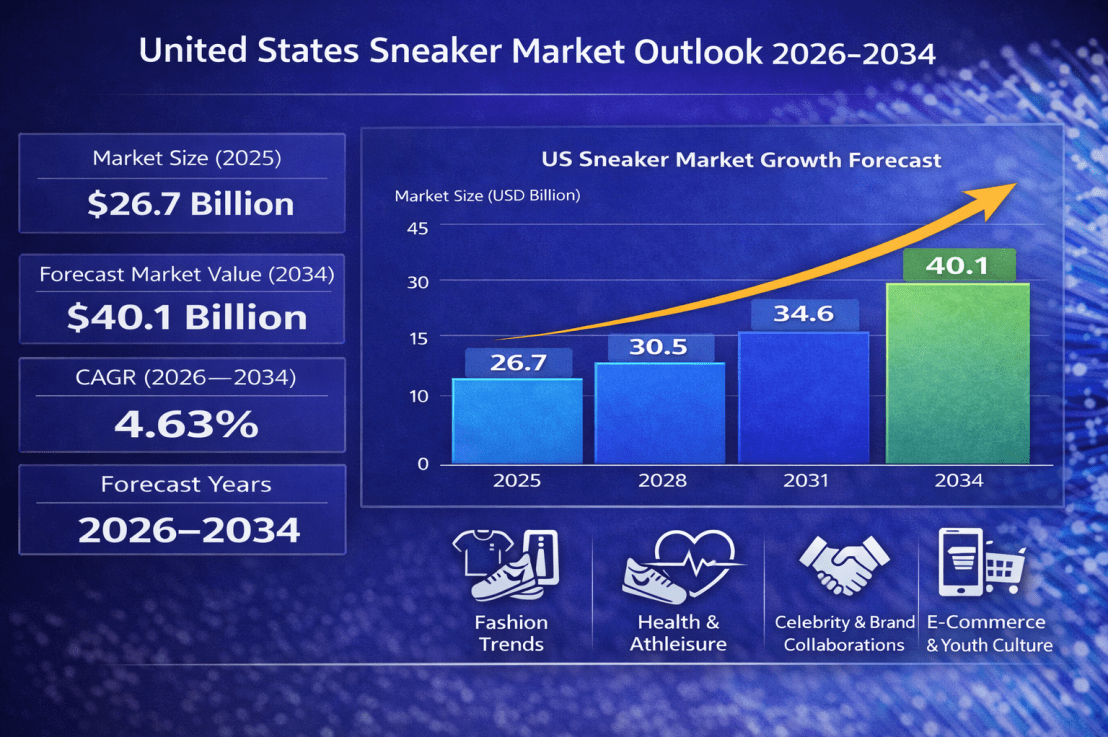
The United States sneaker market size was valued at USD 26.7 Billion in 2025 and is projected to reach USD 40.1 Billion by 2034, exhibiting a CAGR of 4.63% during 2026–2034. The market is experiencing steady growth driven by evolving fashion preferences and increasing demand for comfortable footwear.

In 2026, the United States sneaker market growth is gaining momentum as consumers increasingly adopt casual and athleisure styles. Sneakers are no longer limited to sportswear but have become a key fashion statement across all age groups. The rising focus on fitness and health consciousness is also encouraging consumers to invest in high-quality and performance-oriented footwear. Additionally, collaborations between brands, celebrities, and athletes are shaping key United States sneaker market trends, boosting product visibility and demand.

Key Market Statistics at a Glance

  • Base Year: 2025
  • Historical Years: 2020–2025
  • Forecast Period: 2026–2034
  • Market Size (2025): USD 26.7 Billion
  • Projected Size (2034): USD 40.1 Billion
  • Growth Rate: CAGR of 4.63%

Explore Growth Opportunities in the United States Sneaker Market – Grab IMARC Sample Report for evaluation: https://www.imarcgroup.com/united-states-sneaker-market/requestsample

United States Sneaker Market Trends and Insights

The United States sneaker market trends are increasingly shaped by the strong influence of fashion, lifestyle, and sports culture. Sneakers have evolved from being purely functional athletic footwear to becoming a key element of everyday style. Their comfort, versatility, and ability to complement casual and athleisure outfits have made them a preferred choice among consumers, particularly younger demographics who prioritize both style and practicality.

In 2026, another prominent trend is the growing impact of sneaker culture and limited-edition releases. Consumers are highly attracted to exclusive drops, collaborations with celebrities and athletes, and collectible designs that offer uniqueness and status. This trend is fueling demand for premium and high-value sneakers, with many buyers viewing them as both fashion statements and investment pieces.

Additionally, the rapid expansion of e-commerce platforms is transforming how sneakers are marketed and sold. Online channels provide consumers with easy access to a wide variety of brands, styles, and limited releases, often accompanied by personalized recommendations and seamless shopping experiences. This shift toward digital retail, combined with ongoing innovation and brand collaborations, is significantly strengthening the overall United States sneaker market share.

Get Customized Segmentation Intelligence — Speak Directly to Our Expert: https://www.imarcgroup.com/request?type=report&id=20404&flag=C

United States Sneaker Market Segmentation Analysis

The United States sneaker market is segmented based on product type, distribution channel, end-user, and region.

Analysis by Product Type:

  • Low-Top Sneakers: Lightweight and versatile sneakers ideal for everyday casual wear and comfort.
  • Mid-Top Sneakers: Provide moderate ankle support with a balance of style and functionality.
  • High-Top Sneakers: Offer strong ankle support and bold fashion appeal, popular in streetwear culture.

Analysis by Category:

  • Branded: Premium products offering quality, innovation, and strong brand recognition among consumers.
  • Private Label: Affordable alternatives sold by retailers, focusing on value and accessibility.

Analysis by Price Point:

  • Luxury: High-end sneakers featuring premium materials, exclusive designs, and limited-edition releases.
  • Economic: Budget-friendly options targeting mass consumers with affordability and basic functionality.

Analysis by Distribution Channel:

  • Specialty Stores: Offer curated collections and expert guidance for sneaker enthusiasts.
  • Supermarkets and Hypermarkets: Provide convenient access to affordable and mass-market sneakers.
  • Brand Outlets: Dedicated stores showcasing latest collections and exclusive brand offerings.
  • Online Stores: Fast-growing channel offering convenience, variety, and easy product comparison.
  • Others: Includes local retailers and third-party sellers contributing to distribution.

Analysis by End User:

  • Men: Largest segment driven by sports, casual wear, and sneaker culture trends.
  • Women: Growing segment influenced by fashion trends and increasing brand focus.
  • Kids: Demand driven by comfort, durability, and growing interest in branded footwear.

Regional Analysis:

  • Northeast: Strong demand influenced by urban fashion trends and higher disposable incomes.
  • Midwest: Stable growth driven by affordability and practical footwear preferences.
  • South: Largest market due to population growth and casual lifestyle adoption.
  • West: High demand driven by sneaker culture, innovation, and premium product adoption.

United States Sneaker Market Challenges & Opportunities

The United States sneaker market faces challenges such as intense competition, counterfeit products, and fluctuating raw material costs. Additionally, changing fashion trends and consumer preferences can impact demand.

However, the market offers significant opportunities driven by innovation, customization, and expanding online retail channels. The growing popularity of sustainable and eco-friendly sneakers is also creating new growth avenues. Companies focusing on product differentiation, digital marketing, and collaborations are likely to gain a competitive advantage.

United States Sneaker Market Competitive Landscape

The United States sneaker market is highly competitive, with major players focusing on innovation, branding, and strategic collaborations.

Companies are investing in new product designs, limited-edition releases, and digital marketing strategies to strengthen their market presence. Partnerships with celebrities and athletes, along with expansion into online platforms, are key strategies to increase United States sneaker market share.

Key Players in the Market

  • Nike: A global leader in athletic footwear, known for innovation, branding, and high-performance sneakers.
  • Adidas: Offers a wide range of sneakers, focusing on style, comfort, and sustainability.
  • Puma: Known for trendy and performance-oriented footwear, targeting both sports and lifestyle segments.

United States Sneaker Market Forecast 2026–2034

The outlook for the United States sneaker market remains positive during the 2026–2034 period. Growth will be driven by evolving fashion trends, increasing health awareness, and rising consumer spending.

The United States sneaker market demand is expected to remain strong, supported by innovation and expanding retail channels. In 2026, the market is already witnessing steady growth due to increased adoption of athleisure and casual footwear.

By 2034, the market is projected to reach USD 40.1 Billion, with companies focusing on innovation, sustainability, and brand collaborations to capture a larger United States sneaker market share.

Author IMARC Group

IMARC Group is a leading global market research company providing data-driven insights and expert consulting services to businesses seeking to achieve their strategic objectives. With a multidisciplinary team of industry experts, IMARC delivers reliable market intelligence across sectors including Chemicals and Materials, Healthcare, Technology, Agriculture, and Retail.

Contact Us:

IMARC Group

Email: sales@imarcgroup.com

United States: +1-201971-6302

United States Drones Market Size is Projected To Exhibit Growth Rate 9.93% CAGR During 2026-2034

United States Drones Market Size is Projected To Exhibit Growth Rate 9.93% CAGR During 2026-2034

United States Drones Market Overview

In 2026, the United States drones market is experiencing robust growth, fueled by the rising adoption of unmanned aerial vehicles (UAVs) across diverse sectors such as agriculture, logistics, media, surveillance, and infrastructure inspection. Organizations are increasingly utilizing drones for applications including aerial imaging, precision farming, parcel delivery, and disaster response operations.

Rapid technological innovations such as AI-enabled navigation, autonomous flight capabilities, real-time analytics, and advanced sensing technologies are significantly enhancing drone performance and efficiency. Moreover, growing investments from both government bodies and private enterprises, coupled with favorable regulatory support, are playing a crucial role in driving market expansion across the country.

United States Drones Market Size and Growth Forecast (2026–2034)

According to industry estimates, the United States drones market size was valued at USD 8.3 billion in 2025 and is projected to reach USD 19.6 billion by 2034, reflecting sustained growth driven by increasing adoption across commercial and industrial applications.

The market is anticipated to grow at a CAGR of 9.93% during the forecast period of 2026–2034. This growth is supported by ongoing technological advancements and the expanding integration of drones into business operations to enhance efficiency, data collection, and monitoring processes.

Furthermore, increased investments in autonomous drone systems, sophisticated sensors, and AI-powered navigation technologies are accelerating market development. The growing use of drones in delivery services, infrastructure monitoring, aerial surveying, and security operations is expected to further strengthen demand in the United States throughout the forecast period.

Explore Opportunities in the United States Drones Market: Download the IMARC Sample Report: https://www.imarcgroup.com/united-states-drones-market/requestsample

Key Insights of the United States Drones Market in 2026

  • Rising adoption of drones in agriculture, particularly for crop monitoring and precision farming practices.
  • Increasing utilization of drones in logistics and last-mile delivery, improving speed and operational efficiency.
  • Expanding applications in infrastructure inspection, construction activities, and aerial mapping, enhancing project accuracy and safety.
  • Growing demand for drones in defense and homeland security, driven by surveillance and strategic operations.
  • Rapid advancements in AI-powered autonomous drone technologies, enabling smarter and more efficient operations.
  • Increasing integration of thermal imaging and high-resolution cameras for enhanced surveillance and monitoring.

Get Customized Segmentation Intelligence — Speak Directly to Our Expert: https://www.imarcgroup.com/request?type=report&id=10757&flag=C

United States Drones Market Segment Analysis and Insights

Analysis by Type:

  • Fixed Wing: Long-endurance drones mainly used for surveillance, mapping, and large-area monitoring operations.
  • Rotary Wing: Highly maneuverable drones widely used for photography, inspection, and short-range commercial applications.
  • Hybrid: Combines fixed-wing efficiency and rotary-wing flexibility for versatile commercial and industrial missions.

Analysis by Component:

  • Hardware: Includes drone frames, motors, cameras, sensors, batteries, and navigation systems.
  • Software: Flight control, data analytics, mapping, and drone management platforms.
  • Accessories: Additional equipment such as payload systems, controllers, batteries, and charging stations.

Analysis by Payload:

  • <25 Kilograms: Lightweight drones mainly used for photography, agriculture, and small commercial applications.
  • 25–170 Kilograms: Medium drones used for industrial inspection, logistics, and surveillance missions.
  • >170 Kilograms: Heavy-duty drones mainly deployed in defense, large cargo transport, and advanced surveillance.

Analysis by Point of Sale:

  • Original Equipment Manufacturers (OEM): Direct drone sales from manufacturers with integrated technology and warranties.
  • Aftermarket: Sales of spare parts, upgrades, accessories, and maintenance services.

Analysis by End Use Industry:

  • Construction: Used for site monitoring, surveying, and infrastructure inspection.
  • Agriculture: Supports crop monitoring, precision farming, and field analysis.
  • Military and Defense: Used for surveillance, reconnaissance, and tactical operations.
  • Law Enforcement: Helps in security monitoring, search-and-rescue, and crime scene analysis.
  • Logistics: Used for last-mile delivery and supply chain monitoring.
  • Media and Entertainment: Used for aerial photography, filming, and broadcasting.
  • Others: Includes environmental monitoring, disaster management, and research.

Regional Analysis:

  • Northeast: High demand driven by urban infrastructure monitoring and public safety applications.
  • Midwest: Strong adoption in agriculture for crop monitoring and precision farming.
  • South: Growing drone use in logistics, energy inspection, and industrial operations.
  • West: Technology innovation hub with strong adoption in media, defense, and commercial applications.

United States Drones Market Competitive Landscape and Key Players

The United States drones market is highly competitive, with both global and domestic companies focusing on innovation and advanced technologies such as AI and autonomous flight systems. Key players are adopting strategies like partnerships, acquisitions, and collaborations to strengthen their market presence. Additionally, increasing investments in software platforms and drone-as-a-service (DaaS) models are helping companies expand their service offerings and reach.

Key Companies Operating in the Market:

  • DJI: A leading global drone manufacturer known for advanced consumer and commercial drone technologies.
  • Parrot SA: A French drone company specializing in professional drones for mapping, agriculture, and inspection.
  • AeroVironment Inc: A U.S. company focused on military, defense, and tactical unmanned aircraft systems.

Future Trends in the United States Drones Market

  • Growth of drone delivery services for e-commerce and healthcare logistics.
  • Increased use of AI-powered autonomous drones.
  • Expansion of drone traffic management systems (UTM).
  • Rising demand for inspection drones in energy, oil & gas, and infrastructure sectors.
  • Development of long-endurance drones with improved battery technologies.
  • Integration with 5G networks for real-time communication and control.

Frequently Asked Questions (FAQs)

1. How large is the United States drones market?
The market was valued at USD 8.3 billion in 2025 and is projected to reach USD 19.6 billion by 2034.

2. What is the expected growth rate of the United States drones market?
The market is anticipated to grow at a CAGR of 9.93% during 2026–2034.

3. What is driving the growth of the market?
Growth is driven by technological advancements, rising commercial adoption, supportive regulatory policies, and expanding use cases across agriculture, logistics, and security sectors.

4. Which industries are the major users of drones?
Key industries include agriculture, logistics, infrastructure inspection, defense, media, and public safety.

5. What are the main challenges in the drones market?
Major challenges include strict regulations, privacy and security concerns, high initial costs, and limited battery life.

Author IMARC Group

IMARC Group is a leading global market research company providing data-driven insights and expert consulting services to businesses seeking to achieve their strategic objectives. With a multidisciplinary team of industry experts, IMARC delivers reliable market intelligence across sectors including Chemicals and Materials, Healthcare, Technology, Agriculture, and Retail.

Contact Us:

IMARC Group

Email: sales@imarcgroup.com

United States: +1-201971-6302

United States Pharmacy Market Outlook 2026-2034 | Market to Hit USD 937.4 Billion by 2034

United States Pharmacy Market Outlook 2026-2034 | Market to Hit USD 937.4 Billion by 2034

IMARC Group has recently released a report titled “United States Pharmacy Market Report by Product Type (Prescription, OTC), Pharmacy Type (Hospital Pharmacy, Retail Pharmacy, ePharmacy, and Others), Ownership (Independent, Chain), and Region 2026-2034”, providing a detailed analysis of market trends, competitive landscape, and regional dynamics.

United States Pharmacy Market Size and Share 2026–2034

The United States pharmacy market size reached USD 668.3 Billion in 2025 and is projected to reach USD 937.4 Billion by 2034, exhibiting a CAGR of 3.72% during 2026–2034. The market is experiencing steady growth driven by increasing healthcare needs and rising demand for medications.

In 2026, the United States pharmacy market growth is supported by the growing prevalence of chronic diseases such as diabetes, cardiovascular disorders, and respiratory conditions. This has led to higher consumption of prescription drugs and over-the-counter medications. Additionally, advancements in pharmaceutical technologies and expanding healthcare access are shaping key United States pharmacy market trends, further contributing to market expansion.

Key Market Statistics at a Glance

  • Base Year: 2025
  • Historical Years: 2020–2025
  • Forecast Period: 2026–2034
  • Market Size (2025): USD 668.3 Billion
  • Projected Size (2034): USD 937.4 Billion
  • Growth Rate: CAGR of 3.72%

Explore Opportunities in the United States Pharmacy Market: Download the IMARC Sample Report: https://www.imarcgroup.com/united-states-pharmacy-market/requestsample

United States Pharmacy Market Trends and Insights

The United States pharmacy market trends are evolving with a strong emphasis on improving accessibility and efficiency in healthcare services. Pharmacies are no longer limited to dispensing medications; they are increasingly offering value-added services such as vaccinations, routine health screenings, and patient counseling. This transformation is enhancing patient engagement, promoting preventive care, and contributing to better overall health outcomes.

In 2026, one of the most significant trends is the rapid expansion of online and digital pharmacy platforms. The adoption of e-prescriptions, telehealth services, and home delivery options is making it easier for consumers to access medications conveniently. These digital solutions are particularly beneficial for patients with chronic conditions, enabling timely refills and continuous care without the need for frequent in-person visits.

Additionally, the growing preference for generic drugs and cost-effective treatment options is shaping market dynamics. Consumers and healthcare providers are increasingly opting for affordable alternatives without compromising quality, helping to manage rising healthcare costs. This shift, combined with technological advancements and service expansion, is significantly strengthening the United States pharmacy market share.

Get Customized Segmentation Intelligence — Speak Directly to Our Expert: https://www.imarcgroup.com/request?type=report&id=21066&flag=C

United States Pharmacy Market Segmentation Analysis

The United States pharmacy market is segmented based on type, product, distribution channel, end-user, and region.

Product Type Insights:

  • Prescription: Medications prescribed by healthcare professionals for treating chronic and acute medical conditions.
  • OTC: Over-the-counter drugs used for minor ailments without requiring a prescription.

Pharmacy Type Insights:

  • Hospital Pharmacy: Provides medications and clinical support within hospital and inpatient care settings.
  • Retail Pharmacy: Largest segment offering medicines and healthcare products to general consumers.
  • ePharmacy: Fast-growing segment enabling online ordering, e-prescriptions, and home delivery services.
  • Others: Includes specialty pharmacies focusing on niche and complex treatments.

Ownership Insights:

  • Independent: Small-scale pharmacies offering personalized services and local customer engagement.
  • Chain: Large pharmacy networks providing standardized services, wide reach, and competitive pricing.

Regional Insights:

  • Northeast: Strong demand driven by advanced healthcare infrastructure and high population density.
  • Midwest: Steady growth supported by expanding healthcare services and regional accessibility.
  • South: Largest market due to high population and increasing healthcare demand.
  • West: Growing adoption of digital healthcare and innovative pharmacy services.

United States Pharmacy Market Challenges & Opportunities

The United States pharmacy market faces challenges such as regulatory complexities, pricing pressures, and supply chain disruptions. Additionally, rising healthcare costs and competition among pharmacies can impact profitability.

However, the market offers significant opportunities driven by technological advancements, increasing healthcare awareness, and expanding digital pharmacy services. The growing adoption of telemedicine, personalized medicine, and home healthcare solutions is expected to create strong growth prospects. Companies focusing on innovation and patient-centric services are likely to gain a competitive advantage.

United States Pharmacy Market Competitive Landscape

The United States pharmacy market is highly competitive, with major players focusing on expanding services, digital transformation, and customer engagement.

Companies are investing in online pharmacy platforms, healthcare services, and advanced supply chain systems to strengthen their market presence. Strategic partnerships, mergers, and acquisitions are key strategies to increase United States pharmacy market share.

Key Players in the Market

  • CVS Health: A leading pharmacy chain offering retail pharmacy services, healthcare solutions, and digital health platforms.
  • Walgreens Boots Alliance: Operates a large network of retail pharmacies, focusing on accessibility and customer service.
  • Walmart: Provides affordable pharmacy services and a wide range of healthcare products across its retail network.

United States Pharmacy Market Forecast 2026–2034

The outlook for the United States pharmacy market remains positive during the 2026–2034 period. Growth will be driven by increasing healthcare demand, rising prevalence of chronic diseases, and advancements in pharmaceutical technologies.

The United States pharmacy market demand is expected to remain strong, supported by innovation and expanding healthcare services. In 2026, the market is already witnessing steady growth due to increased medication usage and improved healthcare access.

By 2034, the market is projected to reach USD 937.4 Billion, with companies focusing on innovation, digital transformation, and patient care to capture a larger United States pharmacy market share.

Author IMARC Group

IMARC Group is a leading global market research company providing data-driven insights and expert consulting services to businesses seeking to achieve their strategic objectives. With a multidisciplinary team of industry experts, IMARC delivers reliable market intelligence across sectors including Chemicals and Materials, Healthcare, Technology, Agriculture, and Retail.

Contact Us:

IMARC Group

Email: sales@imarcgroup.com

United States: +1-201971-6302

Canada Generative AI Market Size is Expected to Reach USD 1,600.5 Million by 2034 | CAGR 18.02%

Canada Generative AI Market Size is Expected to Reach USD 1,600.5 Million by 2034 | CAGR 18.02%

IMARC Group has recently released a report titled “Canada Generative AI Market Size, Share, Trends and Forecast by Offering Type, Technology Type, Application, and Region, 2026-2034”, providing a detailed analysis of market trends, competitive landscape, and regional dynamics.

Canada Generative AI Market Size and Share 2026–2034

The Canada generative AI market size reached USD 345.4 Million in 2025 and is projected to reach USD 1,600.5 Million by 2034, exhibiting a CAGR of 18.02% during 2026–2034. The market is experiencing rapid growth driven by increasing adoption of AI-powered content generation across various industries.

In 2026, the Canada generative AI market growth is accelerating as organizations leverage AI technologies for content creation, automation, and enhanced customer engagement. Industries such as media, marketing, and customer service are increasingly adopting generative AI solutions to improve efficiency and personalization. Additionally, the expansion of cloud computing infrastructure and rising investments in AI research and development are shaping key Canada generative AI market trends, further supporting market expansion.

Key Market Statistics at a Glance

  • Base Year: 2025
  • Historical Years: 2020–2025
  • Forecast Period: 2026–2034
  • Market Size (2025): USD 345.4 Million
  • Projected Size (2034): USD 1,600.5 Million
  • Growth Rate: CAGR of 18.02%

Get Insights on the Canada Generative AI Market: Access the IMARC Sample Report: https://www.imarcgroup.com/canada-generative-ai-market/requestsample

Canada Generative AI Market Trends and Insights

The Canada generative AI market trends are evolving rapidly as artificial intelligence becomes deeply integrated into business operations across industries. Organizations are increasingly leveraging generative AI for applications such as content creation, image generation, chatbots, and workflow automation. These technologies are helping companies enhance productivity, streamline processes, and deliver more engaging and personalized customer experiences.

In 2026, one of the most significant trends is the growing adoption of cloud-based AI platforms. These solutions provide scalability, flexibility, and cost efficiency, enabling businesses of all sizes to deploy generative AI tools without heavy infrastructure investments. This shift is accelerating digital transformation across sectors, particularly in media, marketing, and customer service, where real-time content and automation are critical.

Furthermore, strong government support for AI innovation, combined with Canada’s skilled talent pool, is driving increased investment in research and development. Businesses are also focusing on data-driven decision-making and personalized digital experiences to remain competitive. These factors are collectively contributing to the expansion of the Canada generative AI market share, positioning the country as a key player in the global AI ecosystem.

Get Customized Segmentation Intelligence — Speak Directly to Our Expert: https://www.imarcgroup.com/request?type=report&id=37854&flag=C

Canada Generative AI Market Segmentation Analysis

The Canada generative AI market is segmented based on component, technology, application, end-use industry, and region.

Offering Type Insights:

  • Image
  • Video
  • Speech
  • Others

The report provides a comprehensive segmentation and analysis of the market based on offering type, including image, video, speech, and others.

Technology Type Insights:

  • Autoencoders
  • Generative Adversarial Networks
  • Others

The report also provides a detailed segmentation and analysis of the market based on technology type, including autoencoders, generative adversarial networks, and others.

Application Insights:

  • Healthcare
  • Generative Intelligence
  • Media and Entertainment
  • Others

The report provides a comprehensive segmentation and analysis of the market based on application, including healthcare, generative intelligence, media and entertainment, and others.

Regional Insights:

  • Ontario
  • Quebec
  • Alberta
  • British Columbia
  • Others

The report further offers a comprehensive analysis of the major regional markets, including Ontario, Quebec, Alberta, British Columbia, and other regions.

Canada Generative AI Market Challenges & Opportunities

The Canada generative AI market faces challenges such as data privacy concerns, regulatory complexities, and high implementation costs. Additionally, ethical considerations and potential misuse of AI-generated content can impact adoption.

However, the market presents significant opportunities driven by technological advancements, increasing digital transformation, and rising demand for automation. Government initiatives supporting AI innovation, coupled with growing investments in research and development, are expected to create strong growth prospects. Companies focusing on innovation and responsible AI practices are likely to gain a competitive advantage.

Canada Generative AI Market Competitive Landscape

The Canada generative AI market is highly competitive, with global and regional players focusing on innovation, research, and strategic partnerships.

Companies are investing in advanced AI models, cloud-based solutions, and data analytics to strengthen their market presence. Collaborations, product innovation, and expansion across industries are key strategies to increase Canada generative AI market share.

Key Players in the Market

  • OpenAI: A leading AI company known for developing advanced generative AI models used across industries for content creation and automation.
  • Google: Google invests heavily in AI research and cloud-based generative AI solutions, supporting innovation across multiple sectors.
  • Microsoft: Microsoft provides AI-powered tools and cloud platforms, enabling businesses to deploy generative AI solutions efficiently.

Canada Generative AI Market Forecast 2026–2034

The outlook for the Canada generative AI market remains highly positive during the 2026–2034 period. Growth will be driven by increasing adoption of AI technologies, expanding cloud infrastructure, and rising demand for automation.

The Canada generative AI market demand is expected to remain strong, supported by continuous innovation and digital transformation. In 2026, the market is already witnessing rapid growth due to increased investment in AI-driven solutions.

By 2034, the market is projected to reach USD 1,600.5 Million, with companies focusing on innovation, scalability, and efficiency to capture a larger Canada generative AI market share.

Author IMARC Group

IMARC Group is a leading global market research company providing data-driven insights and expert consulting services to businesses seeking to achieve their strategic objectives. With a multidisciplinary team of industry experts, IMARC delivers reliable market intelligence across sectors including Chemicals and Materials, Healthcare, Technology, Agriculture, and Retail.

Contact Us:

IMARC Group

Email: sales@imarcgroup.com

United States: +1-201971-6302

United States Cloud Security Market Size is Expected to Reach USD 32.3 Billion by 2034 | CAGR 13.64%

United States Cloud Security Market Size is Expected to Reach USD 32.3 Billion by 2034 | CAGR 13.64%

United States Cloud Security Market Overview

The United States cloud security market is experiencing rapid expansion, driven by the increasing adoption of cloud-based infrastructure, rising cyber threats, and the growing need for data protection across industries. The market is anticipated to reach USD 9.9 Billion in 2025 and is projected to grow to USD 32.3 Billion by 2034, exhibiting a CAGR of 13.64% during 2026–2034.

The growth of the market is largely supported by the surge in cyberattacks, including ransomware, phishing, and data breaches, which are compelling organizations to invest in advanced cloud security solutions. Additionally, regulatory frameworks such as GDPR and CCPA are encouraging enterprises to implement compliant and robust security systems, thereby strengthening the U.S. cloud security market demand.

In 2026, the market continues to expand due to the rapid integration of artificial intelligence (AI) and machine learning (ML) in security solutions, enabling predictive threat detection and automated responses. Furthermore, the increasing adoption of hybrid and multi-cloud environments is enhancing the need for scalable and cost-effective cloud security technologies, contributing to sustained United States cloud security market growth.

Key Market Statistics at a Glance

  • Base Year: 2025
  • Historical Years: 2020–2025
  • Forecast Period: 2026–2034
  • Market Size (2025): USD 9.9 Billion
  • Projected Market Size (2034): USD 32.3 Billion
  • Growth Rate: CAGR of 13.64% (2026–2034)

Get Insights on the US Cloud Security Market — Access the IMARC Sample Report: https://www.imarcgroup.com/united-states-cloud-security-market/requestsample

United States Cloud Security Market Growth Analysis and Trends

Rising Cybersecurity Threats and Data Breaches

The increasing frequency and sophistication of cyberattacks are major drivers of the cloud security market. Businesses are prioritizing advanced threat detection, identity management, and data encryption solutions to safeguard critical information, thereby boosting the United States cloud security market share.

Regulatory Compliance and Data Protection Requirements

Strict regulations such as GDPR and CCPA are compelling organizations to adopt secure cloud frameworks. Compliance requirements are encouraging enterprises to invest in advanced cloud security solutions, positively influencing the United States cloud security market demand.

Adoption of AI and Machine Learning in Security

The integration of AI and ML technologies is revolutionizing cloud security by enabling real-time monitoring, predictive analytics, and automated incident response. These innovations are significantly shaping United States cloud security market trends.

Growth of Multi-Cloud and Hybrid Cloud Strategies

Organizations are increasingly adopting multi-cloud and hybrid cloud environments to enhance flexibility and scalability. This shift is creating demand for unified security platforms capable of managing complex cloud ecosystems, supporting overall United States cloud security market growth.

Expansion of Remote Work and Digital Transformation

The rise of remote work and digital transformation initiatives has increased reliance on cloud services. This trend is driving demand for secure access solutions, endpoint protection, and identity verification systems, strengthening the United States cloud security market demand.

Get Customized Segmentation Intelligence — Speak Directly to Our Expert: https://www.imarcgroup.com/request?type=report&id=11339&flag=C

United States Cloud Security Industry Segmentation

Analysis by Service Model:

  • Infrastructure as a Service (IaaS): Secures virtualized infrastructure, ensuring protection of servers, storage, and networking resources.
  • Platform as a Service (PaaS): Protects application development platforms, safeguarding data, APIs, and runtime environments.
  • Software as a Service (SaaS): Ensures data security, user access control, and compliance across cloud-based applications.

Analysis by Deployment Model:

  • Public Cloud: Offers scalable security solutions for shared environments with cost efficiency and flexibility.
  • Private Cloud: Provides enhanced control, customization, and data security for sensitive enterprise workloads.
  • Hybrid Cloud: Combines public and private security features, ensuring flexibility and unified threat management.

Analysis by Organization Size:

  • Small and Medium-sized Enterprises (SMEs): Increasing adoption of cost-effective cloud security solutions to protect digital assets.
  • Large Enterprises: High investments in advanced, multi-layered security frameworks for complex cloud infrastructures.

Analysis by Solution Type:

  • Email and Web Security: Protects against phishing, malware, and web-based cyber threats.
  • Cloud Identity and Access Management: Manages user identities, authentication, and secure access controls.
  • Data Loss Prevention: Prevents unauthorized data access, leakage, and exfiltration across cloud environments.
  • Intrusion Detection/Prevention Systems: Detects and blocks suspicious activities and potential cyberattacks in real time.
  • Security Information and Event Management: Provides centralized monitoring, analysis, and response to security events.
  • Others: Includes encryption, tokenization, and advanced threat intelligence solutions.

Analysis by Industry Verticals:

  • BFSI: Requires strong security for financial transactions, sensitive customer data, and regulatory compliance.
  • IT and Telecom: High reliance on cloud infrastructure drives demand for advanced security solutions.
  • Energy and Utilities: Protects critical infrastructure from cyber threats and operational disruptions.
  • Government and Public Sector: Ensures data sovereignty, national security, and compliance with regulations.
  • Healthcare and Life Sciences: Safeguards patient data, medical records, and healthcare systems.
  • Manufacturing: Secures industrial IoT systems and cloud-based production processes.
  • Others: Includes retail, education, and media sectors adopting cloud security solutions.

Regional Analysis:

  • Northeast: Strong adoption driven by financial services and technology industries.
  • Midwest: Growing demand across manufacturing and industrial sectors.
  • South: Rapid cloud adoption supported by expanding enterprise infrastructure.
  • West: Dominates market due to presence of major tech companies and innovation hubs.

United States Cloud Security Market Forecast

The United States cloud security market is expected to witness strong growth through 2034, supported by increasing cyber threats, regulatory compliance requirements, and continuous technological advancements.

The United States cloud security market trends indicate a growing focus on AI-driven security, zero-trust architecture, and automated threat detection systems. Companies are increasingly investing in innovative solutions to enhance data protection and operational efficiency.

In 2026 and beyond, the market is anticipated to benefit from rising cloud adoption across industries, increasing remote work trends, and growing demand for scalable and cost-effective security solutions. These factors will continue to drive the United States cloud security market growth and expand the overall United States cloud security market share.

Competitive Landscape of the United States Cloud Security Market

The United States cloud security market is highly competitive, with key players focusing on innovation, strategic partnerships, and advanced security solutions. Companies are investing in AI-based security platforms, zero-trust frameworks, and cloud-native security tools to strengthen their market presence.

Key Players in the Market:

  • IBM Corporation: Provides advanced cloud security solutions, including AI-driven threat detection, identity management, and data protection through its hybrid cloud and zero-trust security frameworks.
  • Microsoft Corporation: Offers comprehensive cloud security via Azure, including identity protection, threat intelligence, and integrated security tools for enterprises adopting multi-cloud and hybrid environments.
  • Cisco Systems, Inc.: Delivers cloud-native security solutions with strong networking integration, offering secure access, threat intelligence, and zero-trust capabilities across distributed cloud environments.
  • Palo Alto Networks: Specializes in cloud security platforms with advanced threat prevention, AI-powered analytics, and unified protection across multi-cloud and hybrid infrastructures.

These companies are actively enhancing their product portfolios and expanding their global footprint to gain a competitive edge in the United States cloud security market.

Author IMARC Group

IMARC Group is a leading global market research company providing data-driven insights and expert consulting services to businesses seeking to achieve their strategic objectives. With a multidisciplinary team of industry experts, IMARC delivers reliable market intelligence across sectors including Chemicals and Materials, Healthcare, Technology, Agriculture, and Retail.

Contact Us:

IMARC Group

Email: sales@imarcgroup.com

United States: +1-201971-6302

Mexico Autonomous Trucks Market Size, Share, Trends and Forecast 2026–2034

Mexico Autonomous Trucks Market Size, Share, Trends and Forecast 2026–2034

IMARC Group has recently released a report titled “Mexico Autonomous Trucks Market Size, Share, Trends and Forecast by Level of Autonomy, Propulsion, Vehicle Type, Application, Sensor Type, ADAS Feature, and Region, 2026-2034”, providing a detailed analysis of market trends, competitive landscape, and regional dynamics.

Mexico Autonomous Trucks Market Size and Share 2026–2034

The Mexico autonomous trucks market size reached USD 651.79 Million in 2025 and is projected to reach USD 1,551.84 Million by 2034, exhibiting a CAGR of 10.12% during 2026–2034. The market is experiencing strong growth driven by increasing cross-border trade, rising demand for efficient logistics, and rapid advancements in autonomous driving technologies.

In 2026, the Mexico autonomous trucks market growth is gaining momentum as nearshoring activities under the USMCA framework significantly boost freight volumes across key industrial corridors. Additionally, the ongoing shortage of qualified truck drivers is accelerating the adoption of automation solutions. The integration of AI-powered sensor systems, including LiDAR, radar, and cameras, is enhancing safety and operational efficiency, shaping major Mexico autonomous trucks market trends and supporting market expansion.

Key Market Statistics at a Glance

  • Base Year: 2025
  • Historical Years: 2020–2025
  • Forecast Period: 2026–2034
  • Market Size (2025): USD 651.79 Million
  • Projected Size (2034): USD 1,551.84 Million
  • Growth Rate: CAGR of 10.12%

Get Insights on the Mexico Autonomous Trucks Market: Access the IMARC Sample Report: https://www.imarcgroup.com/mexico-autonomous-trucks-market/requestsample

Mexico Autonomous Trucks Market Trends and Insights

The Mexico autonomous trucks market trends are evolving rapidly due to the expansion of nearshoring and cross-border trade with the United States. As Mexico strengthens its position as a key manufacturing hub, freight demand is increasing significantly, particularly across northern industrial states and major logistics corridors. Autonomous trucking solutions are gaining attention for their ability to operate continuously, reduce delivery times, and lower transportation costs.

Another key trend in 2026 is the rapid advancement of AI and sensor technologies enabling safer and more reliable autonomous operations. Integrated systems combining LiDAR, radar, cameras, and ultrasonic sensors provide real-time environmental awareness and decision-making capabilities. Additionally, AI-driven logistics optimization, predictive maintenance, and route planning are improving fleet efficiency. The increasing adoption of connected vehicle technologies and smart logistics infrastructure is further strengthening the Mexico autonomous trucks market share.

Get Customized Segmentation Intelligence — Speak Directly to Our Expert: https://www.imarcgroup.com/request?type=report&id=44138&flag=C

Mexico Autonomous Trucks Market Segmentation Analysis

The Mexico autonomous trucks market is segmented based on level of autonomy, propulsion, vehicle type, application, sensor type, ADAS feature, and region.

Analysis by Level of Autonomy:

  • L1
  • L2 and L3
  • L4
  • L5

The report provides a comprehensive segmentation and analysis of the market based on the level of autonomy, including L1, L2 and L3, L4, and L5.

Analysis by Propulsion:

  • Diesel
  • Electric
  • Hybrid

The report also provides a detailed segmentation and analysis of the market based on propulsion, including diesel, electric, and hybrid.

Analysis by Vehicle Type:

  • Light Duty Trucks
  • Medium Duty Trucks
  • Heavy Duty Trucks

The report provides a comprehensive segmentation and analysis of the market based on vehicle type, including light-duty trucks, medium-duty trucks, and heavy-duty trucks.

Analysis by Application:

  • Last Mile Delivery Trucks
  • Mining Trucks
  • Shuttles

The report also provides a detailed segmentation and analysis of the market based on application, including last-mile delivery trucks, mining trucks, and shuttles.

Analysis by Sensor Type:

  • Camera
  • Radar
  • Lidar
  • Ultrasonic
  • Others

The report provides a comprehensive segmentation and analysis of the market based on sensor type, including camera, radar, lidar, ultrasonic, and others.

Analysis by ADAS Feature:

  • Adaptive Cruise Control (ACC)
  • Automatic Emergency Braking (AEB)
  • Blind Spot Detection (BSD)
  • Intelligent Park Assist (IPA)
  • Lane Keep Assist (LKA)
  • Traffic Jam Assist (TJA)
  • Highway Pilot (HP)

The report also provides a detailed segmentation and analysis of the market based on ADAS features, including adaptive cruise control (ACC), automatic emergency braking (AEB), blind spot detection (BSD), intelligent park assist (IPA), lane keep assist (LKA), traffic jam assist (TJA), and highway pilot (HP).

Analysis by Region:

  • Northern Mexico
  • Central Mexico
  • Southern Mexico
  • Others

The report further offers a comprehensive analysis of the major regional markets, including Northern Mexico, Central Mexico, Southern Mexico, and other regions.

Mexico Autonomous Trucks Market Challenges & Opportunities

The Mexico autonomous trucks market faces several challenges, including fragmented regulatory frameworks, cybersecurity risks, and infrastructure limitations. The absence of clear policies governing autonomous vehicle operations creates uncertainty for companies, while increasing cyber threats pose risks to connected vehicle systems. Additionally, inconsistent road infrastructure and security concerns in freight corridors remain significant barriers.

However, the market offers substantial opportunities driven by rising freight demand, nearshoring expansion, and advancements in AI and automation technologies. Increasing investments in logistics infrastructure, railway expansion, and port modernization are creating favorable conditions for autonomous truck deployment. Furthermore, the growing need to address driver shortages and improve operational efficiency is expected to accelerate adoption, supporting long-term market growth.

Mexico Autonomous Trucks Market Competitive Landscape

The Mexico autonomous trucks market is characterized by an emerging competitive landscape, with strong reliance on international technology providers and strategic partnerships.

Global companies are collaborating with logistics firms and automotive manufacturers to develop and deploy autonomous trucking solutions. Investments in AI, sensor technologies, and fleet management systems are key strategies to enhance performance and expand Mexico autonomous trucks market share.

Key Players in the Market

  • Aurora Innovation: Aurora Innovation focuses on developing advanced autonomous driving systems powered by AI and LiDAR technologies. The company is actively expanding its operations across North America, with potential deployment opportunities in Mexico’s cross-border freight corridors.
  • Waymo Via: Waymo Via specializes in autonomous trucking solutions using advanced AI and sensor integration. The company leverages its expertise in self-driving technology to improve logistics efficiency and safety in long-haul transportation.
  • Volvo Autonomous Solutions: Volvo Autonomous Solutions develops autonomous transport systems for industrial and logistics applications. The company focuses on safety, sustainability, and operational efficiency through advanced automation technologies.

Mexico Autonomous Trucks Market Forecast 2026–2034

The outlook for the Mexico autonomous trucks market remains highly positive during the 2026–2034 period. Growth will be driven by increasing integration into North American supply chains, rising logistics demand, and technological advancements in autonomous systems.

The Mexico autonomous trucks market demand is expected to remain strong, supported by nearshoring trends, infrastructure investments, and digital transformation in logistics. In 2026, the market is already witnessing accelerated adoption due to growing pressure to improve efficiency, safety, and reliability in freight operations.

By 2034, the market is projected to reach USD 1,551.84 Million, with companies focusing on innovation, AI integration, and smart logistics solutions to capture a larger Mexico autonomous trucks market share.

Author IMARC Group

IMARC Group is a leading global market research company providing data-driven insights and expert consulting services to businesses seeking to achieve their strategic objectives. With a multidisciplinary team of industry experts, IMARC delivers reliable market intelligence across sectors including Chemicals and Materials, Healthcare, Technology, Agriculture, and Retail.

Contact Us:

IMARC Group

Email: sales@imarcgroup.com

United States: +1-201971-6302

Mexico Calibration Services Market to Reach USD 115.3 Million by 2034

Mexico Calibration Services Market to Reach USD 115.3 Million by 2034

Mexico Calibration Services Market Overview

The Mexico calibration services market is witnessing steady expansion driven by the increasing need for precision and quality assurance across industrial and manufacturing sectors. Calibration services are essential to ensure that equipment and instruments operate accurately and comply with regulatory standards, which is becoming increasingly important across industries such as automotive, aerospace, healthcare, and electronics.

The growing emphasis on industrial automation and quality control is significantly boosting the Mexico calibration services market growth. Businesses are increasingly investing in calibration solutions to enhance operational efficiency, reduce errors, and maintain compliance with international standards. Additionally, the rising presence of accredited calibration laboratories and advancements in digital calibration technologies are further supporting market development.

Mexico Calibration Services Market Size and Growth Forecast

According to industry analysis, the Mexico calibration services market size reached USD 73.6 Million in 2025. The market is expected to grow steadily and reach USD 115.3 Million by 2034, reflecting the increasing demand for precision measurement services across industries.

The market is projected to expand at a CAGR of 4.86% during 2026–2034, driven by growing industrialization, stricter quality regulations, and the adoption of advanced calibration technologies. The expansion of manufacturing facilities and increased investments in industrial infrastructure are further strengthening the Mexico calibration services market share.

Moreover, companies are adopting automated calibration systems, IoT-enabled devices, and cloud-based monitoring solutions to improve efficiency and accuracy. These technological advancements are expected to play a key role in shaping the Mexico calibration services market trends over the forecast period.

Explore Growth Opportunities in the Mexico Calibration Services Market: Grab IMARC Sample Report for evaluation: https://www.imarcgroup.com/mexico-calibration-services-market/requestsample

Key Insights of the Mexico Calibration Services Market

  • Increasing demand for accurate measurement and quality assurance across industries
  • Rising adoption of automation and smart manufacturing technologies
  • Growth of accredited calibration laboratories in Mexico
  • Expanding applications in aerospace, automotive, and healthcare sectors
  • Technological advancements such as digital and IoT-enabled calibration systems
  • Growing compliance with international quality and safety standards
  • Increasing focus on preventive maintenance and equipment reliability

Get Customized Segmentation Intelligence — Speak Directly to Our Expert:https://www.imarcgroup.com/request?type=report&id=31873&flag=C

Mexico Calibration Services Market Segment Analysis and Insights

Service Type Insights:

  • In-House: Calibration performed internally by companies to maintain control, reduce downtime, and ensure equipment accuracy.
  • OEMs: Original equipment manufacturers provide calibration services tailored to their specific instruments and technical standards.
  • Third-Party Service: Independent providers offer specialized, cost-effective calibration services with certifications and compliance expertise.

Calibration Type Insights:

  • Electrical: Ensures accuracy of electrical instruments measuring voltage, current, resistance, and frequency across industrial applications.
  • Mechanical: Focuses on calibration of mechanical tools like pressure gauges, torque devices, and force measurement instruments.
  • Thermodynamic: Involves temperature and humidity calibration for equipment used in laboratories, healthcare, and manufacturing processes.
  • Physical/Dimensional: Measures dimensions like length, thickness, and geometry to maintain precision in production and engineering tasks.
  • Others: Includes specialized calibration services such as optical, acoustic, and chemical instrument calibration across niche applications.

End-Use Industry Insights:

  • Electronics Manufacturing: Requires precise calibration to ensure quality, performance, and reliability of electronic components and devices.
  • Communication: Calibration supports telecom equipment accuracy, ensuring signal quality, network reliability, and efficient data transmission.
  • Aerospace and Defense: Critical for maintaining high precision, safety standards, and regulatory compliance in complex aerospace systems.
  • Automotive: Ensures accuracy in testing, manufacturing, and safety systems for improved vehicle performance and compliance standards.
  • Others: Includes energy, healthcare, and industrial sectors relying on calibration for efficiency, safety, and operational accuracy.

Regional Insights:

  • Northern Mexico: Strong industrial presence with automotive and manufacturing hubs driving high demand for calibration services.
  • Central Mexico: Dominates due to dense industrial clusters, advanced infrastructure, and growing electronics and automotive sectors.
  • Southern Mexico: Emerging region with gradual industrial growth and increasing adoption of calibration services across industries.
  • Others: Includes smaller regions witnessing steady growth due to expanding industrialization and infrastructure development.

Challenges in the Mexico Calibration Services Market

  • High costs associated with advanced calibration equipment and technologies
  • Limited availability of skilled professionals and technicians
  • Increasing complexity of modern measurement instruments
  • Compliance challenges with international calibration standards
  • Growing competition among local and international service providers
  • Need for continuous technological upgrades and certifications

Mexico Calibration Services Market Competitive Landscape and Key Players

The Mexico calibration services market report highlights a competitive landscape with several global and regional players focusing on expanding their service portfolios and improving technological capabilities. Companies are investing in advanced calibration technologies, automation, and digital solutions to enhance accuracy and efficiency. Strategic collaborations, certifications, and expansion of service networks are key strategies adopted by market players to strengthen their market position.

Key players are also focusing on providing customized calibration solutions, real-time monitoring, and compliance services to meet industry-specific requirements.

Key Players Operating in the Market:

  • Trescal: A global leader offering accredited calibration services with a wide range of precision measurement capabilities. 
  • Keysight Technologies: Provides advanced instrument calibration services with automated systems and global service network support. 
  • Tektronix: Offers multi-brand calibration services with extensive technical expertise and certified laboratories in Mexico. 

Frequently Asked Questions (FAQs)

1. How large is the Mexico calibration services market?

The market reached USD 73.6 Million in 2025 and is expected to reach USD 115.3 Million by 2034.

2. What is the expected growth rate of the Mexico calibration services market?

The market is projected to grow at a CAGR of 4.86% during 2026–2034.

3. What factors are driving the Mexico calibration services market growth?

Key drivers include increasing demand for precision in manufacturing, growth of accredited laboratories, technological advancements, and stricter quality regulations.

4. Which industries use calibration services the most?

Major industries include automotive, aerospace, healthcare, electronics, and energy sectors.

5. What are the key challenges in the market?

Challenges include high equipment costs, lack of skilled workforce, regulatory compliance, and increasing competition.

Author IMARC Group

IMARC Group is a leading global market research company providing data-driven insights and expert consulting services to businesses seeking to achieve their strategic objectives. With a multidisciplinary team of industry experts, IMARC delivers reliable market intelligence across sectors including Chemicals and Materials, Healthcare, Technology, Agriculture, and Retail.

Contact Us:

IMARC Group

Email: sales@imarcgroup.com

United States: +1-201971-6302

Mexico Solar Panel Market Size to Hit 17.2 GW by 2034: Trends & Forecast

Mexico Solar Panel Market Size to Hit 17.2 GW by 2034: Trends & Forecast

Mexico Solar Panel Market Size and Share 2026–2034

The Mexico solar panel market size reached 4.2 GW in 2025 and is projected to reach 17.2 GW by 2034, exhibiting a CAGR of 16.33% during 2026–2034. The market is experiencing rapid growth driven by rising electricity costs, supportive government policies, and declining solar panel prices.

In 2026, the Mexico solar panel market growth is accelerating as both residential and commercial sectors increasingly adopt solar energy solutions. Favorable financing options, corporate power purchase agreements (PPAs), and increasing environmental awareness are shaping key Mexico solar panel market trends. Additionally, Mexico’s high solar irradiance levels and rising energy demand are encouraging large-scale investments in renewable energy projects, further boosting market expansion.

Key Market Statistics at a Glance

  • Base Year: 2025
  • Historical Years: 2020–2025
  • Forecast Period: 2026–2034
  • Market Size (2025): 4.2 GW
  • Projected Size (2034): 17.2 GW
  • Growth Rate: CAGR of 16.33%

Analyze the Mexico Solar Panel Market: Download the IMARC Sample Report for Insights: https://www.imarcgroup.com/mexico-solar-panel-market/requestsample

Mexico Solar Panel Market Trends and Insights

The Mexico solar panel market trends are evolving rapidly, supported by increasing adoption of clean energy solutions and strong policy support. Rising electricity tariffs are encouraging households and businesses to shift toward solar power as a cost-effective alternative. Additionally, declining costs of photovoltaic (PV) modules and technological advancements are making solar installations more accessible across various sectors.

Another major trend in 2026 is the expansion of utility-scale solar projects, driven by favorable government policies and corporate sustainability goals. Companies are increasingly entering into long-term PPAs to secure renewable energy sources, while residential adoption is growing due to flexible financing options and net metering benefits. Furthermore, increasing environmental awareness and the need to reduce carbon emissions are accelerating the transition toward solar energy, strengthening the overall Mexico solar panel market share.

Mexico Solar Panel Market Segmentation Analysis

The Mexico solar panel market is segmented based on technology, grid type, application, end-use, and region.

Type Insights:

  • Crystal Silicon
  • Monocrystalline Silicon
  • Polycrystalline Silicon
  • Thin Film
  • Others

The report provides a comprehensive segmentation and analysis of the market based on type, including crystalline silicon, monocrystalline silicon, polycrystalline silicon, thin-film, and others.

End Use Insights:

  • Commercial
  • Residential
  • Industrial

The report also provides a detailed segmentation and analysis of the market based on end use, including commercial, residential, and industrial sectors.

Regional Insights:

  • Northern Mexico
  • Central Mexico
  • Southern Mexico
  • Others

The report further offers a comprehensive analysis of the major regional markets, including Northern Mexico, Central Mexico, Southern Mexico, and other regions.

Mexico Solar Panel Market Challenges & Opportunities

The Mexico solar panel market faces challenges such as regulatory uncertainties, grid infrastructure limitations, and high initial installation costs. Additionally, fluctuations in policy frameworks and financing constraints may impact market growth in certain regions.

However, the market offers significant opportunities driven by increasing energy demand, declining solar technology costs, and strong government support for renewable energy. The expansion of corporate PPAs, advancements in solar storage technologies, and rising investments in utility-scale projects are expected to create substantial growth prospects. Furthermore, the push toward sustainability and carbon reduction is encouraging widespread adoption of solar energy solutions.

Mexico Solar Panel Market Competitive Landscape

The Mexico solar panel market is highly competitive, with global and regional players focusing on innovation, efficiency, and large-scale project development.

Companies are investing in advanced photovoltaic technologies, expanding production capacities, and forming strategic partnerships to strengthen their market presence. Digital monitoring solutions, improved panel efficiency, and cost optimization strategies are key approaches to increase Mexico solar panel market share.

Key Players in the Market

  • First Solar: A leading provider of advanced thin-film solar modules, First Solar focuses on large-scale utility projects and sustainable manufacturing practices. The company leverages technological innovation and strong project execution capabilities to expand its presence in Mexico.
  • Trina Solar: Trina Solar is known for high-efficiency photovoltaic modules and global project development expertise. The company emphasizes innovation, cost-effective solutions, and strategic partnerships to meet growing solar energy demand in Mexico.
  • Canadian Solar: Canadian Solar offers a wide range of solar panels and energy solutions for residential, commercial, and utility-scale applications. The company focuses on expanding its global footprint through project development and advanced solar technologies.

Mexico Solar Panel Market Forecast 2026–2034

The outlook for the Mexico solar panel market remains highly positive during the 2026–2034 period. Growth will be driven by rising renewable energy adoption, supportive policies, and increasing investments in solar infrastructure.

The Mexico solar panel market demand is expected to remain strong, supported by technological advancements and growing awareness of sustainable energy solutions. In 2026, the market is already witnessing accelerated growth due to increased adoption across residential, commercial, and industrial sectors.

By 2034, the market is projected to reach 17.2 GW, with companies focusing on innovation, efficiency, and large-scale deployment to capture a larger Mexico solar panel market share.

Author IMARC Group

IMARC Group is a leading global market research company providing data-driven insights and expert consulting services to businesses seeking to achieve their strategic objectives. With a multidisciplinary team of industry experts, IMARC delivers reliable market intelligence across sectors including Chemicals and Materials, Healthcare, Technology, Agriculture, and Retail.

Contact Us:

IMARC Group

Email: sales@imarcgroup.com

United States: +1-201971-6302
Mexico Running Gear Market Size to Hit USD 1,101.0 Million by 2034 | Growth at 5.04% CAGR

Mexico Running Gear Market Size to Hit USD 1,101.0 Million by 2034 | Growth at 5.04% CAGR

Mexico Running Gear Market Size & Trends

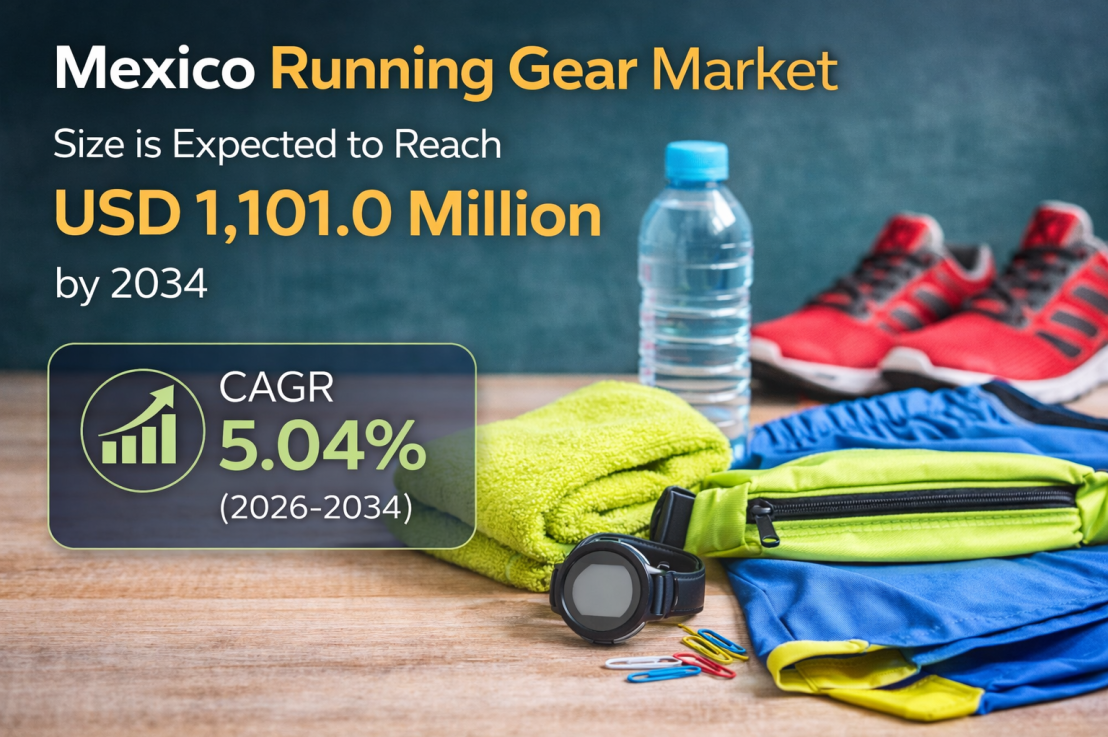
The Mexico running gear market was valued at USD 697.8 Million in 2025 and is projected to reach USD 1,101.0 Million by 2034, growing at a CAGR of 5.04% during 2026–2034. The market is experiencing steady expansion driven by rising health consciousness, increasing disposable incomes, and growing participation in fitness activities such as marathons and running events. These factors are collectively shaping Mexico running gear market trends and supporting long-term industry growth. Additionally, the growing awareness of preventive healthcare and active lifestyles is encouraging consumers to invest in high-quality running shoes, apparel, and accessories that enhance comfort and performance, thereby strengthening the Mexico running gear market share.

Moreover, rapid urbanization and increasingly sedentary lifestyles are prompting individuals to adopt running as a convenient and effective fitness activity, further boosting demand. The influence of social media fitness influencers and sports campaigns is also playing a crucial role in encouraging participation in athletic activities, positively impacting Mexico running gear market growth. Brands are leveraging digital marketing strategies to expand their reach and engage with consumers more effectively. At the same time, the rising preference for sustainable and eco-friendly products is driving innovation, with manufacturers focusing on recycled materials and environmentally responsible production processes, further shaping the evolution of the market.

Get Insights on the Mexico Running Gear Market: Access the IMARC Sample Report: https://www.imarcgroup.com/mexico-running-gear-market/requestsample

Key Trends Shaping the Mexico Running Gear Market in 2026

Rising Health and Fitness Awareness

The increasing focus on maintaining a healthy lifestyle is a primary driver of demand for running gear in Mexico. Consumers are adopting running as a daily fitness routine, boosting the Mexico running gear market share across various product categories.

Growth in Marathon and Sports Participation

The rising number of marathons, running events, and sports initiatives organized by government and private organizations is fueling product demand. This trend is significantly contributing to Mexico running gear market growth.

Expansion of E-commerce and Digital Marketing

Online platforms and brand websites are making running gear more accessible to consumers. Social media promotions and influencer collaborations are also playing a crucial role in shaping Mexico running gear market trends.

Increasing Demand for Sustainable Products

Consumers are becoming environmentally conscious, leading to a surge in demand for eco-friendly running shoes and apparel made from recycled and sustainable materials.

Technological Advancements in Running Gear

Innovations such as lightweight materials, enhanced cushioning, and smart wearable integration are improving performance and comfort, thereby boosting product adoption.

Get Customized Segmentation Intelligence — Speak Directly to Our Expert: https://www.imarcgroup.com/request?type=report&id=31971&flag=C

Mexico Running Gear Market Report Segmentation

According to IMARC Group, the market is segmented based on product type, distribution channel, and region, with forecasts for 2026–2034.

Product Insights:

  • Running Footwear
  • Running Apparel
  • Running Accessories
  • Fitness Trackers

The report offers a comprehensive segmentation and detailed analysis of the market based on product categories, including running footwear, running apparel, running accessories, and fitness trackers.

Gender Insights:

  • Male
  • Female
  • Unisex

The report also presents a detailed segmentation and in-depth analysis of the market based on gender, including male, female, and unisex categories.

Distribution Channel Insights:

  • Specialty and Sports Shops
  • Supermarkets and Hypermarkets
  • Department and Discount Stores
  • Online
  • Others

The report provides a comprehensive segmentation and detailed analysis of the market based on distribution channels, including specialty and sports shops, supermarkets and hypermarkets, department and discount stores, online platforms, and others.

Regional Insights:

  • Northern Mexico
  • Central Mexico
  • Southern Mexico
  • Others

The report also delivers a comprehensive analysis of the key regional markets, including Northern Mexico, Central Mexico, Southern Mexico, and others.

Mexico Running Gear Market Forecast

The Mexico running gear market is expected to witness sustained growth through 2034, driven by evolving consumer preferences, increasing fitness awareness, and technological innovations. The rising popularity of organized sports events and government initiatives promoting physical activity are further supporting Mexico running gear market growth.

Additionally, the growing influence of digital platforms and fitness communities is enhancing consumer engagement and brand visibility. Companies are increasingly adopting omnichannel strategies, combining online and offline retail experiences to improve customer convenience and satisfaction. This approach is expected to further strengthen Mexico running gear market trends in the coming years.

However, the market may face challenges such as fluctuating raw material costs, price sensitivity among consumers, and intense competition among global and local brands. Despite these challenges, continuous innovation, sustainability initiatives, and expanding distribution networks are expected to drive long-term market expansion.

Frequently Asked Questions About This Report

1. How large is the Mexico running gear market?
The market was valued at USD 697.8 Million in 2025.

2. What is the expected growth rate of the market?
The market is projected to grow at a CAGR of 5.04% during 2026–2034.

3. What are the key Mexico running gear market trends?
Major trends include rising fitness awareness, increasing marathon participation, expansion of e-commerce, and growing demand for sustainable products.

4. What is driving the Mexico running gear market demand?
Key drivers include increasing health consciousness, higher disposable incomes, government sports initiatives, and influencer-driven marketing.

5. Which segment holds the largest market share?
Running footwear dominates the market due to its essential role in enhancing performance and reducing injury risks.

Author IMARC Group

IMARC Group is a leading global market research company providing data-driven insights and expert consulting services to businesses seeking to achieve their strategic objectives. With a multidisciplinary team of industry experts, IMARC delivers reliable market intelligence across sectors including Chemicals and Materials, Healthcare, Technology, Agriculture, and Retail.

Contact Us:

IMARC Group

Email: sales@imarcgroup.com

United States: +1-201971-6302