Category: Uncategorized

Mexico Logistics Market Size, Share, Industry Overview, Latest Trends and Forecast 2026-2034

Mexico Logistics Market Size, Share, Industry Overview, Latest Trends and Forecast 2026-2034

IMARC Group has recently released a report titled “Mexico Logistics Market Size, Share, Trends and Forecast by Model Type, Transportation Mode, End Use, and Region, 2026-2034”, providing a comprehensive analysis of market trends, competitive landscape, and regional dynamics.

Mexico Logistics Market Size and Forecast 2026–2034

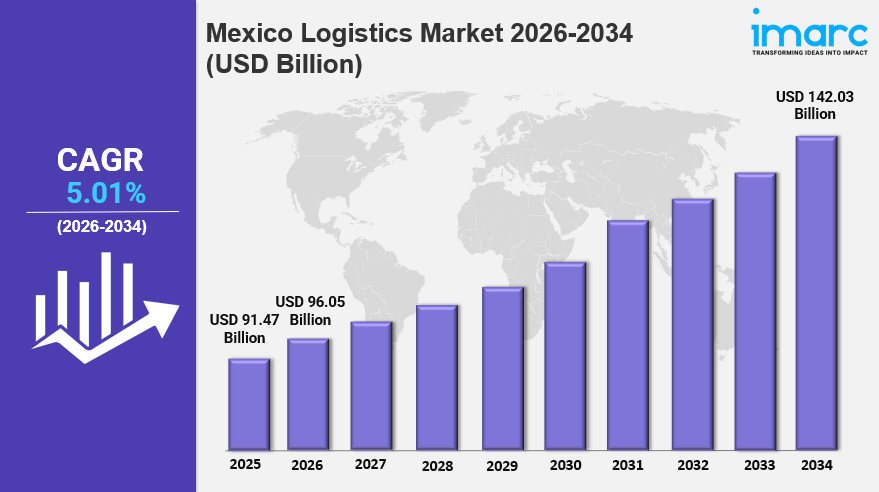
The Mexico logistics market size increased from USD 91.47 Billion in 2025 to USD 96.05 Billion in 2026 and is projected to reach USD 142.03 Billion by 2034, exhibiting a CAGR of 5.01% during 2026–2034. The market is driven by Mexico’s strategic geographic positioning as a gateway for North American trade, accelerating nearshoring activities from multinational corporations, and the rapid expansion of e-commerce platforms demanding efficient last-mile delivery solutions. Rising adoption of third-party logistics providers and multimodal transportation networks is further strengthening operational efficiency across diverse industries.

In 2026, the Mexico logistics market growth is being fueled by continued nearshoring-driven demand for warehousing, freight services, and customs clearance across major industrial corridors, alongside large-scale infrastructure and technology investment. In September 2025, Amazon, Mercado Libre, and GEODIS announced a combined USD 1.1 Billion investment in the State of Mexico’s logistics sector to expand distribution centers and logistics infrastructure. Rapid digitalization of retail channels, ongoing highway, port, and railway modernization, and growing adoption of smart logistics technologies are further improving operational visibility and efficiency across the supply chain ecosystem.

Key Market Statistics at a Glance

  • Base Year: 2025
  • Historical Years: 2020–2025
  • Forecast Period: 2026–2034
  • Market Size (2025): USD 91.47 Billion
  • Market Size (2026): USD 96.05 Billion
  • Projected Size (2034): USD 142.03 Billion
  • Growth Rate: CAGR of 5.01%

Explore Opportunities in the Mexico Logistics Market: Download the IMARC Sample Report: https://www.imarcgroup.com/mexico-logistics-market/requestsample

Mexico Logistics Market Growth: Key Trends and Market Insights

The Mexico logistics market growth is supported by digital transformation and smart logistics adoption, as artificial intelligence, IoT sensors, and blockchain solutions gain widespread implementation. Logistics providers are deploying real-time tracking systems, predictive analytics platforms, and automated warehouse management solutions, while cloud-based logistics platforms enable seamless coordination between stakeholders. In October 2025, Salesforce announced a USD 1 Billion investment in Mexico to expand AI-driven operations and establish a Global Delivery Center, accelerating digital transformation across industries, alongside growing exploration of autonomous guided vehicles and drone delivery for last-mile operations.

Key Mexico logistics market trends include the expansion of multimodal transportation networks combining road, rail, sea, and air freight to optimize cost, delivery timelines, and cargo specifications while reducing environmental impact. In June 2025, the 73-hectare U.A.C Logistics Park was inaugurated near Veracruz port, enhancing Mexico’s global supply chains and supporting multimodal transport. Strategic investments in port infrastructure and railway connectivity continue to strengthen the backbone of multimodal networks, enabling comprehensive door-to-door services for manufacturing, retail, and e-commerce sectors.

The Mexico logistics market growth is also being supported by sustainability and green logistics initiatives, including the transition toward electric and alternative fuel vehicles, energy-efficient warehouse designs, and solar power installations. In May 2025, GEODIS and Prologis launched a 619 kW rooftop solar project at Prologis Park Grande in Tepotzotlán, generating approximately 892 MWh annually to advance sustainable logistics in Mexico. Route optimization algorithms and packaging innovations are further reducing fuel consumption, emissions, and material waste, positioning environmentally responsible providers for competitive advantage through 2034.

Speak to an Analyst: https://www.imarcgroup.com/request?type=report&id=16217&flag=C

Mexico Logistics Market Segmentation Analysis

The Mexico logistics market is segmented by model type, transportation mode, end use, and region, offering a comprehensive view of demand drivers, operational preferences, and regional dynamics across the country.

Breakup by Model Type

  • 3 PL: Dominates with a 46% share in 2025, as manufacturers and retailers increasingly outsource complex supply chains to specialized providers to optimize costs, improve scalability, and enhance service flexibility. In December 2025, DP World opened a 117,000-square-foot multi-customer warehouse in Querétaro, strengthening 3PL capabilities and supporting nearshoring-driven demand.
  • 2 PL: Covers asset-based transportation and warehousing services provided directly to shippers without the broader integration offered by 3PL and 4PL models.
  • 4 PL: Serves businesses seeking fully integrated supply chain management and strategic oversight across multiple logistics providers.

Breakup by Transportation Mode

  • Roadways: Lead with a 59% share in 2025, supported by extensive highway networks, last-mile flexibility, and cost efficiency. In June 2025, Mexico’s SICT announced a MX$53.3 Billion investment to modernize and expand the national highway network, enhancing freight connectivity nationwide.
  • Seaways: Support international trade flows through Mexico’s major ports, benefiting from ongoing port modernization and multimodal terminal development.
  • Railways: Provide cost-efficient movement of high-volume freight, with continued investment in railway connectivity strengthening multimodal networks.
  • Airways: Serve time-sensitive and high-value cargo, supporting sectors such as electronics and healthcare that require rapid transit.

Breakup by End Use

  • Manufacturing: Represents the largest segment with an 18% share in 2025, driven by Mexico’s strength in automotive, aerospace, electronics, and consumer goods. In April 2025, Volvo announced a USD 1 Billion investment to expand its heavy-duty truck manufacturing plant in Nuevo León, reinforcing logistics demand from the sector.
  • Consumer Goods: Benefits from rising domestic consumption and distribution network expansion.
  • Retail: Driven by omnichannel strategies connecting physical stores with digital fulfillment.
  • Food and Beverages: Requires temperature-controlled and time-sensitive logistics solutions.
  • IT Hardware: Supported by growth in electronics assembly and export activities.
  • Healthcare: Demands specialized handling and regulatory-compliant distribution networks.
  • Chemicals: Requires hazardous materials handling and safety-focused logistics protocols.
  • Construction: Supported by infrastructure modernization and industrial park development.
  • Automotive: A key driver of nearshoring-related logistics demand across northern industrial corridors.
  • Telecom: Benefits from network infrastructure expansion and equipment distribution needs.
  • Oil and Gas: Requires specialized logistics for equipment and materials transport.
  • Others: Include additional sectors relying on Mexico’s expanding logistics infrastructure.

Breakup by Region

  • Northern Mexico: Dominates with a 46% share in 2025, benefiting from proximity to U.S. borders, dense maquiladora clusters, industrial parks, and established trade corridors enabling efficient cross-border freight flows through cities such as Monterrey, Tijuana, and Ciudad Juárez.
  • Central Mexico: A significant logistics hub anchored by Mexico City’s manufacturing and consumption base.
  • Southern Mexico: An emerging logistics market supported by growing industrial and infrastructure development.
  • Others: Include remaining regions where logistics infrastructure continues to expand.

Key Challenges and Growth Opportunities in the Mexico Logistics Market

The Mexico logistics market faces several challenges that could affect its growth, including infrastructure bottlenecks such as congested transportation corridors, limited port capacity, and inadequate railway connectivity in certain regions, along with border crossing delays and customs processing inefficiencies. Cargo theft and security incidents along transportation routes require substantial investment in protective measures and tracking technologies, while shortages of qualified professionals, particularly truck drivers and supply chain specialists, constrain service capacity and drive up labor costs.

Despite these challenges, the market offers significant growth opportunities driven by accelerating nearshoring and manufacturing relocation, as seen in November 2025 when Canadian company MARKDOM inaugurated a USD 25 Million manufacturing plant in Irapuato, Guanajuato, reinforcing nearshoring trends. Rapid e-commerce expansion is also creating opportunities, with DHL investing USD 60 Million in 2025 to expand its ground delivery fleet by 300 vehicles ahead of El Buen Fin. Continued infrastructure modernization and multimodal network development are expected to further support market expansion through 2034.

Competitive Landscape

The Mexico logistics market demonstrates a fragmented competitive landscape marked by the coexistence of global logistics enterprises, regional operators, and niche service providers catering to varied industry requirements. Companies compete by differentiating their service portfolios, geographic reach, technological integration, and sector-specific expertise to meet complex supply chain demands. The report provides a comprehensive analysis of the competitive landscape, including detailed profiles of major companies operating in the market.

Strategic alliances, mergers, and acquisitions continue to influence market dynamics as players aim to strengthen capabilities, scale operations, and broaden customer bases. Increasing investment in digital platforms, automation solutions, data analytics, and sustainability initiatives highlights shifting competitive priorities and long-term value creation strategies across the logistics ecosystem.

Latest News and Developments

  • December 2025: DP World opened a 117,000-square-foot multi-customer warehouse in Querétaro, enhancing 3PL capabilities and strengthening integrated supply chain services for manufacturers across Mexico.
  • November 2025: Canadian company MARKDOM inaugurated a USD 25 Million manufacturing plant in Irapuato, Guanajuato, expanding production capacity and reinforcing nearshoring trends.
  • October 2025: Salesforce announced a USD 1 Billion investment in Mexico to expand AI-driven operations, establish a Global Delivery Center, and accelerate digital transformation across industries.
  • September 2025: Amazon, Mercado Libre, and GEODIS announced a combined USD 1.1 Billion investment in the State of Mexico’s logistics sector, expanding distribution centers and infrastructure.
  • June 2025: Amazon Mexico partnered with Rappi to launch Amazon Now, delivering over 5,000 essential products in under 15 minutes across Mexico’s 10 largest cities, integrating restaurant orders alongside ultrafast e-commerce fulfillment.
  • June 2025: The 73-hectare U.A.C Logistics Park was inaugurated near Veracruz port, enhancing multimodal transport capacity and supporting Mexico’s global supply chains.

Author IMARC Group

IMARC Group is a leading global market research company providing data-driven insights and expert consulting services to businesses seeking to achieve their strategic objectives. With a multidisciplinary team of industry experts, IMARC delivers reliable market intelligence across sectors including Chemicals and Materials, Healthcare, Technology, Agriculture, and Retail.

Contact Us:

IMARC Group

Email: sales@imarcgroup.com

United States: +1-201-971-6302
United States Olive Oil Market Size to Worth USD 6.76 Billion by 2034

United States Olive Oil Market Size to Worth USD 6.76 Billion by 2034

IMARC Group has recently released a report titled “United States Olive Oil Market Size, Share, Trends and Forecast by Type, Distribution Channel, Application, and Region 2026-2034”, providing a comprehensive analysis of market trends, competitive landscape, and regional dynamics.

United States Olive Oil Market Size and Forecast 2026–2034

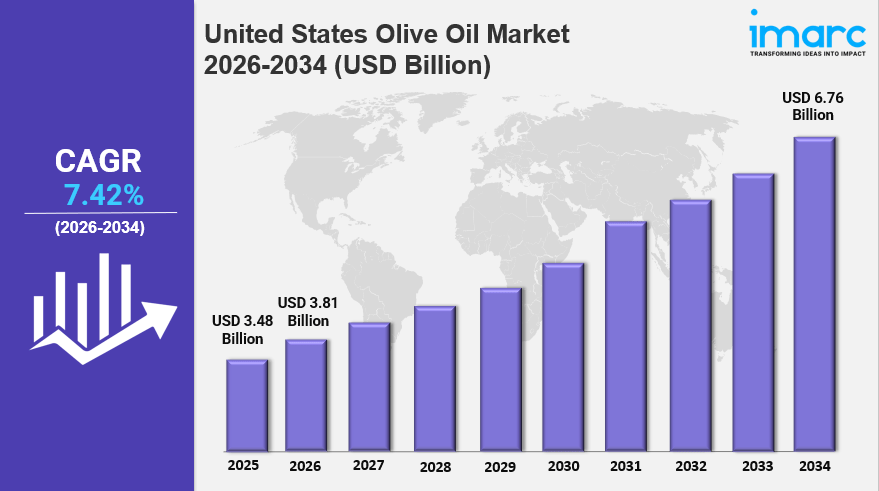
The United States olive oil market size increased from USD 3.48 Billion in 2025 to USD 3.81 Billion in 2026, and is projected to reach USD 6.76 Billion by 2034, growing at a CAGR of 7.42% during 2026–2034. Rising health consciousness among consumers, the surging popularity of the Mediterranean diet, and expanding applications of olive oil across food, cosmetics, and pharmaceutical sectors are key growth drivers.

The United States olive oil market share is led by the West region, which accounted for 34.2% in 2025, while extra virgin olive oil represented 48.7% of type demand. The food and beverage segment dominated applications with a 76.5% share. Growing premiumization, demand for authentic Mediterranean and single-origin varieties, and increasing domestic production in California are further supporting market expansion.

Key Market Statistics at a Glance

  • Base Year: 2025
  • Historical Years: 2020–2025
  • Forecast Period: 2026–2034
  • Market Size (2025): USD 3.48 Billion
  • Market Size (2026): USD 3.81 Billion
  • Projected Size (2034): USD 6.76 Billion
  • Growth Rate: CAGR of 7.42%

Explore Opportunities in the United States Olive Oil Market: Download the IMARC Sample Report: https://www.imarcgroup.com/united-states-olive-oil-market/requestsample

United States Olive Oil Market Overview

Olive oil is a premium edible oil extracted from fresh olives, predominantly imported from Mediterranean countries including Spain, Italy, Greece, and Tunisia, with at least 97% of the US supply derived from imports. The market ecosystem spans producers and exporters in Mediterranean growing regions, import distributors, domestic California producers, food manufacturers, and retail and foodservice channels serving household, commercial, cosmetic, and pharmaceutical applications. Rising per-capita health expenditure, growing awareness of cardiovascular disease prevention, and the mainstreaming of the Mediterranean dietary pattern are primary growth catalysts, with the US having overtaken Spain to become the world’s second-largest olive oil consumer for the first time in 2023.

Market Drivers

  • Rising Health Consciousness: Olive oil’s documented cardiovascular benefits are driving consistent consumer trading-up from conventional cooking oils, with a large majority of Americans expecting to cook as much or more in the year ahead, sustaining retail demand for premium varieties.
  • Mediterranean Diet Popularity: Endorsed by leading nutrition organizations and consistently ranked among the healthiest dietary patterns, the Mediterranean diet has elevated olive oil from a specialty product to a household staple across income brackets.
  • Expanding Foodservice Sector: Foodservice and restaurant channels account for roughly 40% of bulk olive oil purchases in the US, with major chains reformulating menus around olive oil as a core cooking ingredient.
  • E-Commerce Growth: Online retail is expanding rapidly as a distribution channel for premium olive oil, giving consumers access to specialty, organic, and single-origin varieties not typically stocked by conventional supermarkets.

United States Olive Oil Market Growth: Key Trends and Market Insights

The United States olive oil market growth is being supported by increasing consumer awareness of healthy dietary choices and the nutritional benefits associated with olive oil. Consumers are increasingly incorporating olive oil into everyday cooking, salad dressings, marinades, and other food preparations as interest in heart-healthy and natural ingredients continues to rise. Growing awareness of Mediterranean dietary patterns is also encouraging demand for high-quality olive oil, particularly among health-conscious consumers seeking products perceived as natural, minimally processed, and rich in beneficial compounds.

The United States olive oil market trends are increasingly characterized by premiumization and rising consumer preference for extra virgin olive oil. Consumers are showing greater interest in authentic Mediterranean products, single-origin varieties, traceability, quality certifications, and distinctive flavor profiles. Extra virgin olive oil accounted for 48.7% of type demand in 2025, reflecting its strong position within the market. The food and beverage segment also remained the leading application, accounting for 76.5% share, supported by the widespread use of olive oil across households, restaurants, food manufacturers, and other foodservice establishments.

Another important factor supporting market development is the expansion of domestic olive oil production, particularly in California, alongside increasing availability of imported premium products. The West region led the market with a 34.2% share in 2025, benefiting from established production capabilities and strong consumer demand. Rising consumption, product diversification, premium offerings, and growing interest in authentic and single-origin oils are expected to create further opportunities for producers, retailers, and foodservice businesses across the United States.

United States Olive Oil Market Segmentation Analysis

The United States olive oil market is segmented by type, distribution channel, application, and region, offering a comprehensive view of consumer preferences, purchasing behavior, and regional dynamics across the country.

Breakup by Type

  • Extra Virgin Olive Oil: Leads the market with a 48.7% share in 2025 and the fastest growth at an 8.8% CAGR, reflecting premium positioning driven by superior nutritional composition, higher polyphenol content, and authentic flavor.
  • Virgin Olive Oil: Holds an 18.9% share, valued for its purity and cold-press processing without chemical refinement, suited to moderate-temperature cooking and finishing dishes.
  • Refined Olive Oil: Accounts for 14.6% of the market, primarily serving food manufacturing and commercial foodservice where a neutral flavor and higher smoke point are preferred.
  • Olive Pomace Oil and Others: Round out the type segment, serving industrial and value-focused cooking applications.

Breakup by Application

  • Food and Beverage: Dominates with a 76.5% share in 2025, spanning household retail cooking oil, restaurant and foodservice use, food manufacturing for dressings and marinades, and snack production.
  • Cosmetics: Accounts for 11.8% of demand, reflecting olive oil’s growing use in premium skincare, hair care, and beauty formulations valued for emollient and antioxidant properties.
  • Pharmaceuticals: Holds a 7.9% share, growing as olive oil is increasingly incorporated into supplement formulations, topical products, and pharmaceutical-grade excipients.
  • Others: Cover additional industrial and specialty uses of olive oil.

Breakup by Distribution Channel

  • Supermarkets and Hypermarkets: Remain the primary channel for mainstream olive oil purchases, offering broad accessibility and everyday convenience.
  • Online Stores: A fast-growing channel enabling access to specialty, organic, and single-origin varieties through curated digital platforms and subscriptions.
  • Convenience Stores and Others: Support broader distribution reach, particularly for everyday and value-tier products.

Breakup by Region

  • West – 34.2%: Led by California’s domestic production, high per-capita consumption, and strong demand for organic and specialty olive oils.
  • Northeast – 25.6%: Supported by urban gourmet food culture, specialty retailers, EVOO demand, and Mediterranean restaurant presence.
  • South – 22.4%: Experiencing strong consumption growth, expanding Mediterranean cuisine, and well-developed Gulf Coast import networks.
  • Midwest – 17.8%: Showing rapid growth through supermarket distribution, increasing availability, and rising private-label olive oil adoption.

Competitive Landscape

The United States olive oil market is moderately fragmented, with the top five players — Deoleo, Gallo Worldwide, Cargill Incorporated, Ybarra, SOVENA, and California Olive Ranch, Inc. — collectively holding approximately 40–50% of total market revenue in 2025. Deoleo leads the market through its Bertolli, Carbonell, and Carapelli brands, maintaining a steady market share through its Mediterranean sourcing network. Gallo Worldwide focuses on premium and organic EVOO positioning, while Cargill leverages its agricultural commodity scale to supply refined and bulk olive oil to food manufacturers and foodservice operators. California Olive Ranch continues to build market share through domestic production, freshness positioning, and traceability. A diverse mix of Mediterranean export brands, California producers, specialty importers, and private-label retailers accounts for the remaining share, sustaining a competitive landscape that rewards both scale and quality differentiation. The report provides a comprehensive analysis of the competitive landscape, including detailed profiles of all major companies operating in the market.

Author: IMARC Group

IMARC Group is a leading global market research company providing data-driven insights and expert consulting services to businesses seeking to achieve their strategic objectives. With a multidisciplinary team of industry experts, IMARC delivers reliable market intelligence across sectors including Chemicals and Materials, Healthcare, Technology, Agriculture, and Retail.

Contact Us

IMARC Group

Email: sales@imarcgroup.com

United States: +1-201-971-6302

United States Crop Protection Chemicals Market Size to Hit USD 25.3 Billion by 2034 | Growth at 3.88% CAGR

United States Crop Protection Chemicals Market Size to Hit USD 25.3 Billion by 2034 | Growth at 3.88% CAGR

IMARC Group has recently released a report titled “United States Crop Protection Chemicals Market Size, Share, Trends, and Forecast by Type, Origin, Application, and Region, 2026-2034”, providing a comprehensive analysis of market trends, competitive landscape, and regional dynamics.

United States Crop Protection Chemicals Market Size and Forecast 2026–2034

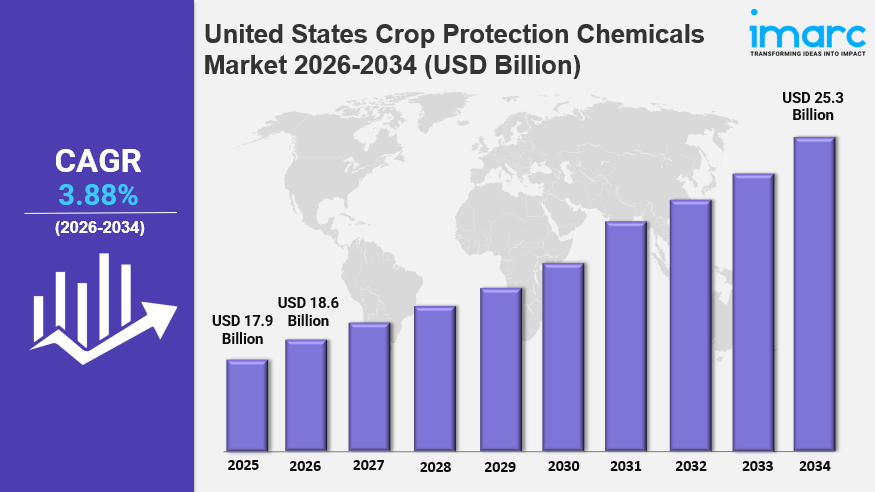
The United States crop protection chemicals market size grew from USD 17.9 Billion in 2025 to USD 18.6 Billion in 2026, and is projected to reach USD 25.3 Billion by 2034, exhibiting a CAGR of 3.88% during 2026–2034. The United States crop protection chemicals market share is led by the Midwest, which held a significant share in 2025. Growth is being driven by increasing agricultural productivity, advanced farming practices, genetically modified crops, rising pest resistance, and climate variability.

Market expansion is further supported by growing food demand associated with population growth, encouraging farmers to increase their use of herbicides, insecticides, and fungicides. The adoption of precision agriculture, including GPS-guided equipment and remote sensing, enables more targeted chemical application. Meanwhile, genetically modified corn, soybean, and cotton varieties, alongside regulatory and R&D investments in lower-toxicity formulations, are reinforcing long-term market growth through 2034.

Key Market Statistics at a Glance

  • Base Year: 2025
  • Historical Years: 2020–2025
  • Forecast Period: 2026–2034
  • Market Size (2025): USD 17.9 Billion
  • Market Size (2026): USD 18.6 Billion
  • Projected Size (2034): USD 25.3 Billion
  • Growth Rate: CAGR of 3.88%

Explore Opportunities in the United States Crop Protection Chemicals Market: Download the IMARC Sample Report: https://www.imarcgroup.com/united-states-crop-protection-chemicals-market/requestsample

United States Crop Protection Chemicals Market Growth: Key Trends and Market Insights

The United States crop protection chemicals market trends are increasingly influenced by population growth, precision agriculture adoption, and technological innovation. Rising food demand is encouraging farmers to improve crop yields and protect harvests from pests, diseases, and weeds, supporting consistent demand for crop protection solutions.

The United States crop protection chemicals market growth is also being supported by the expanding adoption of precision farming technologies, including GPS mapping, drone-based spraying, and variable-rate application. These technologies enable farmers to apply crop protection inputs more efficiently while reducing waste and improving productivity.

Continued innovation is further strengthening market expansion, with manufacturers and regulators focusing on effective, environmentally responsible formulations. The development of broad-spectrum and resistance-management solutions is supporting improved efficacy, safety, and sustainability while helping the industry respond to evolving agricultural and environmental requirements.

Speak to an Analyst: https://www.imarcgroup.com/request?type=report&id=20483&flag=C

United States Crop Protection Chemicals Market Segmentation Analysis

The United States crop protection chemicals market is segmented by type, origin, application, and region, offering a comprehensive view of demand drivers, product preferences, and regional dynamics across the country.

Breakup by Type

  • Herbicides: Hold the leading share at 43.7% in 2025, supported by the vast scale of commercial farming and the high prevalence of weed-related crop loss, reinforced by wider adoption of herbicide-tolerant GM crops.
  • Insecticides: Remain essential for managing recurring pest pressure across major row crops, particularly as unpredictable weather patterns raise the risk of pest outbreaks.
  • Fungicides: Continue to gain traction as growers seek protection against foliar and soil-borne diseases that threaten yield and quality.
  • Others: Include nematicides, rodenticides, and plant growth regulators used in targeted crop-protection programs.

Breakup by Origin

  • Synthetic: Leads the market with a 78.3% share in 2025, owing to its proven effectiveness, broad-spectrum action, cost-efficiency, and compatibility with genetically modified crop varieties.
  • Bio-based: Gaining ground as growers and regulators favor lower-toxicity, environmentally responsible alternatives alongside conventional chemistries.

Breakup by Application

  • Grains and Cereals: Lead the market with a 38.9% share in 2025, reflecting the vast cultivation area and critical role of corn, wheat, and rice in domestic consumption, animal feed, and exports.
  • Pulse and Oilseeds: Benefit from steady demand for protein and oil crops requiring consistent pest and disease management.
  • Fruits and Vegetables: See growing chemical usage tied to quality-sensitive, high-value horticultural production.
  • Commercial Crops: Cotton and other cash crops continue to drive targeted herbicide and insecticide demand.
  • Others: Cover turf, ornamentals, and additional specialty applications.

Breakup by Region

  • Midwest: Dominates the market, underpinned by large-scale corn, soybean, and wheat cultivation, widespread adoption of GM seeds, and strong uptake of precision farming technologies.
  • South: Supported by diverse cropping patterns and sustained demand for pest and weed management across row and specialty crops.
  • West: Driven by high-value fruit, vegetable, and nut production requiring intensive crop protection.
  • Northeast: A smaller but steady contributor, supported by diversified and specialty agriculture.

Key Challenges and Growth Opportunities in the United States Crop Protection Chemicals Market

The market faces challenges including tightening regulatory scrutiny from the EPA, growing resistance among target weeds and pests that reduces the efficacy of established chemistries, and the need to balance high-performance synthetic solutions with rising demand for sustainable, lower-toxicity alternatives.

Despite these challenges, the market offers significant growth opportunities driven by rising food demand, expanding precision agriculture adoption, and continued investment in R&D for resistance-management and eco-friendly formulations. Companies pursuing agri-tech partnerships, digital integration, and biological product pipelines are well positioned to strengthen their competitive position through 2034.

Competitive Landscape

The United States crop protection chemicals market is highly competitive, with major companies such as Bayer AG, Corteva Agriscience, Syngenta AG, BASF SE, and FMC Corporation dominating through extensive product portfolios and nationwide distribution networks. Leading players are investing heavily in R&D to develop eco-friendly and resistance-management solutions, including biologicals and precision-targeted chemicals, while pursuing mergers, acquisitions, and agri-tech collaborations to enhance digital integration and application efficiency. Regional players and startups are also emerging in niche segments such as biopesticides, as evolving EPA standards continue to shape competitive dynamics. The report provides a comprehensive analysis of the competitive landscape, including detailed company profiles and Porter’s Five Forces analysis.

Latest News and Developments

  • June 2025: Corteva confirmed the release of its Forcivo fungicide, combining three active ingredients to combat foliar diseases such as tar spot and southern rust in corn and soybeans, pending EPA registration.
  • May 2025: ADAMA Ltd. secured US registration for Temper More, a herbicide built on its proprietary formulation technology aimed at controlling herbicide-resistant weeds.
  • April 2025: Syngenta disclosed three new foliar-applied insecticide products — Incipio, Vertento, and Zivalgo — for in-season insect control, pending EPA approval.
  • March 2025: ADAMA US introduced Maxentis SC, a dual-active fungicide for maize, soybean, and wheat growers targeting major crop diseases.
  • January 2025: FMC launched two new herbicides, Keenali Complete and Keenali GR, powered by its Dodylex active ingredient, with staggered rollout for rice growers through 2028.

Author: IMARC Group

IMARC Group is a leading global market research company providing data-driven insights and expert consulting services to businesses seeking to achieve their strategic objectives. With a multidisciplinary team of industry experts, IMARC delivers reliable market intelligence across sectors including Chemicals and Materials, Healthcare, Technology, Agriculture, and Retail.

Contact Us

IMARC Group

Email: sales@imarcgroup.com

United States: +1-201-971-6302

Mexico Skin Care Products Market Size, Growth, Demand, Trends and Forecast 2026-2034

Mexico Skin Care Products Market Size, Growth, Demand, Trends and Forecast 2026-2034

IMARC Group has recently released a new research study titled “Mexico Skin Care Products Market Size, Share, Trends and Forecast by Product Type, Ingredient, Gender, Distribution Channel, and Region, 2026-2034“, offering a detailed analysis of the market drivers, segmentation, growth opportunities, trends, and competitive landscape to understand the current and future market scenarios.

Mexico Skin Care Products Market Size & Share 2026-2034

The Mexico skin care products market size reached USD 2.6 Billion in 2025. Looking forward, IMARC Group expects the market to reach USD 3.6 Billion by 2034, exhibiting a growth rate of CAGR of 3.58% during 2026-2034. Rising consumer awareness of natural ingredients, rapid growth in e-commerce platforms, and increasing demand for personalized, inclusive skin care solutions are key drivers of the Mexico skin care products market outlook.

Local brands leveraging traditional botanicals and digital engagement strategies are gaining value, while technology integration enhances consumer experiences and purchasing decisions, strengthening the Mexico skin care products market share.

Key Market Statistics at a Glance

  • Base Year: 2025
  • Historical Years: 2020-2025
  • Forecast Period: 2026-2034
  • Market Size (2025): USD 2.6 Billion
  • Projected Market Size (2034): USD 3.6 Billion
  • Growth Rate: CAGR of 3.58% (2026-2034)

Explore Opportunities in the Mexico Skin Care Products Market: Download the IMARC Sample Report: https://www.imarcgroup.com/mexico-skin-care-products-market/requestsample

Key Growth Drivers and Trends in the Mexico Skin Care Products Market

Growth in the Mexico skin care products market is being driven by growing demand for natural and organic products, as Mexican consumers become more attracted to skin care items focused on natural and organic ingredients. Increased concern regarding strong chemicals has spurred a movement toward clean beauty, with paraben-free, sulfate-free, and artificial-free products bolstering market growth, while locally sourced products with classic botanical extracts such as aloe vera, avocado oil, and nopal (cactus) are well received for their cultural recognition and documented skin benefits.

One of the leading Mexico skin care products market trends is digital transformation and e-commerce expansion, with social media and e-commerce revolutionizing how consumers discover and purchase products. Platforms like TikTok, Instagram, and YouTube play a major role in influencing consumer choices, particularly through beauty influencers, with Mexican micro-influencers highly active in beauty, shopping, and lifestyle categories. Brands are investing in influencer marketing, improving digital presence, and providing AI-enabled features such as virtual try-ons and customized product suggestions.

Another key factor supporting Mexico skin care products market growth is the emphasis on personalization and inclusivity, as consumers increasingly look for products that address specific skin concerns such as acne, hyperpigmentation, or sensitivity. Brands are responding with customized routines, skin analysis tools, and targeted formulations, alongside growing demand for inclusivity through diverse product ranges accommodating various skin tones, types, and cultural backgrounds.

Speak to an Analyst: https://www.imarcgroup.com/request?type=report&id=32112&flag=C

Mexico Skin Care Products Industry Segmentation Insights

Breakup by Product Type:

  • Face Cream: Includes skin brightening cream, anti-aging cream, and sun protection cream, addressing diverse skin care needs.
  • Body Lotion: Includes mass body care, premium body care, and others, catering to varied consumer price preferences.

Breakup by Ingredient:

  • Chemical: Remains a widely used category valued for consistent formulation and cost-effectiveness.
  • Natural: Gaining traction rapidly amid rising demand for clean beauty and botanical-based products.

Breakup by Gender:

  • Male: Growing segment reflecting rising grooming awareness among male consumers.
  • Female: Represents the leading segment driven by broad and diverse skin care product usage.
  • Unisex: Expanding through demand for inclusive, gender-neutral skin care formulations.

Breakup by Distribution Channel:

  • Supermarkets and Hypermarkets: Provides broad accessibility and a wide selection of skin care brands.
  • Beauty Parlours and Salons: Offers professional guidance and premium product recommendations.
  • Multi Branded Retail Stores: Supports curated selections across multiple skin care brands.
  • Online: Growing rapidly through e-commerce platforms and social media-driven discovery.
  • Exclusive Retail Stores: Provides brand-focused shopping experiences for dedicated consumers.
  • Others: Includes additional retail and distribution channels serving the market.

Breakup by Region:

  • Northern Mexico: Benefits from a strong urban and retail base supporting skin care demand.
  • Central Mexico: Holds a significant share supported by dense urban population and beauty-conscious consumers.
  • Southern Mexico: An emerging region with growing retail investment supporting skin care demand.
  • Others: Comprises smaller regional markets experiencing gradual growth in adoption.

Key Challenges and Growth Opportunities in the Mexico Skin Care Products Market

The Mexico skin care products market faces challenges including the technical complexity of formulating effective natural and clean-label products that match the performance of conventional formulations, along with intensifying competition from both domestic brands and international entrants expanding their retail presence.

Despite these challenges, the market offers considerable growth opportunities driven by continued demand for natural and organic products, rising e-commerce and influencer-driven marketing, and growing emphasis on personalized and inclusive beauty solutions. Continued investment in digital engagement and product innovation is expected to create substantial opportunities for long-term growth in the Mexico skin care products market.

Competitive Landscape

The Mexico skin care products market is competitive, with established and emerging brands focusing on product innovation, digital engagement, and retail expansion to strengthen their market position. Recent entries such as E.L.F. Cosmetics at Sephora Mexico and Ulta Beauty’s planned joint venture with Grupo Axo highlight growing international interest in the Mexican beauty retail landscape.

Author

IMARC Group

IMARC Group is a leading global market research company providing data-driven insights and expert consulting services to businesses seeking to achieve their strategic objectives. With a multidisciplinary team of industry experts, IMARC delivers reliable market intelligence across sectors including Chemicals and Materials, Healthcare, Technology, Agriculture, and Retail.

Contact Us:

IMARC Group

Email: sales@imarcgroup.com

United States: +1-201-971-6302
Mexico Spectrometry Market Share, Size, In-Depth Analysis and Forecast 2026-2034

Mexico Spectrometry Market Share, Size, In-Depth Analysis and Forecast 2026-2034

IMARC Group has recently released a new research study titled “Mexico Spectrometry Market Size, Share, Trends and Forecast by Type, Product, Application, End User, and Region, 2026-2034“, offering a detailed analysis of the market drivers, segmentation, growth opportunities, trends, and competitive landscape to understand the current and future market scenarios.

Mexico Spectrometry Market Size & Share 2026-2034

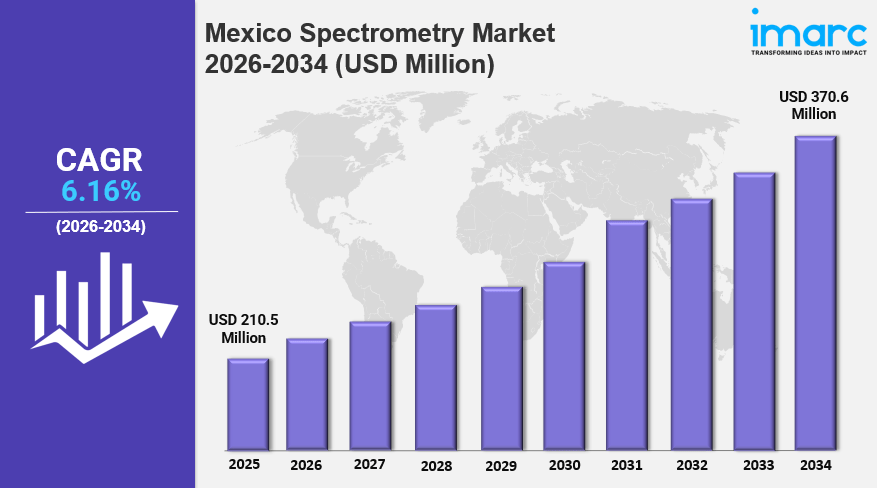
The Mexico spectrometry market size reached USD 210.5 Million in 2025. Looking forward, IMARC Group expects the market to reach USD 370.6 Million by 2034, exhibiting a growth rate of CAGR of 6.16% during 2026-2034. Tighter environmental regulations, increased industrial complexity, and growing emphasis on pollutant detection are driving analytical adoption, while rising pharmaceutical research activity, expanded clinical trials, and public-private investments are enhancing instrumentation demand.

Strategic biotech partnerships, improved data accuracy requirements, and high-throughput research integration are strengthening the Mexico spectrometry market share.

Key Market Statistics at a Glance

  • Base Year: 2025
  • Historical Years: 2020-2025
  • Forecast Period: 2026-2034
  • Market Size (2025): USD 210.5 Million
  • Projected Market Size (2034): USD 370.6 Million
  • Growth Rate: CAGR of 6.16% (2026-2034)

Explore Opportunities in the Mexico Spectrometry Market: Download the IMARC Sample Report: https://www.imarcgroup.com/mexico-spectrometry-market/requestsample

Key Growth Drivers and Trends in the Mexico Spectrometry Market

Growth in the Mexico spectrometry market is being driven by increasing industrial and environmental applications, as regulatory bodies intensify monitoring requirements across sectors such as mining, petrochemicals, and wastewater treatment. This heightened scrutiny necessitates precise, real-time analytical technologies, with mass spectrometry and related techniques offering unmatched sensitivity and reliability. Industrial facilities, particularly in northern Mexico, are integrating these systems into quality control and emissions tracking processes to ensure compliance with national and international standards. In November 2023, Balluff announced the opening of a new production facility in Aguascalientes, Mexico, with an investment of approximately USD 53 Million, enhancing the country’s capabilities in sensor and network technology integral to spectrometry applications.

One of the leading Mexico spectrometry market trends is the expansion of the pharmaceutical and clinical research sector, driven by increased clinical trial activity and pharmaceutical manufacturing. The country’s strategic position as a nearshore destination for U.S. biotech companies, combined with competitive labor costs and growing medical infrastructure, has positioned it as a central hub for drug discovery and validation. Mass spectrometry systems play a critical role in pharmacokinetics, toxicology, proteomics, and biomarker research, with universities and contract research organizations increasingly adopting these technologies to improve data quality and accelerate development timelines.

Another key factor supporting Mexico spectrometry market growth is the growing demand for forensic and security applications, particularly in drug enforcement and criminal investigations. Mass spectrometry, with its ability to detect trace amounts of substances with high sensitivity, is integral to forensic labs analyzing illegal drugs, explosives, and other illicit materials, with law enforcement agencies increasingly adopting these techniques to enhance the accuracy of evidence analysis and ensure compliance with international security standards.

Speak to an Analyst: https://www.imarcgroup.com/request?type=report&id=33783&flag=C

Mexico Spectrometry Industry Segmentation Insights

Breakup by Type:

  • Molecular Spectrometry: Includes visible and ultraviolet spectroscopy, infrared spectroscopy, nuclear magnetic resonance (NMR) spectroscopy, and others.
  • Mass Spectrometry (MS): Includes MALDI-TOF, triple quadrupole, quadrupole-trap, hybrid linear ion trap orbitrap, and quadrupole-orbitrap.
  • Atomic Spectrometry: Includes atomic absorption spectroscopy (AAS), atomic emission spectroscopy (AES), atomic fluorescence spectroscopy (AFS), X-ray fluorescence (XRF), and inorganic mass spectroscopy.

Breakup by Product:

  • Instrument: Represents the core hardware category driving spectrometric analysis across industries.
  • Consumables: Reflects recurring demand for reagents, columns, and other supporting materials.
  • Services: Gaining traction through maintenance, calibration, and analytical support offerings.

Breakup by Application:

  • Proteomics: Supports advanced protein research within pharmaceutical and academic settings.
  • Metabolomics: Growing rapidly through applications in biomarker and disease research.
  • Pharmaceutical Analysis: Represents a significant share driven by drug development and quality control needs.
  • Forensic Analysis: Expanding through increased use in criminal investigations and drug enforcement.
  • Others: Comprises additional application areas across various industries.

Breakup by End User:

  • Government and Academic Institutions: Utilizes spectrometry for research, regulatory testing, and education.
  • Pharmaceutical and Biotechnology Companies: Represents a leading end-user category driven by drug discovery and validation needs.
  • Others: Includes additional end-user segments adopting spectrometry solutions.

Breakup by Region:

  • Northern Mexico: Benefits from a strong industrial and manufacturing base supporting spectrometry demand.
  • Central Mexico: Holds a significant share supported by dense urban population and research infrastructure.
  • Southern Mexico: An emerging region with growing investment supporting spectrometry demand.
  • Others: Comprises smaller regional markets experiencing gradual growth in adoption.

Key Challenges and Growth Opportunities in the Mexico Spectrometry Market

The Mexico spectrometry market faces challenges including the high cost and technical complexity of advanced analytical instruments, along with the need for skilled personnel to operate and interpret sophisticated spectrometric data across industrial, clinical, and forensic settings.

Despite these challenges, the market offers considerable growth opportunities driven by tighter environmental regulations, expanding pharmaceutical and clinical research activity, and rising demand for forensic and security applications. Continued investment in sensor technology, biotech partnerships, and analytical infrastructure is expected to create substantial opportunities for long-term growth in the Mexico spectrometry market.

Competitive Landscape

The Mexico spectrometry market is competitive, with established manufacturers focusing on product innovation, sensor and instrumentation advancement, and strategic partnerships to strengthen their market position. In November 2023, Balluff opened a new production facility in Aguascalientes, Mexico, investing approximately USD 53 Million to enhance its sensor and network technology capabilities integral to spectrometry applications.

Author

IMARC Group

IMARC Group is a leading global market research company providing data-driven insights and expert consulting services to businesses seeking to achieve their strategic objectives. With a multidisciplinary team of industry experts, IMARC delivers reliable market intelligence across sectors including Chemicals and Materials, Healthcare, Technology, Agriculture, and Retail.

Contact Us:

IMARC Group

Email: sales@imarcgroup.com

United States: +1-201-971-6302

U.S. Logistics Market Size, Share, Industry Trends, Growth and Forecast 2026-2034

U.S. Logistics Market Size, Share, Industry Trends, Growth and Forecast 2026-2034

IMARC Group has recently released a new research study titled “U.S. Logistics Market Size, Share, Trends and Forecast by Model Type, Transportation Mode, End Use, and Region, 2026-2034”, offering a detailed analysis of the market drivers, segmentation, growth opportunities, trends, and competitive landscape to understand the current and future market scenarios.

U.S. Logistics Market Size & Share 2026-2034

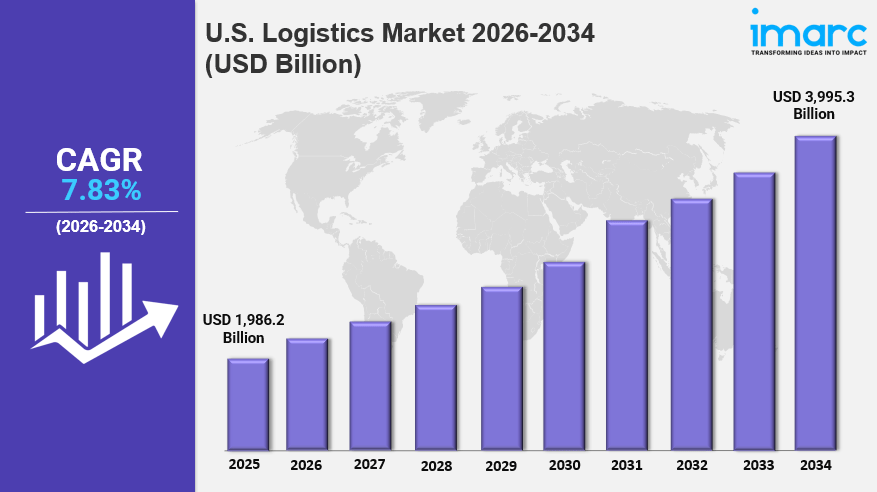
The U.S. logistics market size is anticipated to reach USD 1,986.2 Billion in 2025. Looking forward, IMARC Group estimates the market to reach USD 3,995.3 Billion by 2034, exhibiting a growth rate of CAGR of 7.83% during 2026-2034. The market is driven by e-commerce growth, advancements in automation and AI, the rising demand for fast delivery, global trade expansion, and infrastructure development.

Increasing focus on supply chain optimization, real-time tracking, and sustainability significantly influence the growth of the U.S. logistics market.

Key Market Statistics at a Glance

  • Base Year: 2025
  • Historical Years: 2020-2025
  • Forecast Period: 2026-2034
  • Market Size (2025): USD 1,986.2 Billion
  • Projected Market Size (2034): USD 3,995.3 Billion
  • Growth Rate: CAGR of 7.83% (2026-2034)

Explore Opportunities in the U.S. Logistics Market: Download the IMARC Sample Report: https://www.imarcgroup.com/united-states-logistics-market/requestsample

Key Growth Drivers and Trends in the U.S. Logistics Market

Growth in the U.S. logistics market is being driven by e-commerce growth, as the quick rise in e-commerce remains an essential driver, with the US Census Bureau reporting an estimated USD 300.1 Billion in retail e-commerce sales in the third quarter of 2024, up 7.4% from the same quarter in 2023 and accounting for 16.2% of all retail sales. The increasing consumer demand for fast, reliable delivery has increased the need for efficient supply chain operations, including last-mile delivery solutions, with businesses investing in advanced technologies and fulfillment networks to meet same-day and next-day delivery expectations.

One of the leading U.S. logistics market trends is significant technological advancements, with automation, artificial intelligence, and the Internet of Things transforming logistics operations. In March 2024, Walmart Commerce Technologies launched Route Optimization, an AI-based logistics product that helps businesses optimize the efficiency of their supply chains, offering it to other companies as a Software as a Service solution. Automated warehousing, predictive analytics, and smart transportation systems enhance operational efficiency, accuracy, and cost-effectiveness.

Another key factor supporting U.S. logistics market growth is rising sustainability initiatives, as companies employ environmentally friendly procedures to satisfy customer and regulatory requirements. In August 2024, Universal Logistics Holdings, Inc. introduced its new 2025 Peterbilt 579EV into its fleet as part of ongoing sustainability initiatives, with Universal Intermodal Services, Inc. ready to reduce its carbon footprint in Southern California, reflecting the industry’s broader shift toward electric vehicles and route optimization.

Speak to an Analyst: https://www.imarcgroup.com/request?type=report&id=20480&flag=C

U.S. Logistics Industry Segmentation Insights

Breakup by Model Type:

  • 2 PL: Involves outsourcing specific logistics functions, primarily transportation and warehousing, to a service provider.
  • 3 PL: Projected to dominate the market due to comprehensive services including transportation, warehousing, inventory management, and distribution.
  • 4 PL: Provides a complete package of supply chain management, integrating multi-3PL services under one umbrella for strategic planning and technology-driven insights.

Breakup by Transportation Mode:

  • Roadways: Offers flexibility and accessibility for last-mile deliveries and regional transportation via an extensive highway and interstate network.
  • Seaways: Facilitates international trade through major ports like Los Angeles, Long Beach, and Houston, vital for imports and exports.
  • Railways: Plays a key role in transporting bulk goods, industrial products, and long-haul shipments with cost-efficiency and high capacity.
  • Airways: Supports time-sensitive and high-value freight requiring rapid transit across long distances.

Breakup by End Use:

  • Manufacturing: Drives demand for efficient supply chains transporting raw materials and finished goods, especially across industrial hubs like the Midwest.
  • Consumer Goods: Dominates due to consistent demand for fast and reliable delivery driven by e-commerce growth.
  • Retail: Significantly influences the market through e-commerce and omnichannel strategies requiring efficient fulfillment networks.
  • Food and Beverages: Requires specialized cold chain and time-sensitive logistics solutions.
  • IT Hardware: Relies on secure, efficient logistics networks for high-value technology products.
  • Healthcare: Depends on precise, compliant logistics for pharmaceuticals and medical equipment.
  • Chemicals: Requires specialized handling and regulatory-compliant transportation solutions.
  • Construction: Relies on logistics for transporting heavy materials and equipment to project sites.
  • Automotive: Depends on just-in-time logistics for parts and finished vehicle distribution.
  • Telecom: Requires logistics support for equipment deployment and network infrastructure.
  • Oil and Gas: Relies on specialized logistics for equipment and product transportation.
  • Others: Includes additional end-use industries served by the logistics market.

Breakup by Region:

  • Northeast: Driven by dense urban populations and proximity to major ports like New York and Boston, with strong cold chain logistics demand.
  • Midwest: Fueled by its status as a manufacturing and agricultural hub with strategic distribution positioning.
  • South: Benefits from access to major ports like Houston, Miami, and New Orleans, driving global trade and logistics growth.
  • West: Thrives as a gateway for international trade through ports like Los Angeles and Long Beach, with advanced last-mile delivery systems.

Key Challenges and Growth Opportunities in the U.S. Logistics Market

The U.S. logistics market faces challenges including the technical complexity of scaling automation and AI-driven systems across diverse transportation modes, along with the need for continued investment in sustainable fleet transitions and infrastructure development.

Despite these challenges, the market offers considerable growth opportunities driven by continued e-commerce expansion, rising adoption of automation and real-time tracking technologies, and growing investment in sustainable logistics practices. Continued infrastructure development and supply chain optimization are expected to create substantial opportunities for long-term growth in the U.S. logistics market.

Competitive Landscape

The U.S. logistics market is highly competitive, with key players including FedEx, UPS, DHL, and XPO Logistics dominating the industry through technology integration, extensive networks, and service diversification. In August 2024, FedEx introduced FedEx Surround, a monitoring and intervention solution using artificial intelligence and machine learning to improve customer visibility and control over shipments, while e-commerce giants like Amazon further intensify competition with in-house logistics capabilities.

Author IMARC Group

IMARC Group is a leading global market research company providing data-driven insights and expert consulting services to businesses seeking to achieve their strategic objectives. With a multidisciplinary team of industry experts, IMARC delivers reliable market intelligence across sectors including Chemicals and Materials, Healthcare, Technology, Agriculture, and Retail.

Contact Us:

IMARC Group

Email: sales@imarcgroup.com

United States: +1-201-971-6302
Mexico Perfume Market Size, Share, Trends, Growth Factors and Forecast 2026-2034

Mexico Perfume Market Size, Share, Trends, Growth Factors and Forecast 2026-2034

IMARC Group has recently released a report titled “Mexico Perfume Market Size, Share, Trends and Forecast by Perfume Type, Category, and Region, 2026-2034”, providing a comprehensive analysis of market trends, competitive landscape, and regional dynamics.

Mexico Perfume Market Size and Forecast 2026–2034

The Mexico perfume market size increased from USD 624.1 Million in 2025 to USD 661.4 Million in 2026, and is projected to reach USD 953.1 Million by 2034, exhibiting a CAGR of 4.67% during 2026–2034. Rising disposable incomes, growing consumer preference for premium and culturally resonant fragrances, and the influence of social media on purchasing behavior continue to drive market expansion. Growing e-commerce penetration and the emergence of local artisanal brands reflecting indigenous heritage are further boosting demand and product diversification.

In 2026, the Mexico perfume market growth is being fueled by the continued expansion of the country’s luxury fragrance segment, rising digital engagement through social media and e-commerce platforms, and growing consumer interest in fragrances inspired by native botanicals and cultural heritage. Strengthening middle and upper-middle-class purchasing power and increasing brand awareness among younger consumers are further broadening market reach across urban and rural regions.

Key Market Statistics at a Glance

  • Base Year: 2025
  • Historical Years: 2020–2025
  • Forecast Period: 2026–2034
  • Market Size (2025): USD 624.1 Million
  • Market Size (2026): USD 661.4 Million
  • Projected Size (2034): USD 953.1 Million
  • Growth Rate: CAGR of 4.67%

Explore Opportunities in the Mexico Perfume Market: Download the IMARC Sample Report: https://www.imarcgroup.com/mexico-perfume-market/requestsample

Mexico Perfume Market Growth: Key Trends and Market Insights

The Mexico perfume market growth is supported by the continued expansion of the country’s luxury fragrance segment. An expanding middle and upper-middle class with rising disposable incomes is drawing consumers toward prestige brands that emphasize uniqueness, handcrafted quality, and custom fragrance profiles. International luxury houses and niche perfumers are entering the country with region-specific launches, including city-exclusive offerings created for Mexico City, while local high-end brands are combining traditional elements with luxury design. Designers and retailers are responding by enhancing in-store experiences and online branding to attract sophisticated, status-conscious buyers.

Key Mexico perfume market trends include the growing role of e-commerce and digital engagement in shaping how fragrances are marketed and sold. Wider internet access and smartphone penetration are pushing more consumers toward online purchasing channels, supported by tools such as virtual scent profiling alongside user-generated reviews and influencer endorsements. Platforms like Instagram and TikTok have become important channels for building brand visibility, particularly among younger buyers, and fragrance companies are increasingly relying on influencer partnerships, livestreamed launches, and targeted digital campaigns to drive engagement. This digital shift is widening accessibility across both urban and rural areas and allowing niche and independent labels to reach consumers without dedicated physical retail space.

The Mexico perfume market growth is also being supported by a rising embrace of indigenous scents and cultural heritage in fragrance formulation. Brands are increasingly drawing on native botanicals and traditional practices to create fragrances with local resonance, with several labels highlighting ingredients such as copal, agave, and native florals alongside artisan-crafted packaging that reflects Mexican craftsmanship. Younger consumers in particular are seeking fragrances that convey a story and a sense of identity, and companies blending modern perfumery techniques with ancestral elements are positioning themselves as distinctive, culturally rooted alternatives to mainstream offerings through 2034.

Speak to an Analyst: https://www.imarcgroup.com/request?type=report&id=32107&flag=C

Mexico Perfume Market Segmentation Analysis

The Mexico perfume market is segmented by perfume type, category, and region, offering a comprehensive view of consumer preferences, product positioning, and regional dynamics across the country.

Breakup by Perfume Type

  • Premium Perfume Products: Encompasses prestige and luxury fragrances favored by consumers seeking uniqueness, handcrafted quality, and custom scent profiles, supported by rising disposable incomes and growing brand consciousness among affluent and aspirational buyers.
  • Mass Perfume Products: Covers widely available, affordably priced fragrances catering to broad consumer segments, supported by expanding retail and e-commerce distribution across urban and rural areas.

Breakup by Category

  • Female Fragrances: Includes perfumes formulated for women, spanning floral, fruity, and gourmand profiles, with growing demand for fragrances that reflect personal identity and cultural heritage.
  • Male Fragrances: Includes perfumes formulated for men, with rising interest in premium and niche offerings as grooming and self-expression gain greater consumer attention.
  • Unisex Fragrances: Includes gender-neutral scent profiles appealing to consumers, particularly younger demographics, seeking versatile and individualized fragrance choices.

Breakup by Region

  • Northern Mexico: Benefits from strong industrial activity and rising incomes, supporting demand for premium and internationally recognized fragrance brands.
  • Central Mexico: Reflects a dense concentration of population, retail infrastructure, and affluent consumers, supporting broad adoption of both premium and mass fragrance products.
  • Southern Mexico: Represents a growing market as improving retail and digital access expand consumer exposure to fragrance brands, including regionally inspired and artisanal offerings.
  • Others: Includes additional regions where expanding e-commerce and mobile connectivity are gradually widening access to a broader range of fragrance products.

Key Challenges and Growth Opportunities in the Mexico Perfume Market

The Mexico perfume market faces several challenges that could affect its growth, including intense competition from established international fragrance houses, price sensitivity among mass-market consumers, and the risk of counterfeit or unauthorized products undermining brand trust and pricing structures.

Despite these challenges, the market offers significant growth opportunities driven by the continued expansion of e-commerce and digital marketing channels, rising consumer interest in premium and niche fragrances, and growing demand for products rooted in indigenous ingredients and cultural storytelling. Investment in localized formulations, influencer-driven engagement, and artisan-crafted packaging is expected to further support market expansion, with companies that combine authenticity, quality, and digital reach well positioned to strengthen their competitive advantage through 2034.

Competitive Landscape

The Mexico perfume market features a mix of global fragrance houses, established consumer goods companies, and emerging local artisanal brands competing across the premium and mass segments. Participants are differentiating through prestige brand positioning, culturally resonant product formulations, and expanded digital and retail engagement strategies.

The IMARC report provides a comprehensive analysis of the competitive landscape, including market structure, key player positioning, top winning strategies, a competitive dashboard, and a company evaluation quadrant, along with detailed profiles of all major companies. Companies continue to invest in production capacity, technology, and market expansion initiatives to remain competitive in the evolving Mexico perfume market.

Latest News and Developments

  • November 2024: Givaudan expanded its production facility in Pedro Escobedo, Mexico, as part of its 2025 strategy to strengthen its position in Latin America. The expansion doubled the site’s encapsulation technology production capacity, which now accounts for roughly 40% of Givaudan’s global output in this area, reinforcing the company’s leadership in the fragrance and beauty market while supporting rising regional and global demand.

Author

IMARC Group

IMARC Group is a leading global market research company providing data-driven insights and expert consulting services to businesses seeking to achieve their strategic objectives. With a multidisciplinary team of industry experts, IMARC delivers reliable market intelligence across sectors including Chemicals and Materials, Healthcare, Technology, Agriculture, and Retail.

Contact Us

IMARC Group

Email: sales@imarcgroup.com

United States: +1-201-971-6302

United States Software Market Size, Share, Latest Insights and Forecast 2026-2034

United States Software Market Size, Share, Latest Insights and Forecast 2026-2034

IMARC Group has recently released a new research study titled “United States Software Market Report by Type (Application Software, System Infrastructure Software, Development and Deployment Software, Productivity Software), Deployment Mode (On-premises, Cloud-based), Enterprise Size (Small and Medium-sized Enterprises, Large Enterprises), Industry Vertical (IT and Telecom, BFSI, Retail, Government/Public Sector, Energy and Utilities, Healthcare, and Others), and Region 2026-2034”, offering a detailed analysis of the market drivers, segmentation, growth opportunities, trends, and competitive landscape to understand the current and future market scenarios.

United States Software Market Size & Share 2026-2034

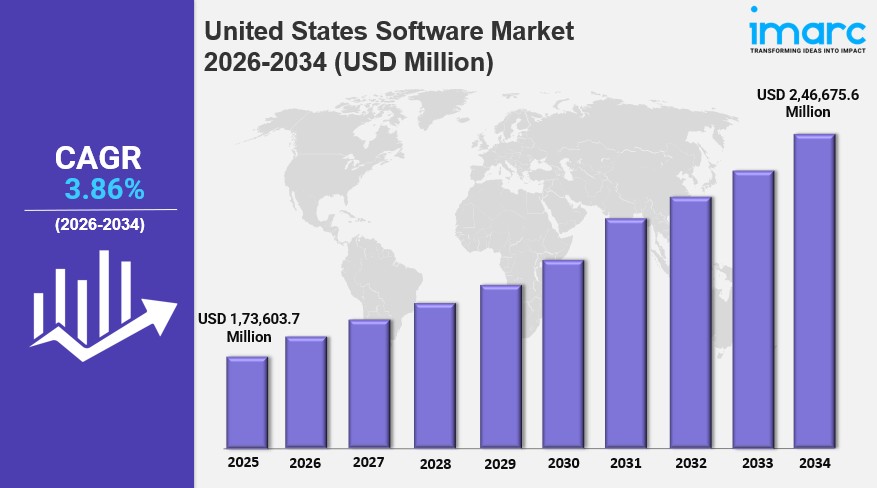
The United States software market size reached USD 1,73,603.7 Million in 2025. Looking forward, IMARC Group expects the market to reach USD 2,46,675.6 Million by 2034, exhibiting a growth rate (CAGR) of 3.86% during 2026–2034. The growing demand in remote healthcare, patient management, and medical data analysis, increasing shift from on-premises software solutions to cloud-based services, and rising popularity of low-code and no-code development platforms represent some of the key factors driving the market.

The industry is further fueled by digital transformation, cloud computing adoption, increasing demand for automation, and artificial intelligence investment, which together drive enterprise modernization and underpin growth in scalable, intelligent technology infrastructures.

Key Market Statistics at a Glance

  • Base Year: 2025
  • Historical Years: 2020-2025
  • Forecast Period: 2026-2034
  • Base Year Market Size (2025): USD 173,603.7 Million
  • Forecast Market Size (2034): USD 246,675.6 Million
  • Growth Rate: CAGR of 3.86% (2026-2034)

Explore Opportunities in the United States Software Market: Download the IMARC Sample Report: https://www.imarcgroup.com/united-states-software-market/requestsample

Key Growth Drivers and Trends in the United States Software Market

Growth in the United States software market is being driven by the rapid and swift uptake of cloud-native software architecture, which is reshaping the software development environment as technologies such as containerization, microservices, and serverless computing allow companies to develop scalable and elastic applications optimized for fast-changing environments. Organizations across industries are increasingly betting on platforms that can deploy, observe, and manage workloads in real-time efficiently, with software vendors concentrating on providing cloud-first offerings that reflect the agile and dispersed nature of current IT infrastructures.

One of the leading United States software market trends is the incorporation of artificial intelligence within mainstream software platforms, remaking user experience, decision-making, and operational capabilities. AI-based software products, ranging from predictive analytics to natural language processing and machine learning, are increasingly integrated into enterprise applications to maximize performance and provide intelligent automation, most notably in industries such as healthcare, finance, and logistics. In May 2025, OpenAI released a research preview of Codex, an AI software engineering agent capable of writing code, debugging, running tests, and answering questions, with plans to revolutionize enterprise-scale software development processes.

Another key factor supporting market growth is the increased focus on software compliance and security, as developers and businesses integrate security protocols and compliance models natively into the software development lifecycle through DevSecOps to enable proactive risk management. This responds to both internal data governance needs and external regulatory compliance requirements including GDPR, HIPAA, and CCPA, with companies increasingly adopting security-oriented software applications to uphold user trust and prevent financial fines.

Speak to an Analyst: https://www.imarcgroup.com/request?type=report&id=19069&flag=C

United States Software Industry Segmentation Insights

Breakup by Type:

  • Application Software: Covers ERP, CRM, SCM, enterprise collaboration, enterprise content management, education software, and other business applications.
  • System Infrastructure Software: Includes network management systems, storage software, and security software supporting core IT operations.
  • Development and Deployment Software: Encompasses enterprise data management, business analytics and reporting tools, application servers, integration middleware, and data quality tools.
  • Productivity Software: Includes office software, creative software, and other tools supporting individual and team productivity.

Breakup by Deployment Mode:

  • On-premises: Serves organizations requiring direct infrastructure control and data residency compliance.
  • Cloud-based: Gaining wider adoption due to scalability, remote accessibility, and reduced infrastructure overhead.

Breakup by Enterprise Size:

  • Small and Medium-sized Enterprises: Increasingly adopting cloud-based and subscription software models to access enterprise-grade capabilities cost-effectively.
  • Large Enterprises: Drives substantial software investment across complex, multi-department digital transformation initiatives.

Breakup by Industry Vertical:

  • IT and Telecom: A leading vertical driving continuous software innovation and infrastructure modernization.
  • BFSI: Adopts software extensively for digital banking, risk management, and regulatory compliance.
  • Retail: Utilizes software for e-commerce, inventory management, and customer experience platforms.
  • Government/Public Sector: Invests in software for citizen services, data management, and cybersecurity infrastructure.
  • Energy and Utilities: Applies software for grid management, asset monitoring, and operational efficiency.
  • Healthcare: Growing rapidly with demand in remote healthcare, patient management, and medical data analysis software.
  • Others: Includes additional industry verticals adopting software solutions across diverse use cases.

Breakup by Region:

  • Northeast: Supported by dense concentrations of financial services and enterprise software adoption.
  • Midwest: Benefits from steady industrial and manufacturing software demand.
  • South: A growing region supported by expanding technology hubs and business relocation trends.
  • West: Leads with concentration of major technology companies and software innovation centers.

Key Challenges and Growth Opportunities in the United States Software Market

The United States software market faces challenges including ongoing data privacy issues, complex regulatory requirements, and persistent cybersecurity attacks that require continuous investment in secure software development practices.

Despite these challenges, the market offers considerable growth opportunities driven by pressure to move toward intelligent automation, edge computing, and vertical-specific SaaS solutions. Continued expansion of cloud-native architectures, AI-infused capabilities, and platform-as-a-service models is expected to support long-term growth in the United States software market.

Competitive Landscape

The United States software market is highly competitive among international and national vendors, with differentiation based on innovation velocity, integration expertise, cybersecurity level, and industry-specific tailoring to address a wide range of enterprise needs. Companies are investing heavily in AI-infused capabilities, cloud-native architectures, and compliance-focused offerings to differentiate their solutions across the enterprise software landscape.

Recent Developments in the United States Software Market

  • May 2025: OpenAI released a research preview of Codex, an AI software engineering agent capable of writing code, debugging, running tests, and answering questions, built on the codex-1 model and made available to ChatGPT Pro, Team, and Enterprise customers.
  • March 2025: OneTrust launched an AI-driven Privacy Breach Response Agent designed with Microsoft Security Copilot, automating data analysis, regulatory mapping, and compliance measures to boost organizational efficiency in handling privacy incidents.
  • July 2025: Rune Technologies debuted its AI-fueled military logistics platform, TyrOS, and raised $24 million in Series A funding, with the edge-deployed platform using deep learning to optimize supply chains, with pilot programs underway in the U.S. Army and Marine Corps.

Author IMARC Group

IMARC Group is a leading global market research company providing data-driven insights and expert consulting services to businesses seeking to achieve their strategic objectives. With a multidisciplinary team of industry experts, IMARC delivers reliable market intelligence across sectors including Chemicals and Materials, Healthcare, Technology, Agriculture, and Retail.

Contact Us:

IMARC Group

Email: sales@imarcgroup.com

United States: +1-201-971-6302
Mexico Managed Services Market Size, Share, Trends & Growth Report 2034

Mexico Managed Services Market Size, Share, Trends & Growth Report 2034

IMARC Group has recently released a new research study titled “Mexico Managed Services Market Size, Share, Trends and Forecast by Type, Deployment Mode, Enterprise Size, End Use, and Region, 2026-2034”, offering a detailed analysis of the market drivers, segmentation, growth opportunities, trends, and competitive landscape to understand the current and future market scenarios.

Mexico Managed Services Market Size & Share 2026-2034

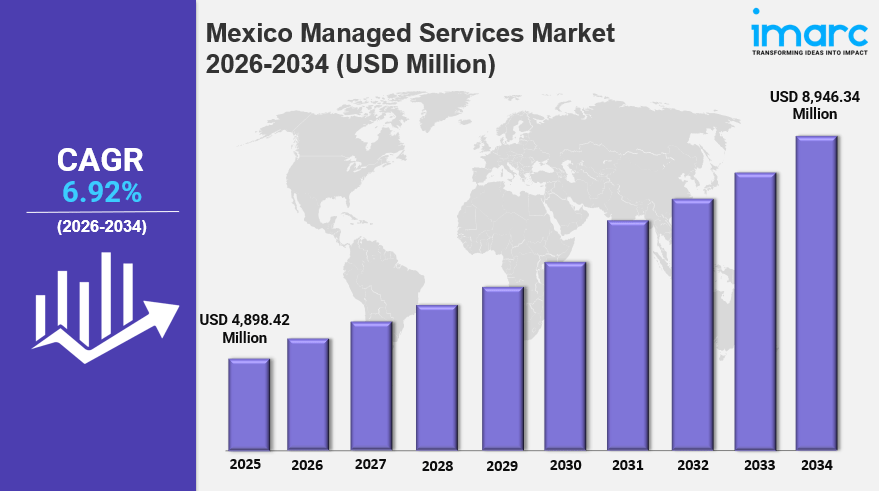
The Mexico managed services market size was valued at USD 4,898.42 Million in 2025 and is projected to reach USD 8,946.34 Million by 2034, growing at a CAGR of 6.92% from 2026-2034. Increasing demand for IT infrastructure management, cloud computing adoption, and cybersecurity solutions is driving consistent consumption as Mexican enterprises seek to optimize operations and reduce costs.

Organizations are prioritizing digital transformation initiatives, enhancing data protection capabilities, and adapting to remote work requirements, with growing emphasis on leveraging expert service providers continuing to strengthen the Mexico managed services market share.

Key Market Statistics at a Glance

  • Base Year: 2025
  • Historical Years: 2020-2025
  • Forecast Period: 2026-2034
  • Market Size (2025): USD 4,898.42 Million
  • Projected Market Size (2034): USD 8,946.34 Million
  • Growth Rate: CAGR of 6.92% (2026-2034)

Explore Opportunities in the Mexico Managed Services Market: Download the IMARC Sample Report: https://www.imarcgroup.com/mexico-managed-services-market/requestsample

Key Growth Drivers and Trends in the Mexico Managed Services Market

Growth in the Mexico managed services market is being driven by accelerated cloud migration and hybrid infrastructure adoption, as Mexican enterprises increasingly transition from conventional on-premises infrastructure to flexible hybrid cloud environments. Mexican enterprises extensively adopted cloud computing in 2025, with usage increasing over 25% annually, driven by Microsoft Azure and partners advancing AI and digital transformation, while managed service providers expand their cloud integration capabilities, offering specialized migration roadmaps, DevSecOps implementation, and ongoing hybrid infrastructure management.

One of the leading Mexico managed services market trends is rising emphasis on cybersecurity and compliance services, with cyberattacks targeting Mexican government agencies projected to surge by 260% in 2025, highlighting urgent demand for managed security services. Enterprises across all sectors are prioritizing security operations center capabilities, threat detection and response services, and compliance management solutions, while service providers expand their security portfolios to include advanced threat intelligence and regulatory compliance frameworks tailored to Mexican market requirements.

Another key factor supporting Mexico managed services market growth is the integration of artificial intelligence and automation technologies, with nearly 40% of Mexican businesses now using AI as of December 2025 and 88% noting productivity and revenue improvements. In October 2025, AWS launched three local availability zones in Mexico, supporting enterprise cloud modernization, GenAI adoption, and compliance strategies, further accelerating innovation and improving operational performance across multiple industries.

Speak to an Analyst: https://www.imarcgroup.com/request?type=report&id=33813&flag=C

Mexico Managed Services Industry Segmentation Insights

Breakup by Type:

  • Managed Infrastructure: Leads at 22% share, driven by comprehensive outsourced management of servers, storage systems, networking equipment, and data centers.
  • Managed Data Center: Supports enterprises seeking scalable, reliable data center operations without capital-intensive investments.
  • Managed Security: Reflects growing demand for threat detection, incident response, and compliance management capabilities.
  • Managed Communications: Supports enterprise voice, messaging, and collaboration infrastructure needs.
  • Managed Network: Ensures optimized, secure, and continuously monitored enterprise network performance.
  • Managed Mobility: Supports enterprise device management and mobile workforce enablement.

Breakup by Deployment Mode:

  • On-premises: Leads at 55% share, reflecting data sovereignty requirements and regulatory compliance mandates in regulated industries.
  • Cloud-based: Growing steadily as enterprises adopt hybrid approaches combining on-premises infrastructure with selective cloud services.

Breakup by Enterprise Size:

  • Small and Medium-sized Enterprises: Represents the largest segment at 58% share, driven by cost-effective access to enterprise-grade IT capabilities.
  • Large Enterprises: Reflects steady demand for sophisticated, integrated managed service solutions at scale.

Breakup by End Use:

  • IT and Telecommunication: Leads at 24% share, driven by the sector’s need for advanced network management and cybersecurity services.
  • BFSI: Requires secure, compliant managed services supporting financial data protection.
  • Healthcare: Relies on managed services for data security and regulatory compliance.
  • Entertainment and Media: Utilizes managed services to support content delivery and digital infrastructure.
  • Retail: Adopts managed services to support e-commerce and omnichannel operations.
  • Manufacturing: Requires managed services for industrial automation and operational technology support.
  • Government: Relies on managed services amid rising cybersecurity threats and digital modernization needs.
  • Others: Includes additional sectors adopting managed IT service solutions.

Breakup by Region:

  • Northern Mexico: Anchored by Monterrey and Tijuana, benefiting from nearshoring activity and cross-border connectivity.
  • Central Mexico: Dominates the national landscape, hosting major hyperscale data centers across the Querétaro-Mexico City corridor.
  • Southern Mexico: Presents emerging opportunities supported by growing tourism, healthcare, and logistics sector investment.
  • Others: Comprises secondary technology hubs such as Guadalajara supporting broader ecosystem growth.

Key Challenges and Growth Opportunities in the Mexico Managed Services Market

The Mexico managed services market faces challenges including chronic shortages of qualified cybersecurity professionals and cloud architects driving wage inflation, data sovereignty and security concerns among regulated industries, and uneven digital infrastructure development across regions.

Despite these challenges, the market offers considerable growth opportunities driven by accelerating digital transformation initiatives, rising cybersecurity threats requiring specialized expertise, and continued cost optimization imperatives among SMEs. Continued investment in hyperscale infrastructure and AI-driven service delivery is expected to create substantial opportunities for long-term growth in the Mexico managed services market.

Competitive Landscape

The Mexico managed services market demonstrates a fragmented competitive structure, with multinational technology corporations competing alongside regional service providers and specialized niche players. Market participants are differentiating through service portfolio expansion, technology partnerships, vertical industry expertise, and localized service delivery capabilities, with strategic acquisitions and partnership formations serving as primary competitive strategies to strengthen market positioning across Mexico.

Author IMARC Group

IMARC Group is a leading global market research company providing data-driven insights and expert consulting services to businesses seeking to achieve their strategic objectives. With a multidisciplinary team of industry experts, IMARC delivers reliable market intelligence across sectors including Chemicals and Materials, Healthcare, Technology, Agriculture, and Retail.

Contact Us:

IMARC Group

Email: sales@imarcgroup.com

United States: +1-201-971-6302
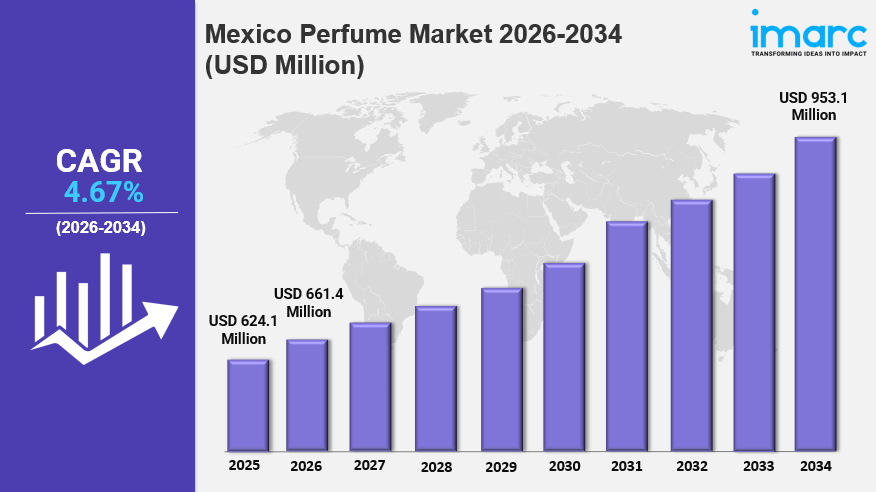
North America Adult Diaper Market 2026: Size, Trends, Growth, Latest Insights and Forecast to 2034

North America Adult Diaper Market 2026: Size, Trends, Growth, Latest Insights and Forecast to 2034

IMARC Group has recently released a new research study titled “North America Adult Diaper Market Size, Share, Trends and Forecast by Type, Distribution Channel, and Region, 2026-2034”, offering a detailed analysis of the market drivers, segmentation, growth opportunities, trends, and competitive landscape to understand the current and future market scenarios.

North America Adult Diaper Market Size & Share 2026-2034

The North America adult diaper market size reached USD 6.0 Billion in 2025. Looking forward, IMARC Group expects the market to reach USD 10.1 Billion by 2034, exhibiting a growth rate of CAGR of 5.75% during 2026-2034. The increasing geriatric population and their care needs, along with rising awareness about incontinence products and their benefits, are driving consistent consumption.

Growing preference for convenient and discreet personal care solutions, advancements in product innovation and comfort features, and higher disposable income and improved healthcare accessibility are supporting broader adoption of adult diapers across North America.

Key Market Statistics at a Glance

  • Base Year: 2025
  • Historical Years: 2020-2025
  • Forecast Period: 2026-2034
  • Market Size (2025): USD 6.0 Billion
  • Projected Market Size (2034): USD 10.1 Billion
  • Growth Rate: CAGR of 5.75% (2026-2034)

Explore Opportunities in the North America Adult Diaper Market: Download the IMARC Sample Report: https://www.imarcgroup.com/north-america-adult-diaper-market/requestsample

Key Growth Drivers and Trends in the North America Adult Diaper Market

Growth in the North America adult diaper market is being driven by an increasing focus on personal care and hygiene, as consumers increasingly purchase adult diapers that are comfortable, absorbent, and equipped with odor-controlling capabilities. This is particularly observed among the geriatric demographic, disabled individuals, and patients with chronic health problems. The stigma associated with incontinence is slowly fading, and individuals are now more openly seeking solutions, which continues to increase adult diaper sales.

One of the leading North America adult diaper market trends is continued product innovation and improved comfort, as manufacturers engineer features such as breathable materials, odor control technologies, elastic waistbands for better fit, and enhanced absorbency that keeps users dry for longer periods. These innovations also target consumers with sensitive skin through hypoallergenic formulations, making adult diapers more appealing and reliable for a broader range of users.

Another key factor supporting North America adult diaper market growth is the increase in healthcare spending and insurance coverage, with many elderly individuals and those suffering from chronic diseases now better positioned to buy incontinence products due to increased access and affordability of healthcare. Adult diapers have also become an accepted item covered under insurance policies as part of incontinence management, easing out-of-pocket cost concerns and expanding accessibility across the region.

Speak to an Analyst: https://www.imarcgroup.com/request?type=report&id=1520&flag=C

North America Adult Diaper Industry Segmentation Insights

Breakup by Type:

  • Adult Pad Type Diaper: Represents the leading segment, driven by usability, comfort, and affordability, with strong availability in pharmacies and online stores.
  • Adult Flat Type Diaper: Provides a flexible option suited to varying levels of incontinence care needs.
  • Adult Pant Type Diaper: Offers convenience and a more discreet, underwear-like fit for active users.

Breakup by Distribution Channel:

  • Pharmacies: Accounts for the largest share, supported by easy reach, wide consumer acceptance, and personalized consultations.
  • Convenience Stores: Provides accessible, everyday purchase options for consumers.
  • Online Stores: Growing steadily due to privacy, convenience, and expanding e-commerce reach.
  • Others: Includes additional retail and distribution channels serving the market.

Breakup by Region:

  • United States: Accounts for the largest market share, supported by a large geriatric population and advanced healthcare infrastructure.
  • Canada: Reflects steady demand supported by a growing aging population and expanding distribution networks.

Key Challenges and Growth Opportunities in the North America Adult Diaper Market

The North America adult diaper market faces challenges including the technical complexity of developing eco-friendly and biodegradable formulations that match the comfort and performance of conventional products, along with the need for continued investment in expanding accessible distribution networks.

Despite these challenges, the market offers considerable growth opportunities driven by continued growth of the geriatric population, rising healthcare spending and insurance coverage, and growing demand for premium, eco-friendly, and skin-friendly product innovations. Continued expansion of online distribution channels and partnerships with healthcare providers is expected to create substantial opportunities for long-term growth in the North America adult diaper market.

Competitive Landscape

The North America adult diaper market is competitive, with key players driving growth through product innovation, introducing sophisticated features such as enhanced absorbency, skin-friendly materials, and odor-control capabilities. Manufacturers are also launching eco-friendly and biodegradable products, expanding online distribution channels, and forming partnerships with healthcare providers and long-term care facilities to strengthen their market position across North America.

Author IMARC Group

IMARC Group is a leading global market research company providing data-driven insights and expert consulting services to businesses seeking to achieve their strategic objectives. With a multidisciplinary team of industry experts, IMARC delivers reliable market intelligence across sectors including Chemicals and Materials, Healthcare, Technology, Agriculture, and Retail.

Contact Us:

IMARC Group

Email: sales@imarcgroup.com

United States: +1-201-971-6302